
Injection Molding Materials: How to Choose a Resin
- Key Takeaways
- The Four Questions to Ask First
- Common Injection Molding Materials Compared
- Amorphous vs. Semi-Crystalline Resins
- How Much Do Injection Molded Parts Shrink?
- Fillers and Grades
- How Resin Choice Affects Tooling
- The Real Cost of Materials
- Frequently Asked Questions
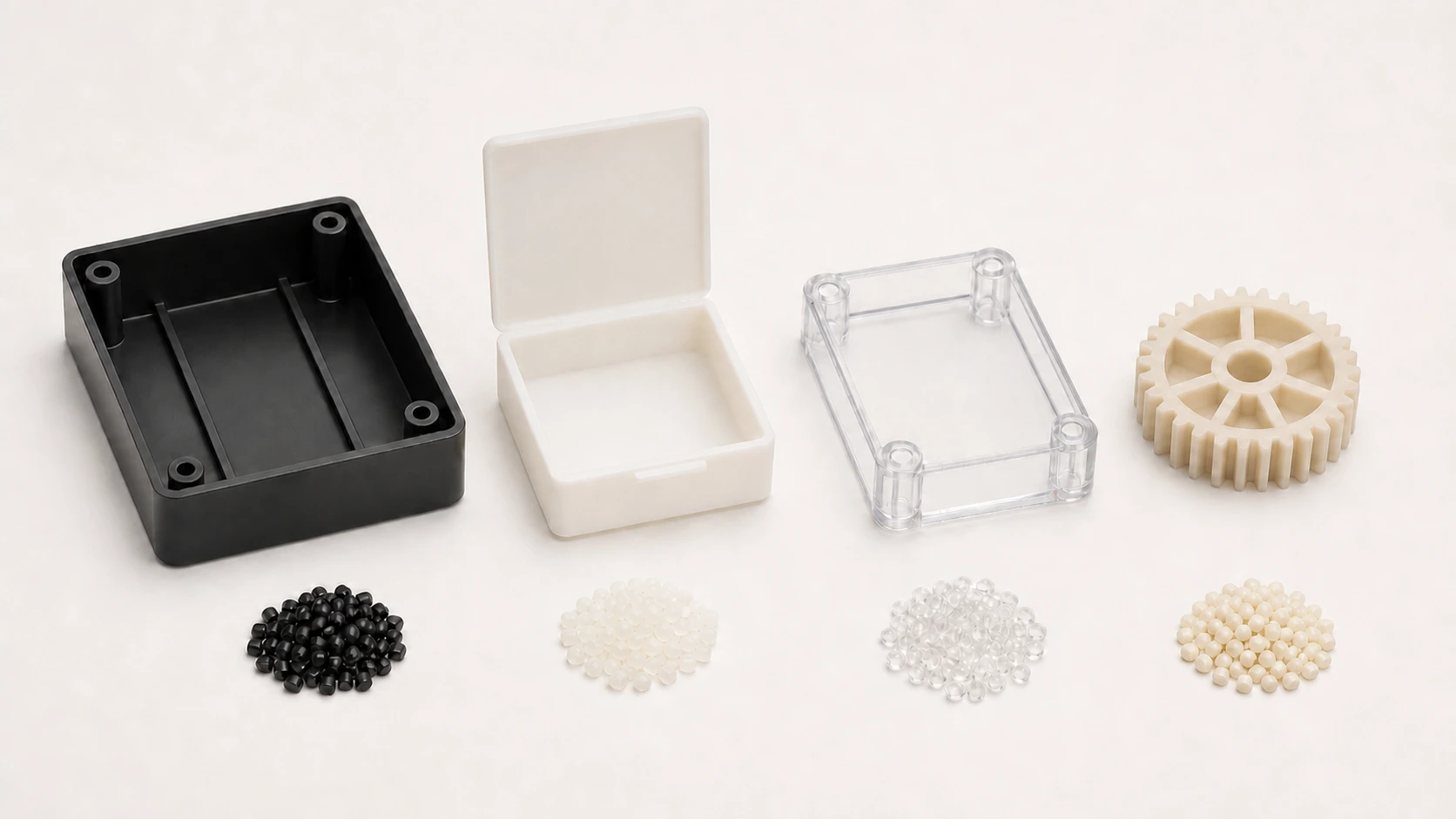
The right injecting molding material comes down to four things: the temperature the part will be exposed to, the load it’s expected to carry, the environment it’s intended to live in, and how the finished product should look. And to a lesser extent, cost and moldability.
Guides often start with a list of different plastics and their properties. But those lists don’t narrow down your options. For your average enclosure or bracket, there will be a dozen resins that might be suitable. So how are you supposed to pick one over another?
The simple answer: start with ABS or polypropylene (PP) and only look at other options when a specific requirement forces you to do so. Over-specifying the resin is a common problem, and one that will cost you more both in terms of material and longer cycle times.
With that out of the way, we’ll go over the steps that will help you pick the right resin for your injection molding process and your specific application.
Key Takeaways
The choice of resin mainly comes down to the part’s expected temperature and load exposure, its intended environment, and how it should look.
For most applications, ABS or polypropylene are sufficient and cost-effective options.
Semi-crystalline resins exhibit directional shrinkage, which must be taken into account when designing the part.
Different grades of the same resin will have unique properties, and should be specified explicitly.
Table of Contents
The Four Questions to Ask First
Answering these four questions will usually narrow down your options to two or three candidates. From there, you can make the final choice based on cost and moldability.
What Kind of Temperature Will Part See?
We’re not talking about the ambient temperature of the space that will house the part. The main concern here is the worst-case temperature for the part under load.
If the part will be near a power supply, in a car interior in Arizona, or sent through a dishwasher cycle, then it needs sufficient heat resistance and you’ll need to provide a thermal spec to make sure it has the right properties. But for something that won’t see any extreme heat, like a shelf bracket, high temperature resistance isn’t a concern.
Once you know what kind of heat you’re dealing with, check the material’s heat deflection temperature. That temperature is quoted at two different loads (0.45 MPa and 1.8 MPa). Each will give you a very different answer, so make sure to verify both.
For parts that need heat resistance, PC/ABS is often the material you’ll end up with. It can handle higher temperatures than ABS can, but without as much added material as straight PC provides. Enclosure projects are usually molded using PC/ABS for this reason.
What Loads Will the Part Carry?
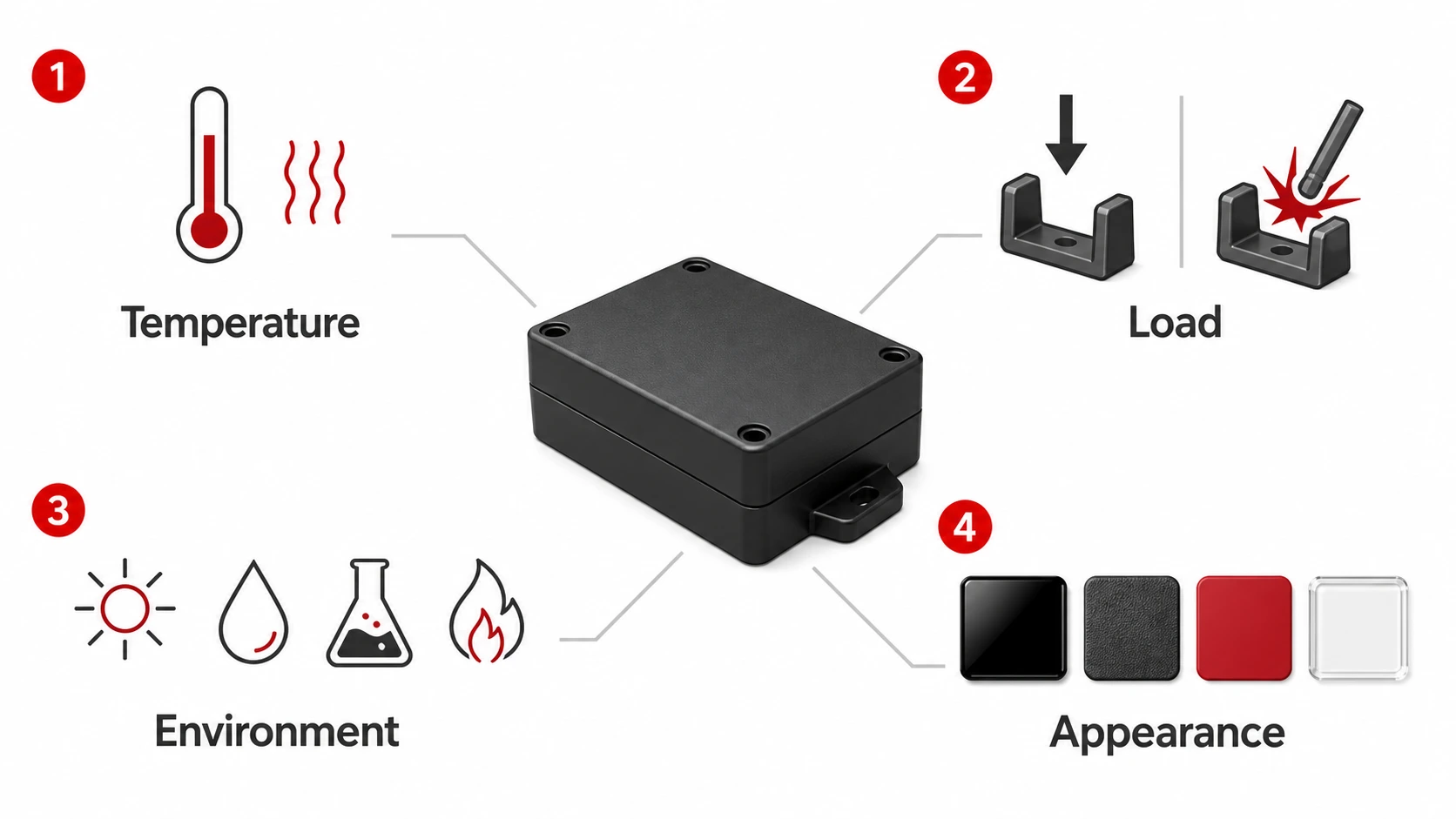
What Kind of Environment Will the Part Live In?
If the part will be exposed to chemicals, UV, or moisture, that eliminates a number of candidates right off the bat.
If your part will be housed inside an electrical enclosure, it will likely need a UL 94 flammability rating. V-0 is the strictest of the common vertical ratings. To qualify for it, the specimen must self-extinguish within 10 seconds with no flaming drips that ignite the cotton indicator below.
The part’s flammability rating will depend on the thickness of the material. So a 3 mm part that qualifies as V-0 grade does not automatically meet the same specification if its thickness is cut in half.
Does the Part Need to Look a Certain Way?
Filled grades are the wrong choice for parts that will have a high-gloss cosmetic surface, texture, or a specific color match.
Glass-filled resins can show fiber read-through on Class A surfaces, which will ruin the part’s appearance.
Common Injection Molding Materials Compared
The table below covers the resins we stock and run most often at Komaspec. Unless specified, the values are for unfilled grades. Specific grades vary. Consult the full property table for our stocked plastics for more detail.
| Material | Tensile strength (MPa) | Elongation at break (%) | Structure | Typical use | Main limitation |
|---|---|---|---|---|---|
| PP (polypropylene) | 26 | 150–300 | Semi-crystalline | Living hinges, containers, chemical-contact parts | Low stiffness, high shrinkage, poor UV without additives |
| HDPE | 15–40 | 200–800 | Semi-crystalline | Tanks, housings, outdoor parts | Low stiffness, hard to bond or paint |
| ABS | 41–45 | 45 | Amorphous | Enclosures, housings, cosmetic parts | Low heat resistance, poor UV and solvent resistance |
| ABS V0 | 39 | ≥10 | Amorphous | Electrical enclosures needing a flame rating | Lower elongation than standard ABS |
| PMMA (acrylic) | 80 | 2.5–4 | Amorphous | Lenses, light pipes, display covers | Brittle, scratches, poor solvent resistance |
| PC (polycarbonate) | 55–75 | 100–150 | Amorphous | Impact-resistant covers, transparent parts, connectors | Notch-sensitive, needs drying, higher cost |
| PA6 (nylon 6) | 78 | ≥30 | Semi-crystalline | Gears, bushings, structural clips | Absorbs moisture, dimensions move with humidity |
| PA66 (nylon 66) | 82 | ≥30 | Semi-crystalline | Higher-heat mechanical parts | Same moisture behavior, higher cost than PA6 |
| PA66 + 30% GF | 160–210 | 5 | Filled | Metal-replacement brackets, load-bearing parts | Brittle, abrasive to tooling, directional shrinkage |
Amorphous vs. Semi-Crystalline Resins
These two categories of resin each shrink differently, which makes them suitable for different applications.
Amorphous resins (ABS, PC, PMMA, PS) have no ordered structure, so they will soften over a range of temperatures and shrink minimally as they cool.
Semi-crystalline resins (PP, PE, PA, POM), on the other hand, form ordered crystalline regions during cooling. That packing releases volume, which will cause the part to shrink more.
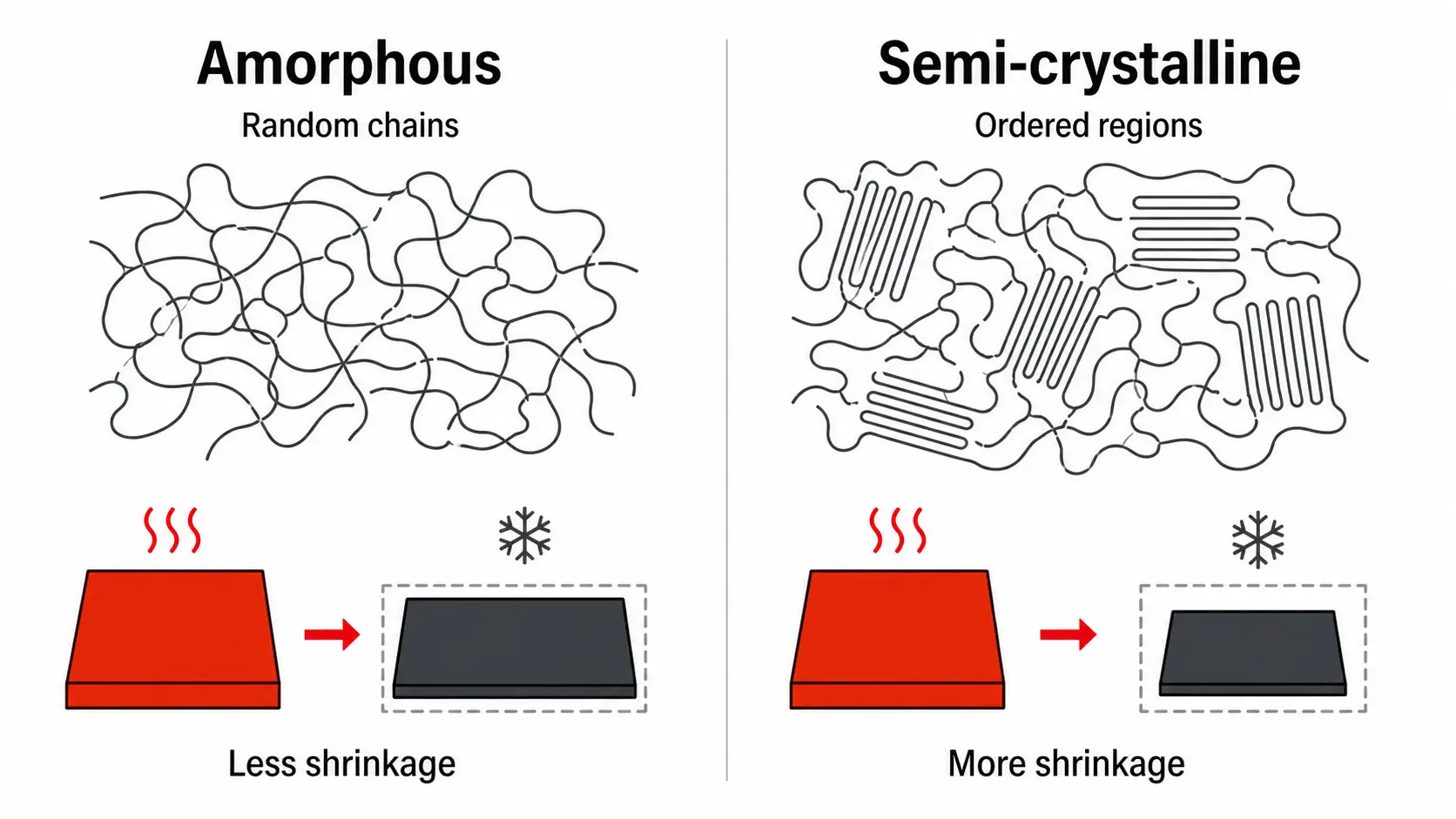
Crystallinity isn't fixed, either. The material’s cooling rate and nucleation both change how much crystal structure forms. So a thick section that cools slowly will shrink differently than a thin one on the same part. That phenomenon is responsible for most warpage on PP and nylon parts. It’s also why uniform wall thickness matters more on semi-crystalline resins than it does on parts made with ABS.
If your part has a tight fit or a tolerance that can’t be modified, amorphous resins are generally a better choice for meeting those parameters. But if your part needs chemical resistance or fatigue life, you'll need to go with semi-crystalline instead.
How Much Do Injection Molded Parts Shrink?
Shrinkage will vary depending on the resin you’re using:
| Resin | Structure | Typical mold shrinkage |
|---|---|---|
| ABS | Amorphous | ~0.4–0.7% |
| PC | Amorphous | ~0.5–0.7% |
| PC/ABS | Amorphous blend | ~0.5–0.7% |
| Nylon (PA6, PA66) | Semi-crystalline | ~0.8–2.0% |
| PP | Semi-crystalline | ~1.5–2.5% |
| TPU / TPE | Elastomer | ~0.8–2.0% |
Glass fill reduces the shrinkage, but only along the flow direction.
These values in this table come from ASTM D955, which measures the difference between cavity and specimen dimensions at 24 hours and again at 48 hours. It uses standard specimens: a 12.7 × 127 mm bar, a 100 mm disk, or a 60 × 60 mm plaque. When the plaque is used, it’s equivalent to ISO 294-4:2018.
The standard specifies that their method gives comparable data on standard specimens and "can not predict absolute values in actual molded parts" with different flow paths, wall thicknesses, and process conditions.
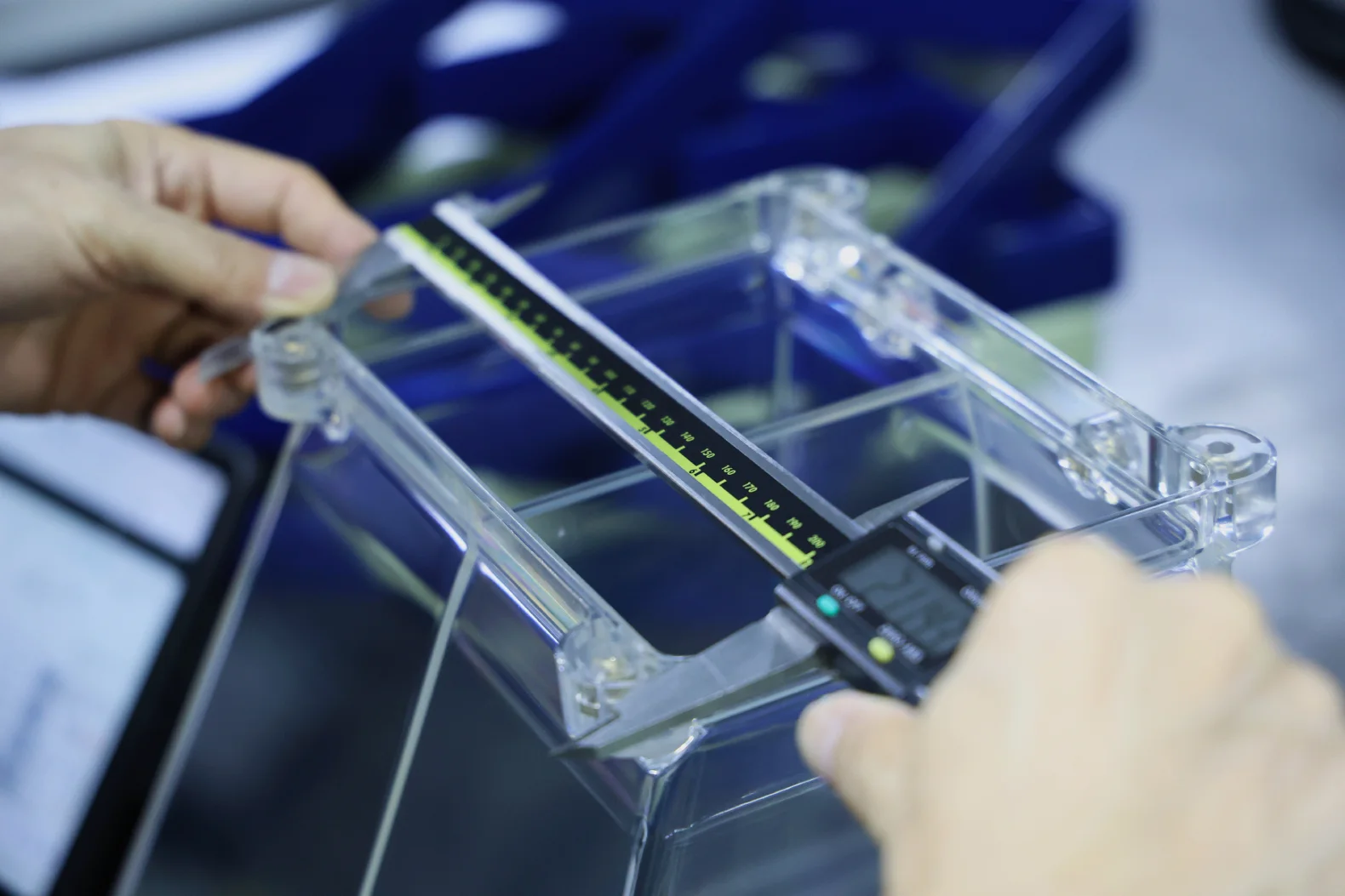
Measuring shrinkage straight off the press can be misleading. Tangram Technology's analysis of shrinkage behavior finds that roughly 90% of shrinkage happens within the first 24 hours. Within a week, the part has experienced 98 to 99% of its total shrinkage. And it could take up to three months before it reaches its total shrinkage. That’s why inspection reports on parts checked at different intervals don’t always correspond.
Fillers and Grades
There is no such thing as ABS.
There are hundreds of ABS grades from a dozen producers. Each will have different flow rates, impact modifiers, heat resistance, and flame ratings. Specifying ABS without calling out a particular grade leaves the supplier to select the material themselves (and they’ll probably choose whichever one molds easiest).
Always specify the grade, producer, color standard, and any regulatory requirement that needs to be met. If you're not sure which grade is best, specify the properties your part needs to meet and the molder will recommend a resin that fits those parameters.
Glass-filled resins have much higher stiffness and strength, and less shrinkage. But they exhibit directional shrink. Instead of shrinking uniformly, the part will shrink less along the flow direction than across it. This increases the risk of warpage.
How Resin Choice Affects Tooling
Glass-filled resins are more abrasive than unfilled resins. This abrasion puts extra wear on the mold and will gradually erode a soft tool (particularly at the gate).
If you’re using filled grades, you’ll need a tool made of harder steel. You’ll also need shorter maintenance intervals. Corrosive resins (like PVC) also wear out molds more quickly, but for different reasons.
The dimensions of the tool’s cavity will be based on the material’s shrinkage values. So once the tool has been made, you usually can’t change the material used for the part without first re-cutting the mold. You might be able to get away with switching between two resins that have similar shrinkage values, but switching from ABS to PP will require you to modify the tool.
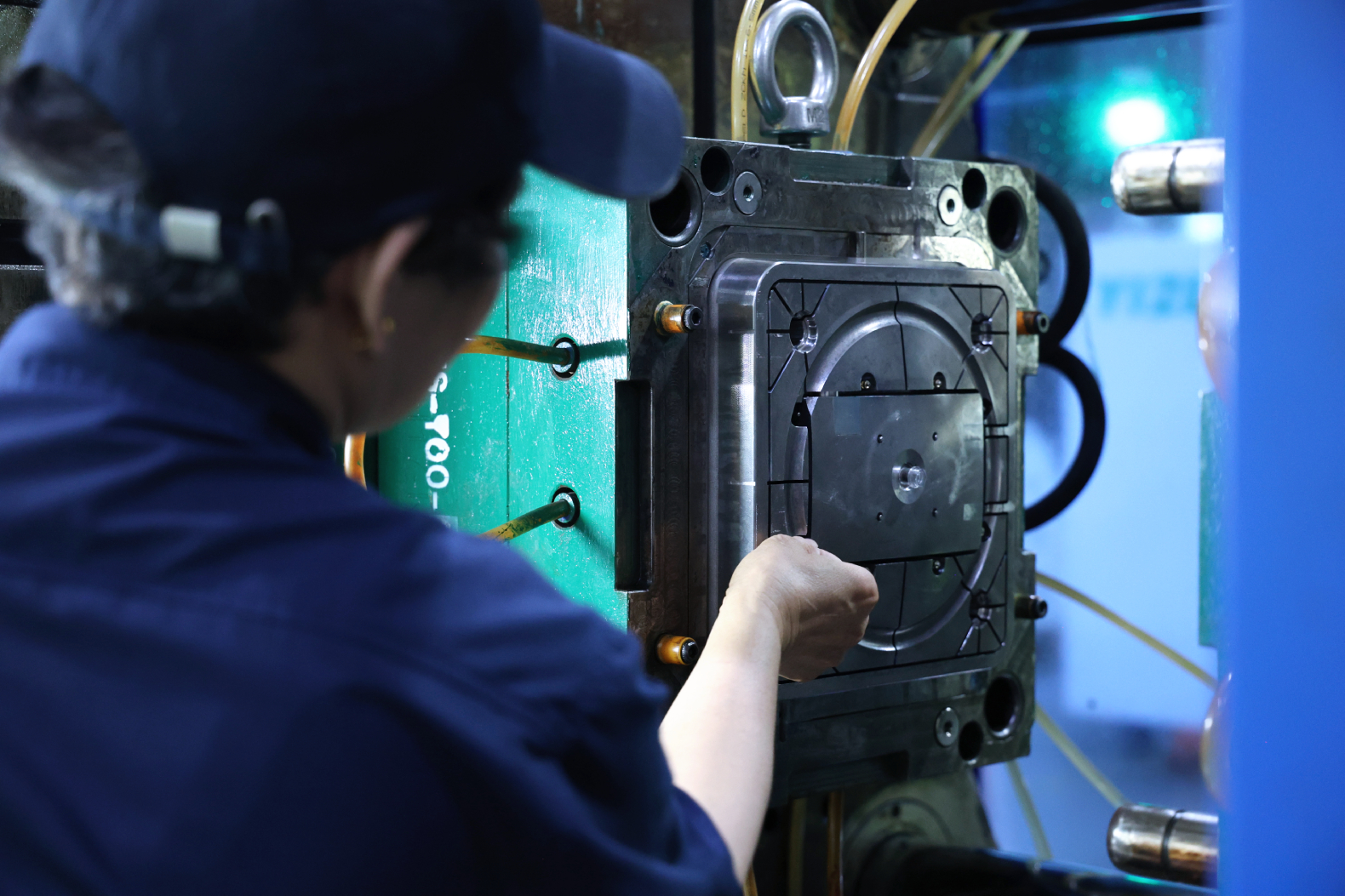
And hygroscopic resins need to be dried if they’re going to perform as expected. PA and PC both absorb moisture from the air, and molding them wet can cause splay and other molding defects. It can also result in hydrolytic degradation, which is easy to miss in a visual inspection but can cause the part to fail once it’s in use.
Drying the resin can help you avoid these problems, but it adds process steps and cycle time.
The Real Cost of Materials
Procurement teams often compare resin quotes based on the price per kilogram. That’s one of the easier ways to do it, but it doesn’t give you a true cost comparison. And there are three reasons for that.
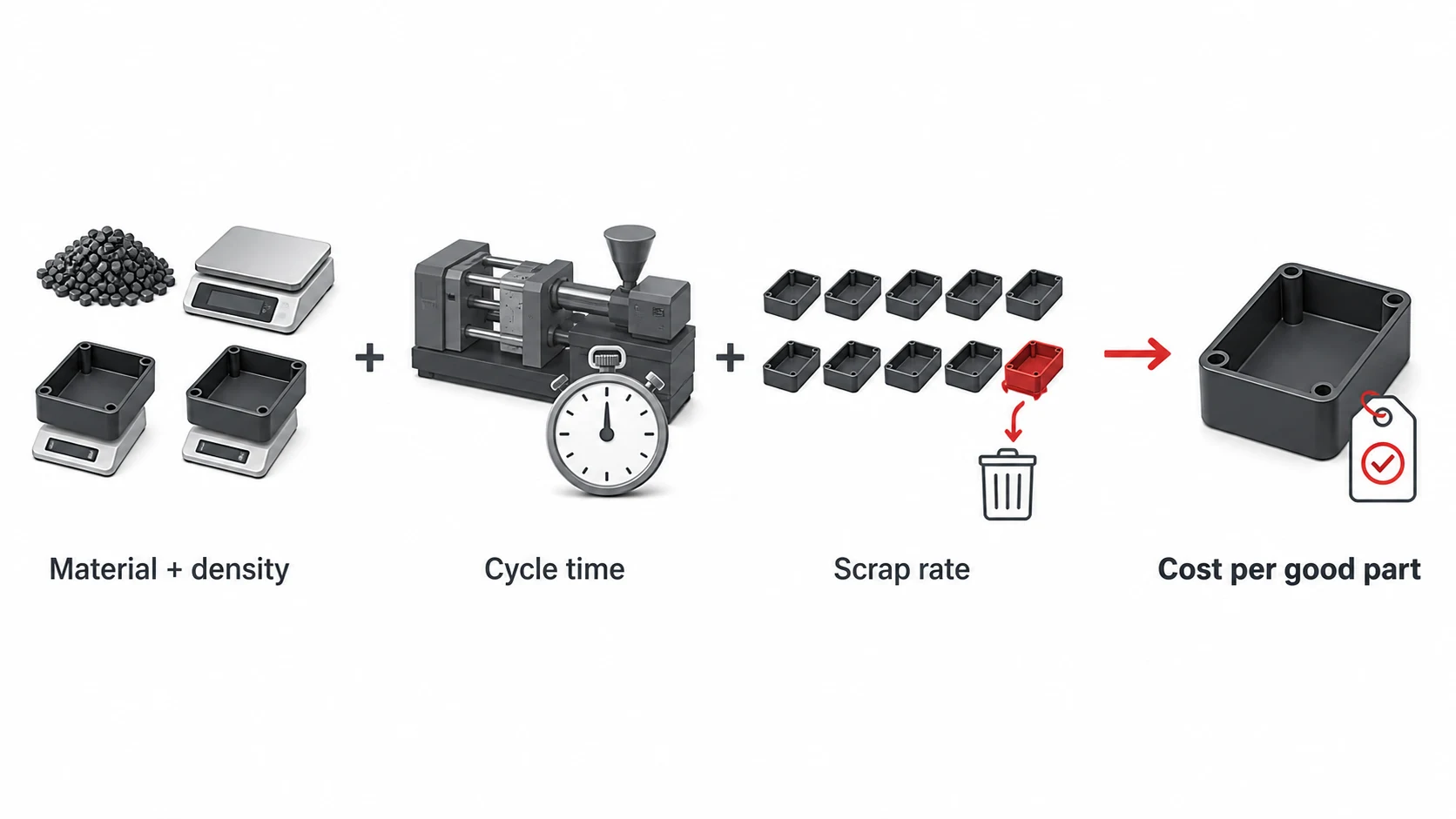
Then there’s the overall cycle time. Semi-crystalline resins need more cooling time to crystallize, for instance. Let’s suppose this adds two extra seconds to a 25-second cycle. That alone will increase your machine cost by 8% for each and every part you produce. On a large-volume run (say, 200,000 units), that added expenses will add up significantly.
Finally, there’s the amount of scrap the material produces. A resin grade that results in 1% scrap will cost you less than a cheaper alternative that produces 5% scrap.
Your molder can also provide the shot weight and estimated cycle time for each of the resins you’re considering. Knowing this will give you a much better idea of how the costs stack up against one another.
Send us your part drawings and target volume and our engineering team will come back with candidate resins, estimated shot weight, and cycle time for each - before you commit to tooling. Request a quote.
Frequently Asked Questions
What is the most commonly used injection molding material?
For general-purpose molded parts, it’s ABS and polypropylene. Enclosures and cosmetic housings are typically made of ABS because of its impact strength, dimensional stability, and finish quality. Containers, living hinges, and parts that need low-cost chemical resistance are usually made of polypropylene.
What is the cheapest plastic for injection molding?
Polypropylene and polyethylene. Both are cheaper by weight and by density (polypropylene has a density of about 0.90 g/cm³, which means fewer kilograms per part). However, both have high shrinkage and low stiffness, which can increase the cost of tooling and design.
Can you change material after the mold is built?
Usually, no. Not unless you’re also modifying the tool. That’s because the tool’s cavity is designed to account for the way a specific resin will shrink. So if you switch to a resin with a different shrink value, the resulting part won’t fall within the right tolerance range. In some cases, you might be able to change to a material in the same resin family (like going from one ABS grade to another) without having to adjust the mold.
What's the difference between amorphous and semi-crystalline plastics?
Amorphous resins have a disordered molecular structure, 0.3–0.7% shrinkage, and hold tighter tolerances. Semi-crystalline resins form ordered regions when cooling, shrink more, and are more likely to warp. This can make semi-crystalline more challenging to use, but it also offers better chemical resistance and fatigue life. So depending on the application, it might still be worth the trouble.
Does glass fiber always reduce shrinkage?
Yes, but mainly in the flow direction. Across the flow direction, the effect is much smaller and the shrinkage will be similar to what it would be with an unfilled grade. Running a flow simulation on filled parts is a good way to make sure you’ve properly accounted for the way the material behaves.
How do I specify a resin on a drawing?
Name the grade, the producer, the color standard (Pantone or RAL), and any regulatory requirements that must be met (like UL 94 V-0 or food contact compliance). If you don’t know which grade to choose, specify the properties you need the material to have and the molder will recommend a resin that has the right features.