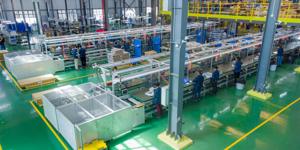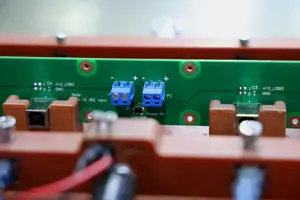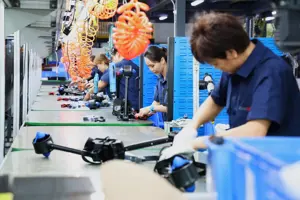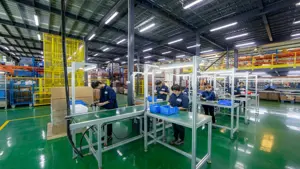
Turnkey manufacturing is a contract manufacturing model in which one supplier takes a product design and delivers the finished product. That supplier handles DFM review, prototyping, material and component sourcing, part production, assembly, testing, quality control, packaging and shipping. The customer manages one supplier, one schedule and one invoice instead of a chain of vendors.
It works best for a mature design that a company wants to buy as a finished, tested product without running its own supply chain. It works less well when the design still changes every week, or when the customer needs to control where most of the components come from. With the manufacturer handling such extensive responsibilities, it's important to make sure you choose the right turnkey manufacturing partner.
Key Takeaways
Turnkey manufacturing is a form of contract manufacturing where one supplier owns the whole chain from design hand-off to delivery, including buying every material and component.
Full turnkey, partial turnkey and consigned manufacturing differ in who buys the materials. That decides who carries the inventory cost and who answers for a defective part.
The main benefit is single-point accountability: one supplier is responsible for quality, schedule and cost.
The main risks are less control, dependency on one provider and quotes that bundle costs you can't see. A detailed RFQ and a written agreement manage all of them.
Turnkey suits designs that are close to frozen and heading into volume production, built by a supplier whose engineering, quality system and supply base can carry the responsibility.
Understanding Turnkey Manufacturing
Also known as end-to-end manufacturing, turnkey manufacturing is a production model in which a company outsources their entire production process to a specialist manufacturer.
Merriam-Webster defines "turnkey" as "built, supplied, or installed complete and ready to operate." The idea is that the end user only has to do something as simple as turning a key. When it's used in a manufacturing context, it implies that a supplier will deliver a product that is ready for immediate use, involving no effort from the ordering business in the production or delivery process.
An example of a turnkey service is a food delivery service. Customers are not involved in ingredient procurement, cooking, or transporting the food to their location. They simply order, and the company delivers the food to their doorstep. This process constitutes a turnkey service, and the idea is the same in product manufacturing. Another example of a turnkey product is a fully furnished house that's for sale. A customer only needs to pay and move in.
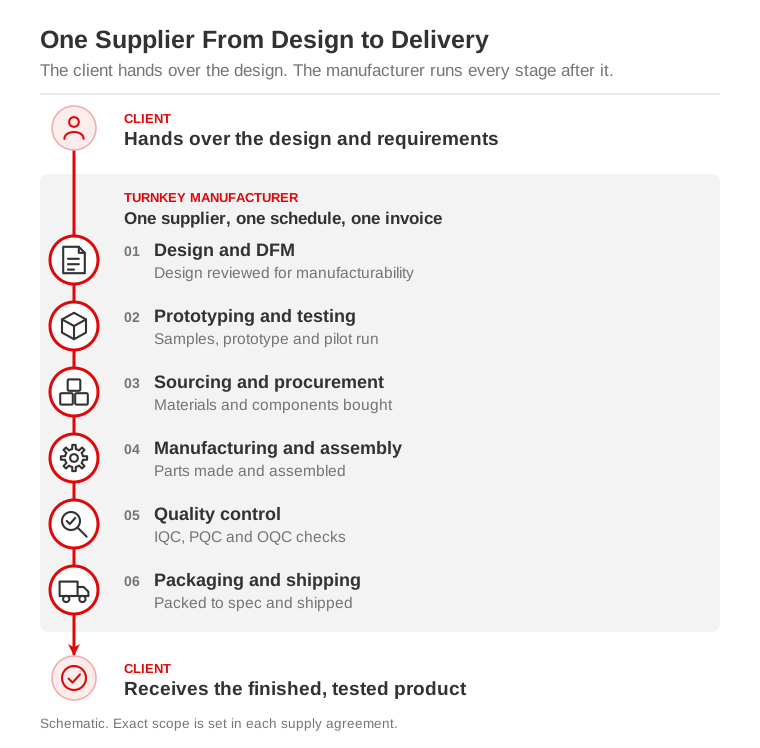
In turnkey manufacturing, the manufacturer is responsible for almost all aspects of the production process. Generally, they start from the handoff of a product design and handle everything from development and commercialization through to material procurement, manufacturing, assembly, testing and final delivery. Typically, the client presents the manufacturer with a mature product or a ready design, and the manufacturer is responsible for making everything happen from there on.
This approach provides businesses with a single point of contact, greatly simplifying communication and keeping the production cycle efficient and hands-off for the customer.
It helps to compare this with the alternatives. In-house manufacturing is an expensive and labor-intensive way for businesses to make products. One popular alternative that businesses have used for a long time is contract manufacturing. This is when separate aspects of sourcing and manufacturing are outsourced to various external contractors. Using the contract manufacturing method is useful, and it's often relatively successful.
However, it can often create a number of complex responsibilities. This is especially true for businesses with global supply and manufacturing networks. Businesses have to handle issues such as design and documentation, supply chain coordination and material procurement if they follow this method. Handling these responsibilities can lead to increased engineering budgets, extended project timelines, quality issues due to miscommunication and various other challenges.
Turnkey manufacturing takes most of that coordination off the customer. While it's still a form of contract manufacturing, turnkey manufacturing goes much further than standard contract manufacturing. It is an approach to production outsourcing that provides a complete end-to-end, hassle-free solution for the customer. With this method, businesses outsource their entire manufacturing process to a single contractor instead of managing the process through several contractors or themselves.
Turnkey manufacturing provides the benefits of contract manufacturing, such as streamlined processes, additional labor and technical resources. However, this is without the complexities associated with managing or overseeing day-to-day operations when using less integrated or capable contract manufacturers.
What is the Turnkey Manufacturing Process?
Turnkey manufacturing processes vary according to the product. They also involve a mix and match of various steps, depending on the level of manufacturer involvement and capabilities, and when that "handover" takes place.
All turnkey projects, however, typically involve the following broadly defined steps:
The turnkey manufacturer will collaborate with their client to finalize the product design, taking into account its utility, specifications, functionality and target market. The client may have a ready-made design of the product, or it may be on the market already. In any case, the manufacturer is responsible for the optimization of design for manufacturability (DFM).
They should focus on reviewing design feasibility, which is whether the product can be made as designed. As well as this, they should also focus on design optimization for lower production cost, better product quality and faster/easier manufacturing and related processes. DFM also involves discussions about material selection, product requirements and testing and other aspects of the product and process definition.
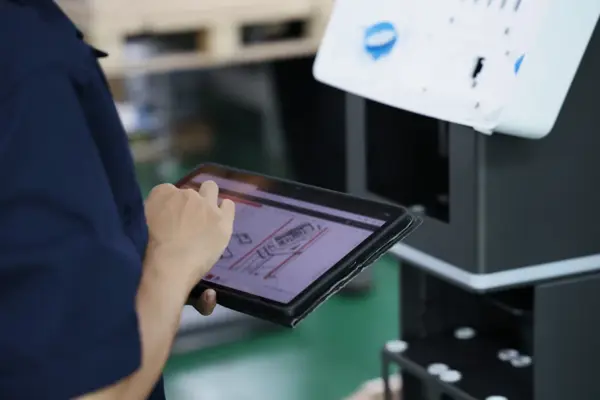
After finalizing the design and obtaining the client's approval, the manufacturer will build prototypes, employing rapid prototyping, custom manufacturing and pilot production techniques. Using the prototypes, designers and developers will validate and test the product, iterate on designs and gather feedback from stakeholders. This is an important stage to complete before moving forward with full-scale production. This iterative process helps identify and resolve issues early on. At this stage, the manufacturer can also confirm that the product conforms to relevant standards.
At Komaspec, this stage follows a set sequence: T0 samples from new tooling, T1 samples for fine-tuning, an engineering prototype, then a pilot run of 20 to 100 units. Field testing follows the pilot run, before mass production starts. Our article on EVT, DVT and PVT explains what each build should prove.
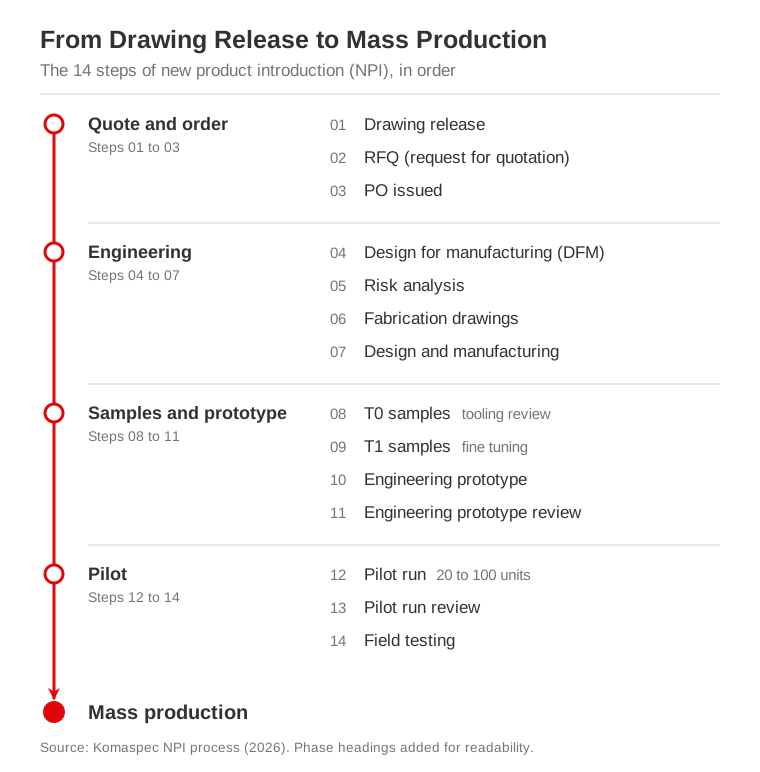
Depending on the product and the customer's requirements, turnkey contract manufacturing may involve new product introduction services, such as product documentation and concept validation.
After the prototypes pass through the testing stage, the manufacturer will source and procure the required raw materials, components or parts from trusted suppliers. They will use their network and expertise to secure quality materials at competitive prices. This saves the customer the complex task of managing the full supply chain, though they may be involved in designating suppliers or consigning parts for crucial components. Who buys which materials is what separates full turnkey from partial turnkey and consigned manufacturing, covered further down.
The actual manufacturing and assembly of the product occurs at the next stage. Depending on the product, the turnkey manufacturer may manufacture it using in-house facilities or order parts from specialized suppliers and assemble it in-house. The latter method is a type of contract assembly.
The customer is not directly involved in either case, and it's up to the manufacturer to make sure that all stakeholders adhere to the customer's timeline and product specifications. This stage involves everything from fabrication and assembly to postprocessing, with the finished product being the outcome. For products that combine electronics, cabling and an enclosure, this stage is often called box build assembly.
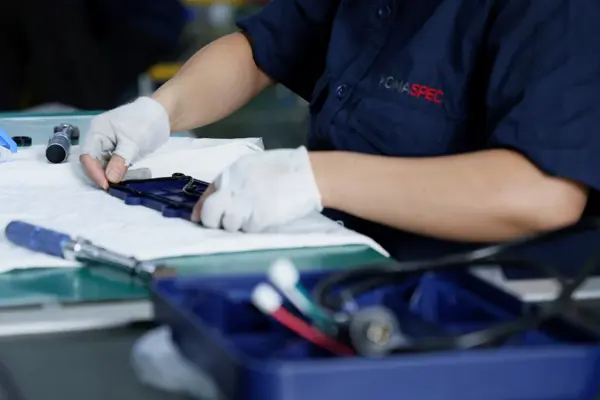
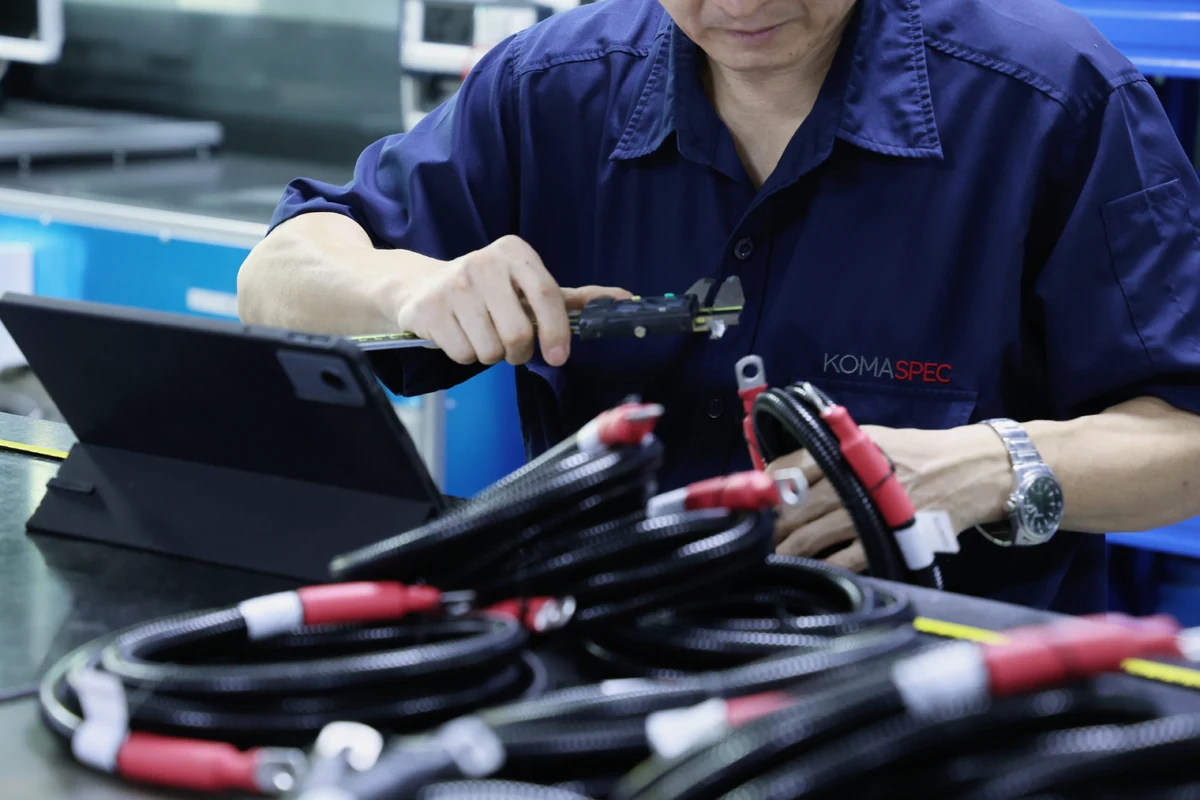
The manufacturer should implement quality control measures at various points during the manufacturing and assembly process based upon known best practices or discussion with the customer. This helps to identify and rectify any defects or issues before products reach the market. Generally, this will involve incoming quality control (IQC), process quality control (PQC), and outgoing quality control (OQC) measures.
Lastly, the turnkey manufacturer packages the finished product according to the client's specifications and manages the logistics of delivering on time to the client or end-users. Depending on the customer's needs, this may involve container shipments, drop shipments via express couriers or even air freight.
Benefits of Turnkey Manufacturing
Turnkey manufacturing is a common model for brands that design and sell products but don't own factories. This widespread popularity is a result of the production model's many inherent benefits.
Some of the main benefits are as follows:
Hassle-free manufacturing
Running a successful business means taking care of a wide range of critical matters. In addition to having a great product, a company needs to handle marketing, sales, customer satisfaction, personnel management and more. Turnkey manufacturing enables businesses to outsource one of the most difficult aspects of their entire operation: manufacturing.
It isn't always essential for a company to be involved in production, as it is with other aspects of business, like customer care or marketing. As well as this, it also frees up time, resources, and staffing to focus on other aspects of the business. With a single point of contact managing the entire process, there is also less chance of miscommunication or coordination issues, reducing the risk of delays or errors.
High-quality products
Where businesses can find a reliable, expert turnkey manufacturing solutions provider, they significantly minimize the possibility of having a weak link in their operations. This is because they will have one reliable expert instead of multiple contractors.
Specialized turnkey manufacturers will typically have dedicated facilities and equipment that support higher product quality. They will have a larger, experienced quality team and supply base. With a larger purchasing volume, they will have good access to quality suppliers and receive better service, pricing and lead times.
One very important advantage for customers of turnkey manufacturers is that there is only one supplier responsible for all production and quality control: the responsible party for any quality issues is clear. When there are multiple suppliers involved, tracking down where an issue originates becomes much more time consuming and complex.
Faster time to market
The turnkey manufacturing model tremendously reduces product development timelines. To begin with, because the entire production process takes place "under one roof," progression between stages is streamlined. The in-house experts in charge of the different stages of production work together from the beginning. This allows for better planning and timely problem identification, and each expert or team also spends less time getting up to speed when it gets to their stage.
For example, if a post-processing expert is involved at the design stage, they can point out any potential issues that may arise in post-processing long before the product gets to that stage. This will significantly increase development speed.
Experts in each stage can quickly consult, make adjustments and exchange feedback with those in the preceding and subsequent stages. Having a turnkey manufacturer also saves businesses the time and stress of supply chain management, delays in transit and the difficulty of organizing logistics protocols.
Reduced production costs
Finding cost savings is an imperative consideration for businesses. With turnkey manufacturing, businesses can save money in numerous ways. The most significant saving is usually the capital expenses related to building and outfitting a factory. The turnkey project model provides businesses with the benefits of having a dedicated manufacturing facility without the cost or risks involved.
Not running a factory allows businesses to scale up and down according to market demand flexibly and quickly. There are no direct personnel costs or upkeep.
Reduced management costs: Turnkey manufacturing can help reduce costs by allowing for a single point of contact, a single supplier who is handling inventory, ordering, and all aspects, reducing the cost of project management, supplier management, cost of quality and other aspects by shifting these responsibilities to the manufacturer.
Limitations of Turnkey Manufacturing
While turnkey manufacturing offers numerous advantages, it also comes with certain limitations and challenges. Businesses should be aware of these before opting for the turnkey approach.
Here are some downsides to turnkey manufacturing:
Lack of control: When companies choose the turnkey project model, they relinquish control of the entire production process to the manufacturer. They may end up with limited oversight over the manufacturing process, making it difficult to intervene if issues arise or changes are needed. Another risk is the risk of compromising product quality if the turnkey manufacturer does not adhere to the desired QC standards.
Requires a clear definition of requirements: Because businesses lack control over production when they use a turnkey manufacturer, it's necessary to be very clear about what is required at the outset. Businesses need to state exactly what they need from their manufacturer, so there is no ambiguity down the road. This includes a clear definition of product and manufacturing requirements as well as the manufacturer's additional responsibilities. Defining requirements can be complicated and time-consuming.
Dependency on the turnkey provider: Companies may become heavily reliant on the turnkey manufacturer for their production needs. This dependence can be a concern if the provider faces unexpected financial difficulties or operational issues in the future. Where issues arise unexpectedly, this can lead to disruptions in the supply chain and a lack of inventory.
Cost and price transparency: Though turnkey manufacturing can lead to cost savings and often comes with a more transparent pricing structure than contract manufacturing, this isn't always the case. A manufacturer may present the customer with a quote that is padded, bloated, or lacking in detail. Where pricing issues arise, they may cause losses for the customer.
| Benefits | Benefits Description | Limitations | Limitations Description |
|---|---|---|---|
| Hassle-Free Manufacturing | Outsources manufacturing, freeing up resources for other critical business operations. Reduces miscommunication and coordination issues. | Lack of Control | Companies relinquish control to the manufacturer, risking limited oversight and difficulty in making changes. |
| High-Quality Products | One reliable expert supports higher product quality through dedicated facilities, experienced teams, and a clear responsibility for quality control. | Clear Definition of Requirements Needed | Businesses must clearly define all product and manufacturing requirements upfront, which can be complex. |
| Faster Time to Market | Streamlines progression between production stages under one roof, leading to better planning, problem identification, and faster development. | Dependency on Turnkey Provider | Businesses may become too dependent on the turnkey manufacturer, risking disruptions if the provider encounters issues. |
| Reduced Production Costs | Saves on capital expenses for factory setup and operations, reducing direct personnel costs and management overhead. | Cost and Price Transparency Issues | Quotes from manufacturers may lack detail, leading to potential hidden costs or pricing issues. |
Table 1: Comparative Overview of Turnkey Manufacturing: Benefits and Limitations
Full Turnkey vs. Partial Turnkey vs. Consigned Manufacturing
"Turnkey" describes who buys the materials as much as who builds the product. Three arrangements are common, and all three can run the same production steps. What moves is the ownership boundary.
| Model | Who buys materials and components | Who carries the inventory cost | Who answers for a defective part | Best fit |
|---|---|---|---|---|
| Full turnkey | The supplier buys every BOM line | The supplier, recovered in the unit price | The supplier | Mature designs; companies without a procurement team |
| Partial turnkey | The customer supplies named items, such as a proprietary motor, a pre-programmed controller or branded packaging; the supplier buys the rest | Split by line | Split by line | A customer with a better price or a locked source on a few lines |
| Consigned (kitted) | The customer buys and delivers all materials; the supplier provides labor, process and assembly | The customer, upfront | The supplier for workmanship; the customer for the materials | Companies with an established procurement team and existing stock |
Table 2: Who owns what under full turnkey, partial turnkey and consigned manufacturing
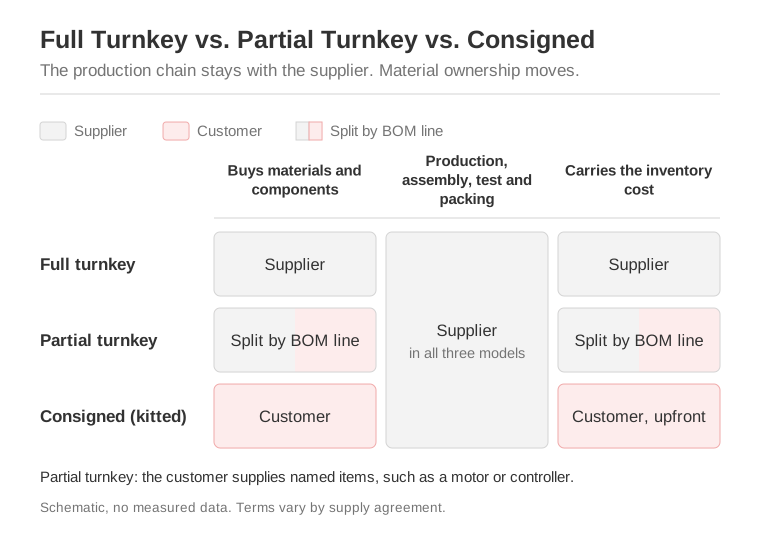
For most product programs, go full turnkey. Consign only the few lines where you have a real reason to hold them.
Under consignment, a failed part turns into a dispute over whether the part or the workmanship caused it. Consignment also leaves attrition with you. In electronics assembly, Cofactr puts typical overage at about 10% above BOM quantities, so a kit packed to exact quantities runs out before the order is finished. Small fasteners, labels and packaging on a mechanical build follow the same logic. Our article on what turnkey PCB assembly includes covers the same three models at board level.
Toll manufacturing sits at the far end of consignment. As accounting firm GHJ describes it, the customer keeps ownership of the raw materials and components, and the manufacturer performs specific production stages.
When Does Turnkey Manufacturing Make Sense?
Full turnkey is the right default when most of these are true:
The design is frozen or close to it, with drawings and a bill of materials a supplier can quote from. (Our guide to EBOM vs MBOM shows what that hand-off should contain.)
The product combines several processes, for example sheet metal, plastic injection molding, cabling, electronics and final assembly. Coordinating five suppliers for that takes more of your team's time than coordinating one.
You don't have a procurement or supplier quality team and don't plan to build one.
Demand is steady enough for the supplier to plan material purchases: a pilot run, then repeat production orders.
Keep more control when the design still changes week to week. Every engineering change after materials are committed costs money, and under full turnkey the supplier has already bought them. If a handful of components are strategic, like a licensed module or a custom motor, consign those lines and let the supplier buy everything else. If a regulator or your own customer requires specific sources, name them on an approved vendor list rather than taking the whole supply chain back.
For most hardware companies the practical decision is which few lines to keep, if any.
What to Put in a Turnkey Manufacturing RFQ
Most of the limitations above (loss of control, dependency, opaque pricing) trace back to something nobody wrote down at the RFQ stage. Ask every supplier to price each of these, or decline it in writing:
Then write the answers into the contract manufacturing agreement. A supplier that answers all nine clearly will be easier to work with than one that offers the lowest unit price and vague answers.
Choosing the Right Manufacturer is Crucial
When you look at the limitations of turnkey contract manufacturing, it is clear that many of the risks associated with the approach stem from the possibility of the manufacturer being incompetent. Similarly, where this approach brings benefits, it will come from employing a proficient, experienced manufacturer.
Brands and other businesses need a turnkey manufacturer that can be trusted to exercise control and good judgement for the various stages of production. An experienced turnkey manufacturer will usually handle these things better than the company can themselves and will reliably provide high quality products at competitive prices. They will also be able to respond quickly to changing market conditions, enabling a business to capitalize on new opportunities.
An incompetent manufacturer will be a liability and could produce sub-standard products or fail to keep up with demand. The manufacturer also needs to be trusted over costs and prices, and they need to be reliable over the course of a long-term business partnership.
Before you commit, ask to see how the supplier's quality system works in practice: a sample build report, inspection records and how it handled a recent nonconformance. Ask which products like yours its engineers have taken from samples to mass production.
Selecting the right manufacturer is, therefore, critical to the success of your turnkey project.
Frequently Asked Questions
What does turnkey manufacturing mean?
Turnkey manufacturing means one supplier takes your product design and delivers a finished, tested product. The supplier handles DFM, prototyping, buying materials and components, part production, assembly, quality control, packaging and shipping. You approve samples and specifications, but you don't manage individual suppliers, purchase orders or logistics along the way.
What is the difference between turnkey and contract manufacturing?
Turnkey manufacturing is a type of contract manufacturing. In standard contract manufacturing, the customer may supply materials, manage several suppliers or outsource only one stage, such as machining or assembly. In turnkey manufacturing, one supplier owns the whole chain from design hand-off to delivery, including sourcing, and is accountable for the finished product.
What is an example of a turnkey manufacturing project?
A brand designs a hitch-mounted bike rack with an integrated lighting system and sends drawings and a BOM to a turnkey manufacturer. The supplier reviews the design, builds samples, buys the tube, sheet metal, plastic parts, cables and electronics, then fabricates, assembles, tests and packs the racks and ships finished units.
What are the disadvantages of turnkey manufacturing?
The main disadvantages are less direct control over production, dependency on a single supplier and less visibility into how the price is built. Each can be managed: define requirements and acceptance criteria up front, ask for itemized quotes with NRE and tooling listed separately, and choose a supplier with a documented quality system.
What is the difference between turnkey and consigned manufacturing?
The difference is who buys the materials. In turnkey manufacturing, the supplier buys every material and component and is responsible if one is defective. In consigned manufacturing, the customer buys and delivers the materials, and the supplier provides labor and process. Partial turnkey sits between them, with the customer supplying only selected items.
Who owns the tooling in turnkey manufacturing?
Whoever the agreement names. Molds, dies and fixtures are usually quoted as separate one-time charges, and customers who pay for them generally expect to own them. That only holds if it's in writing, so set out ownership, maintenance responsibility and the right to move tooling to another supplier before approving the tooling order.
About Komaspec
Komaspec is a turnkey manufacturing solutions provider for mechanical and electromechanical products. Founded in 2005, we have grown to more than 350 people across six facilities in Guangzhou (China), Hai Phong (Vietnam) and Ciudad Juárez (Mexico), with an engineering team of more than 40 engineers and project managers.
With extensive complex mechanical and electromechanical product assembly experience, capabilities that span sheet metal fabrication, injection molding, welding, CNC machining, stamping and assembly, and a full-service team of engineers and project professionals, we offer turnkey services for small and medium-sized enterprises in a variety of sectors, including: mining, IoT, agritech, hard consumer goods, recreational vehicles, fitness equipment and others.
Contact us and one of our experienced sales engineers will reach out on how we can help you with your next project. Request a quote with your drawings and BOM to start with a free DFM review.