
How to Find an Electronics Contract Manufacturer in 2026 — Step-by-Step Guide
- Key Takeaways
- Manufacturing Needs
- Selecting an Electronics Contract Manufacturer
- Evaluating Electronics Manufacturers
- 7 Common Mistakes to Avoid
- Find an Electronics Contract Manufacturer
- FAQs
Choosing an electronics contract manufacturer stands as one of the most consequential decisions in your entire product development cycle. The partner you select dictates your hardware success because they control everything from unit cost and first-pass yield to regulatory compliance and the final out-of-box experience.
This is a detailed guide for engineers, product designers, supply chain managers, and business leaders that need to find an electronics contract manufacturer. Below you will see the most important factors to evaluate before choosing.
If you'd rather skip the search and go straight to a vetted partner, Komaspec offers contract manufacturing services, from DFM review to final assembly and testing. Request a quote to get started.
Key Takeaways
- Strong partners deliver more than labor. Upfront DFM and DFT analysis, supply chain stability, and testing infrastructure pushes first-pass yields above 98 percent.
- Industry certifications prove baseline regulatory competence. They never replace mandatory on-site factory audits.
- Geography dictates your total landed cost and logistics strategy. China provides massive scale while nearshoring guarantees strict production oversight.
- Actual equipment capabilities outrank polished marketing claims. Verify specific machinery limits and demand direct customer references.
- Cheap initial quotes create expensive downstream failures. You must evaluate total cost of ownership instead of base unit price.
Table of Contents
- Key Takeaways
- Understanding Your Electronics Manufacturing Needs
- Step-by-Step Guide to Selecting an Electronics Contract Manufacturer
- 7 Major Criteria for Evaluating Electronics Manufacturers
- 7 Common Mistakes to Avoid When Choosing an Electronics Manufacturer
- Ready to Find an Electronics Contract Manufacturer?
- FAQs
Understanding Your Electronics Manufacturing Needs
You must develop a precise picture of your exact build requirements before approaching any electronics manufacturing company.
Companies that want to find an electronics contract manufacturer successfully usually start by documenting these requirements in detail:
- Product complexity
- Total production volume
- Strict technical requirements
- Available timeline and budget
These shape exactly which factories are suited to execute your program successfully.

Product Complexity
Simple printed circuit board assemblies typically involve standard surface mount placement and basic through-hole soldering followed by standard functional testing. Box builds increase this complexity by adding custom mechanical components. The same goes for products that require integration of multiple processes (e.g. a sheet metal enclosure, a precision CNC machined heatsink, and an injection-molded front bezel).
Complex products benefit heavily from vertically integrated contract manufacturers that handle these diverse processes under one roof. Since everything is done in-house, the transition from one stage to the next is faster. Management also becomes simpler, as communication is centralized through a single point of contact.
Production Volume
Factories specialize in highly specific production scales because their equipment and labor models target distinct operational volumes. That's why production volume is one of the first criteria to evaluate when you find an electronics contract manufacturer.
- Prototyping and initial product introductions (10 to 100 units) require highly agile setups. Smaller onshore manufacturing companies handle these low-volume specialized builds effectively by allowing your engineers to debug the assembly process directly before scaling offshore.
- Low-to-mid volume (500 to 10,000 units) can be covered by a number of mid-tier electronics manufacturing service providers both on- and off-shore. IP sensitivity, industry regulations, budget and timeline dictate the best choice.
- High volume production (100,000+ units) demand massive infrastructure and tight process control. Automated optical inspection, robotic inventory management, automated functional testing, and rigorous statistical process controls become absolutely critical to maintain throughput at this massive scale.
Technical Requirements
Before trying to find an electronics manufacturer, document every technical aspect of your product.
This package requires:
- A detailed Bill of Materials (BOM)
- Compliance standards, such as CE and FCC, UL safety certifications, RoHS directives, etc.
- Detail your testing expectations, i.e. automated optical inspection for mounted components, in-circuit testing,.
- Clarify your component sourcing model by stating whether the factory will procure all parts in a turnkey arrangement or if you will consign stock to their facility.
Timeline
These are some of the considerations you should make while looking for an electronics contract manufacturer:
- Standard circuit board assembly cycles require 4 to 8 weeks when components flow through normal distribution channels.
- Sourcing active components from open market brokers compresses that window significantly at a massive cost premium.
- Stocking long-lead-time components in your own warehouse reduces production delays while introducing significant inventory holding risks to your balance sheet.
- Custom mechanical tooling adds massive time constraints to your product launch schedule. Steel injection molds for plastic housings add 6 to 10 weeks to the critical path depending on part complexity. First-piece plastic samples can take roughly 45 days to materialize.
- For some products you must budget several additional weeks for tool texturing, mechanical tolerance adjustments, drop testing, and initial assembly fit checks.
Budget
The quoted unit price represents only a fraction of your actual financial commitment to the manufacturing program. Non-recurring engineering charges, custom steel tooling, custom testing fixtures, and regulatory certification testing inflate your total budget immediately.
Setup costs for early prototyping get amortized across small production batches, forcing low-volume production to carry higher unit costs.
Complex assemblies require dedicated testing hardware that demands significant upfront capital. Basic bed-of-nails test fixtures cost a few hundred dollars to validate simple circuit boards. Full-spectrum automated functional testers reach many thousands of dollars because they require custom hardware development, precision machining, specialized data acquisition boards, and custom firmware programming.
Regulatory certification adds further massive expenses that can derail underfunded programs, especially for Wi-Fi and Bluetooth enabled devices. You must plan for these compliance line items from day one because you cannot legally sell products into major global markets without these certificates.
Step-by-Step Guide to Selecting an Electronics Contract Manufacturer

Experienced hardware companies take a systematic approach to find electronics contract manufacturers to better evaluate them and to eliminate emotional decision-making. These are the main steps to do so.
Step 1: Initial Research and Longlisting
The first step to find an electronics contract manufacturer is building a broad longlist of companies.
You can build yours by:
- Searching on online directories
- Attending major trade shows (like Electronica in Munich or Canton Fair in Guangzhou)
- Asking for referral from industry peers
Build a comprehensive list and assume half will fail your quality criteria.
Collect baseline operational data on every candidate immediately. Note their total facility square footage, list their specific service offerings, verify their exact quality certifications, and estimate their annual revenue.
Consider their target audience as well. If you are an agile startup, it makes no sense to choose a supplier that caters to Fortune 500 volume.
Step 2: RFQ and Shortlisting
Prepare a comprehensive Request for Quote package. A detailed RFQ makes it easier to find an electronics contract manufacturer that can accurately assess your project.
Provide all the information the manufacturer needs to give you an accurate quote, such as BOM details, volume forecast, regulatory compliance requirements, testing scope, mechanical drawings, and testing needs.
Send this complete package to your entire longlist and evaluate their responses based on technical clarity rather than just looking at the bottom-line price.
Expect roughly 60 percent of factories to reply within one week. Only a fraction of those respondents will invest the engineering time to provide a fully itemized quote. Use these responses to narrow your list.
Step 3: Deep Dive and Due Diligence
Due diligence is where most companies either validate or disqualify candidates when they find an electronics contract manufacturer.
Start interviewing the shortlisted candidates. Ask hard questions about how they would manufacture your specific design and request suggestions for cost reduction.
Any reluctance to share customer references acts as a massive red flag. Credible manufacturers happily offer multiple client contacts to prove their reliability. Call those clients immediately to verify if factory schedules match reality, discover how they handle quality escapes, and learn how they manage sudden component shortages.
According to a PwC analysis, a single 12-month delay can cost an OEM up to $200 million and cost a supplier $15 million.
Step 4: On-Site Audits and Final Selection
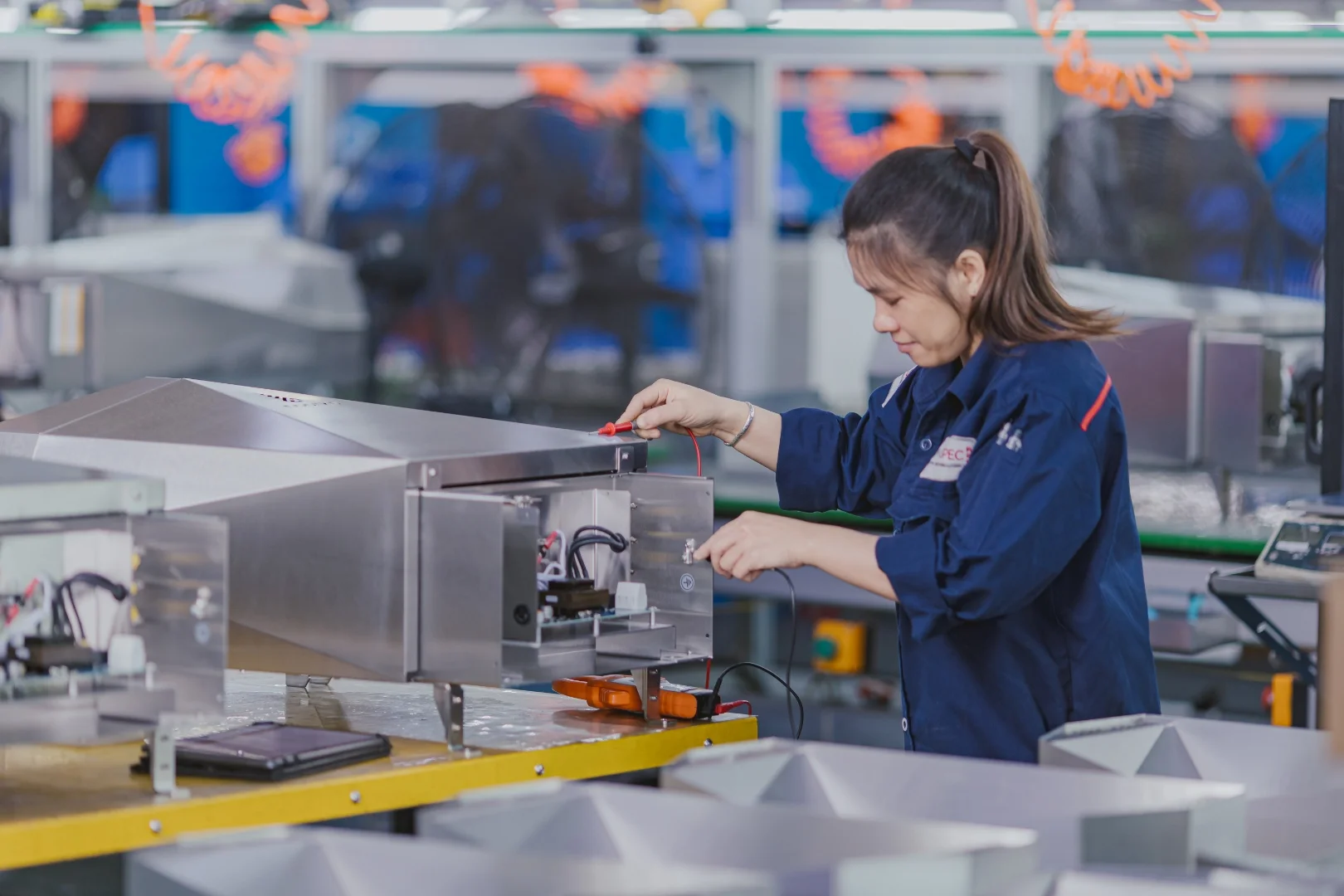
Before signing any contract, conduct an on-site inspection of the factory. This is one of the most important validation steps after you find an electronics contract manufacturer.
If you are unable to do so, hire a third-party service (they typically charge $300–$500 per day in Asia).
Look for specific details on the factory floor that indicate strong management. Check for clear floor markings, look for physical red bins indicating non-conforming material, watch the operators performing quality-control checkpoints, inspect the calibration stickers on testing equipment, and gauge overall worker morale.
Document your exact findings against your core criteria immediately after the visit. Score their quality systems, rate their true scale, evaluate their communication speed, and assess their apparent financial stability.
If auditing factories yourself feels like too much, Komaspec already runs facilities you're looking for. Contact us more information or request a quote to see our capabilities firsthand.
7 Major Criteria for Evaluating Electronics Manufacturers
The most difficult part of finding an electronics contract manufacturer is separating polished marketing promises from their actual verified capabilities.
The seven factors you should always evaluate are:
- Quality control procedures
- Experience and expertise
- Technical capability
- Staff qualification
- Financial stability
- Location and supply chain reach
- Communication and project management
Quality and Certifications
Robust quality management systems form the absolute bedrock of consistent factory output over long production lifecycles. Any company looking to find an electronics contract manufacturer should evaluate quality systems early in the selection process.
Important certifications include, for instance:
- ISO 9001 for general quality systems
- AS9100 for aerospace applications
- IATF 16949 for the automotive industry
- ISO 13485 for medical devices
Confirm the factory executes a strict layered inspection approach daily rather than just passing annual audits. They must check incoming components meticulously by verifying part numbers against your approved vendor list and validating material compliance. Their line supervisors must run continuous process control checks using solder paste inspection machines, automated optical inspection cameras, and X-ray analysis.
Top-tier manufacturing providers achieve first-pass yields exceeding 98 percent on pure surface mount boards through relentless process optimization.
Experience and Expertise
Market experience dictates compliance knowledge and operational reality. Manufacturers already shipping into your target market know the actual regulatory requirements from painful experience rather than theoretical interpretations.
- For consumer electronics, look for evidence of high volume production (over 100,000 units annually)
- For regulated industries, like aerospace, automotive, and medical), require documented proof of compliance audits.
- For complex board types (rigi-flex or high layer boards), verify production history.
As a general rule, ask for detailed case studies highlighting problems they solved during previous product launches, request direct customer references from clients building products similar to yours in complexity, and demand blinded sample inspection reports to verify the depth of their quality control documentation.
Experienced manufacturing partners keep these documents readily available to prove their competence.
Technical Capabilities
Process capabilities vary drastically between vendors regardless of their marketing materials. Technical capability is often the deciding factor when you find an electronics contract manufacturer especially for complex products.
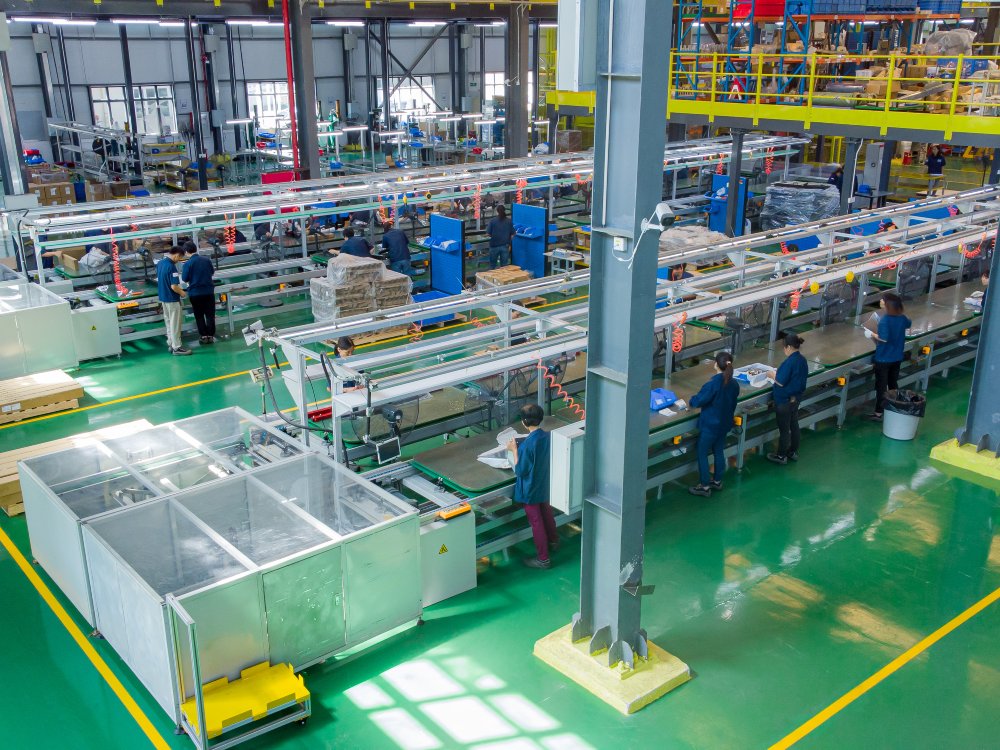
Some factories only run automated pick-and-place machines for bare circuit boards. Other facilities handle comprehensive box builds by molding the plastics, stamping the sheet metal, integrating the internal cable routing, and sealing the final retail packaging.
Clarify their exact in-house EMS capabilities upfront while identifying exactly which fabrication processes they outsource to local suppliers.
Verify their specific printed circuit board fabrication limits before submitting complex designs. Ask about maximum layer counts, confirm their capability to produce micro-vias, and check their flexible circuit manufacturing tolerances.
Equipment age heavily dictates surface mount placement quality. Modern connected designs require microscopic components that older machinery simply cannot place accurately. Lines must handle 01005 component placement reliably to support modern wearable devices and compact IoT sensors.
Choose a focused circuit board assembly shop when your product lacks any mechanical complexity. You need a broader partner when your product combines multiple manufacturing disciplines that require complex electromechanical integration.
Post-production testing reveals the truth about the entire assembly process. Functional testing proves the assembled product meets your exact design specifications under simulated use cases.
In-house testing capabilities give you faster engineering feedback loops during the prototype phase. Performing all validation under one roof also provides cleaner accountability when failures occur on the line, preventing frustrating finger-pointing between the assembly house and a third-party testing laboratory.
Workforce and Staff Qualifications
The human operators matter just as much as expensive robotics on a modern factory floor.
Soldering microscopic components requires intense focus, reading complex technical drawings demands high literacy, operating testing fixtures requires specific training, and catching subtle assembly defects requires deep hands-on experience.
Their engineers must know how to design effective test fixtures while demonstrating the ability to identify root cause failures quickly.
Financial Stability
Financial health represents a critical operational concern that directly impacts your supply chain security.
Suppliers operating under severe financial pressure can make dangerous decisions that compromise your product. They cut corners on raw material quality, delay critical equipment maintenance, reduce engineering headcount, and struggle to purchase components at your required volumes due to poor credit terms.
Severe financial instability might lead to sudden mid-program shutdowns that leave your company stranded without a production partner during critical launch windows.
- Request available financial data to validate their long-term operational stability.
- Ask for supplier references that confirm they pay their component distributors on time.
- Check their recent capital expenditure history because a factory neglecting line upgrades signals shrinking margins and poor management priorities.
- Probe their ability to absorb sudden demand fluctuations or unexpected component price increases.
- Manufacturers surviving recent market downturns or global supply chain shocks demonstrate actual resilience that undercapitalized new suppliers cannot match.

Location and Supply Chain Reach
Geography is one of the most underrated decisions when you find an electronics contract manufacturer.
Different locations offer different characteristics. Tariff exposure, logistics costs, lead time for sourcing raw materials, and the availability of a skilled workforce—all of these factors are influenced by where your electronics manufacturer is located.
China produces over 40% of global electronics exports, led by manufacturing clusters in Shenzhen and Suzhou. Passive and low-cost active components are also manufactured there, which translates into shorter lead times and better prices.
Vietnam has doubled its electronics exports recently by drawing massive investments from global technology brands. Growing numbers of contract manufacturers operate near major ports to support this expansion. The Vietnamese local ecosystem of bare board fabricators and custom tooling shops remains less developed than China, but accessing the massive Chinese supply chain across the northern border remains relatively straightforward for most components.
Asia-Pacific countries operate at a slightly smaller scale than the massive Chinese hubs.
- Taiwan boasts incredible electronics capabilities focused heavily on semiconductors and high-end computing.
- The Philippines hosts numerous specialized assembly plants.
- Malaysia carries significant semiconductor testing capabilities.
- Thailand provides strong automotive electronics manufacturing.
North America and Europe offer distinct advantages for complex, highly regulated products. They provide extremely short shipping transit times, eliminate complex time zone barriers, simplify intellectual property protection, and host massive concentrations of aerospace and medical device expertise. But unit production costs run significantly higher in these regions.
Mexico and Eastern Europe provide exceptions to this rule by offering highly competitive labor rates near major consumer markets, though their raw component ecosystem depth remains thinner than Asia.
Choose local manufacturing when you need rapid engineering iteration during the initial design phase. Nearshore options allow some balance between labor costs. Move to Asia for better production scale, deep component ecosystems, and maximum cost reduction.
Communication and Project Management
Technical capability alone cannot save a poorly managed program plagued by vendor silence.
Elite manufacturing companies assign dedicated technical project managers to act as your single point of contact. They provide highly structured weekly progress updates, deploy ERP-linked customer dashboards, share raw quality data openly, and provide real-time transparency into material shortages.
Responsiveness indicates exactly how a partner operates under extreme pressure. Communication delays destroy hardware schedules and cause massive project overruns at global brands.
7 Common Mistakes to Avoid When Choosing an Electronics Manufacturer
Companies fall into predictable traps during factory selection regardless of their industry experience. These specific errors reliably cause massive delays and generate crippling unplanned costs.
These are the traps companies fall into most often when trying to find an electronics contract manufacturer.
1. Focusing on the Lowest Price
Factories quoting far below the competition look highly attractive initially. But the price gap always evaporates during actual production, because you often will pay the difference through massive rework bills and hidden tooling fees.
Evaluate your total cost of ownership instead. Calculate the real financial impact of shipping logistics and expected defect rates, and factor in your exact tariff exposure alongside the daily cost of communication friction.
2. Poor Due Diligence
Skipping physical audits leaves you completely blind to operational reality. Bypassing customer reference checks forces reliance on biased marketing claims.
On-site audits verify actual process discipline, expose aging equipment, reveal true factory capacity, and validate their actual track record in your specific industry.
3. Poor Communication Channels
Supplier miscommunication destroys product launch schedules routinely.
Implement structured weekly video check-ins, deploy shared project management dashboards, require regular photographic updates of tooling progress, and demand immediate notification of any component shortages.
4. Ignoring Cultural and Geographic Nuances
Chinese New Year completely shuts down Asian factories for several weeks. Vietnam observes Tet during the exact same period. Missing these massive logistical windows pushes projects back by months while port congestion spikes globally.
Asian corporate decision hierarchies also differ vastly from Western structures, meaning middle managers often lack authority to adjust pricing or approve schedule changes. Misreading these cultural norms stalls critical negotiations and creates immense friction.
5. Weak IP Protection
You must use specialized NNN agreements (non-disclosure, non-use, and non-circumvention terms). These contracts must be strictly enforceable in the supplier's local jurisdiction and written in the local language to hold weight in local courts.
6. Choosing Location Based on Labor Cost Alone
Lower hourly labor rates do not magically reduce your total landed cost. Moving complex production to an emerging region saves money on final assembly labor while simultaneously stretching your lead times on multi-process products.
Weak supply chain visibility amplifies your sourcing risks, increases your schedule vulnerability, forces you to air-freight components across borders, and often eats the labor savings entirely through logistics friction.
7. Relying on a Single Manufacturer
Single-source manufacturing feels incredibly simple to manage initially because you only track one vendor relationship. This simplicity can create a massive risk to your business.
A sudden factory fire, a vendor financial crisis, geopolitical disruptions, severe customs holds, or localized quality incidents can halt your global supply overnight.
Diversify your supply chain intentionally by qualifying a second location for your core products before you actually need them. Many companies opt to keep China as a primary high-volume supplier while qualifying a second locale in Vietnam or Mexico.
Ready to Find an Electronics Contract Manufacturer?
The global electronics manufacturing market continues growing at a staggering pace. Companies who manage to find electronics contract manufacturers that lock in capability, establish strong communication channels, and secure production capacity, are better positioned to scale new products.
Get this decision right and your factory transforms into a massive strategic asset, with the manufacturer operating as an extension of your internal engineering team by catching design errors early and optimizing production flows continuously.
Komaspec operates highly advanced manufacturing facilities where we cover the entire production spectrum by executing deep Design for Manufacturability reviews, building rapid functional prototypes, managing complex box-build assemblies, testing finished goods rigorously, and handling global logistics.
Request a detailed quote to baseline your next hardware program or take a comprehensive virtual factory tour to inspect the facilities firsthand.
Frequently Asked Questions
What is the difference between an OEM, an EMS provider, and a contract manufacturer?
OEMs (Original Equipment Manufacturers) design and market the product but outsource production.
EMS (Electronics Manufacturing Services) providers assemble the circuit boards, place components and run electrical tests.
Contract Manufacturers manage the complete workflow under a single agreement.
How do I protect my IP when working with an overseas manufacturer?
Think about IP protection before any technical work gets done.
- File patents and trademarks directly in the production country before disclosure
- Sign NNN agreements (non-disclosure, non-use, non-circumvention)
- Specify tooling ownership on your contracts.
What quality certifications should I look for?
- ISO 9001: General quality management across industries.
- ISO 13485: Medical devices, with traceability and risk management.
- IATF 16949: Automotive, focused on defect prevention and continuous improvement.
- IPC-A-610: Global standard for PCB assembly workmanship.
- ISO 14001/45001: Environmental and occupational safety standards (valuable for ESG-focused buyers).
Should I manufacture domestically or overseas?
Each has its pros and cons.
Domestic manufacturers simplify communication and logistics but are more expensive.
Overseas options (like China, responsible for 30% of global manufacturing output, and Vietnam, with electronics exports valued at $177B in 2024) offer scale, access to extensive supply chains, and significant cost savings—provided you can manage the longer logistics lead times.
What are the differences between manufacturing in China and Vietnam?
China delivers unmatched production scale, incredibly fast prototyping speeds, and the densest component supplier network in the world.
Vietnam offers lower baseline labor costs and massive tariff advantages for global export.
However, Vietnam's raw material ecosystem remains less mature, meaning complex multi-process products will require longer component sourcing cycles.
What are typical lead times with Asian manufacturers?
Plan your launch schedules around these baseline timelines, but always build in strategic buffer time to absorb unexpected customs holds or component shortages.
- Bare PCB prototypes: 2 to 5 days.
- Custom mechanical tooling (plastics and metals): 3 to 8 weeks.
- Complex electromechanical box builds: 12 to 24 weeks from purchase order to final shipment.
How much does it cost to manufacture an electronic product?
Never evaluate a factory based solely on their quoted per-unit assembly price. Your final cost depends entirely on design complexity, required testing infrastructure, and your total production volume.
Calculate your true total cost of ownership by explicitly factoring in shipping logistics, import tariffs, tooling amortization, and projected rework labor.
What should I look for when visiting a manufacturing facility?
- Demand full access to the active production lines and refuse to stay confined to the sanitized visitor areas.
- Verify the line operators actually use their advanced testing equipment (AOI, X-ray) daily instead of keeping it idle for show.
- Inspect the specific quarantine zones for failed components to see how they handle errors.
- Question their employee turnover rates directly, as high turnover guarantees inconsistent assembly quality.