
Sheet Metal Enclosure Design: A Practical Guide
- Key Takeaways
- Selecting the Right Material For Your Sheet Metal Enclosure
- Key Sheet Metal Enclosure Design Considerations
- Surface Finishing For Sheet Metal Enclosures
- Design for Manufacturability and Cost Optimization
- Testing and Validation of Sheet Metal Enclosures
- Sheet Metal Enclosure Fabrication Guide Checklist
- Conclusion
- FAQ
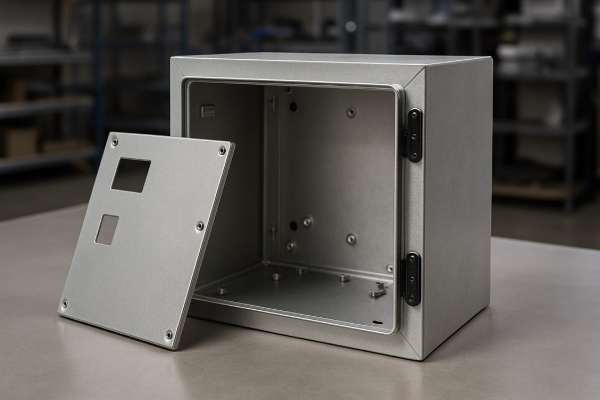
Enclosures are boxes which contain and mount electrical components, protecting them from physical damage, leaks, thermal variations and electromagnetic interference.
A good enclosure is a compromise between functional requirements and manufacturing constraints. Getting the balance wrong can increase the hardware cost and reduce the performance of the finished product.
This guide covers the most important sheet metal enclosure design considerations.
Key Takeaways
- Start with the operating environment. Temperature range, corrosion exposure, impact risk, and sealing requirements determine material and feature selection before anything else.
- Material and finish choices matter most in custom enclosures. The right combination determines durability, weight, and unit cost.
- Design for assembly from the start. Simpler assembly reduces production time and makes field service less expensive.
- Waterproofing and sealing are non-negotiable for protecting internal components in demanding environments.
Table of Contents
- Key Takeaways
- Selecting the Right Material For Your Sheet Metal Enclosure
- Key Sheet Metal Enclosure Design Considerations
- Surface Finishing For Sheet Metal Enclosures
- Design for Manufacturability and Cost Optimization
- Testing and Validation of Sheet Metal Enclosures
- Sheet Metal Enclosure Fabrication Guide Checklist
- Conclusion
- FAQ
Sheet Metal Enclosure Design Basics
The sheet metal enclosure design basics include application fit, assembly, manufacturability, operating environment, expected performance and grounding. Together, these determine whether the design will perform well in production and the field.
Form Factor and Application Fit
Minimize size by carefully planning how components stack, but leave room for adequate airflow and thermal management – especially if the assembly includes parts that generate significant heat, like power boards.
Strength and dimensional tolerances are equally important, as the enclosure must absorb mechanical shocks during installation and operation.
Simplify Assembly and Service
Design for access first. Primary components should install through the main opening without blind fastening or awkward angles. Every screw point, fastener, and connector should be visible and reachable with standard tools — screwdrivers, torque wrenches, and similar equipment used in production.
The same access that speeds assembly also simplifies field service. An enclosure that's easy to open, inspect, and reconfigure reduces repair time and lowers service cost. Cable routing and component mounting points should be planned at the design stage, not resolved during assembly.
Cost-Effective and Straightforward to Manufacture
Performance and manufacturing efficiency need to stay in balance. The clearest place to cut costs is in welding: it's expensive, requires secondary processing like grinding and polishing, and adds lead time. Minimize it wherever the design allows.
CNC bending is a practical tool for reducing part count by combining features into single formed components.
Environmental Factors
When designing sheet metal enclosures, define the exposure conditions before selecting materials or finishes. Rain, power washing, snow, salt spray and UV load each place different demands on the enclosure.
Corrosion and weather resistance can be obtained either by material selection (stainless steel, aluminum, UV resistant options), or by secondary finishing (powder coating, galvanization).
Harsher environments require both more design effort and higher unit cost. Designing around that tradeoff early is less expensive than addressing failures later.
Key Performance Factors
Several sheet metal enclosure design considerations converge in performance requirements:
- Structural strength must be sufficient to absorb physical shocks without deforming
- Heat dissipation needs to be matched to the thermal load of internal components.
- EMI shielding is required to avoid electromagnetic interference and to control emitted radiation to meet EMC standards.
Effective Grounding
Most sheet metal enclosures must be electrically grounded to qualify for CE, ETL, UL or other certifications.
This is accomplished by providing a dedicated ground point usually near the power supply entry, and running ground lines with lock washers and nuts to energized components or surfaces.
Selecting the Right Material For Your Sheet Metal Enclosure
Material selection determines corrosion behavior, weight, thermal performance, and unit cost. It's one of the core sheet metal enclosure design considerations and the operating environment and application requirements should drive the choice.
Common materials for sheet metal enclosures are:
- Cold rolled steel: economical, reasonably strong, and easy to fabricate. Requires secondary finishes to prevent corrosion.
- Stainless steel: has great strength and corrosion resistance. It is however 5 times more expensive than carbon steel, and therefore used only for harsh environments.
- Aluminium: has a number of good properties such as low weight, heat dissipation and corrosion resistance. It is relatively expensive and not suitable for high-impact applications.
- Galvanized Steel: a practical outdoor option with minimal secondary processing, thanks to a pre-applied rust protection. Cutting or bending can compromise this protective layer at exposed edges.
- Titanium: an expensive, strong and corrosion resistant metal. Mostly used in aerospace and other demanding fields.
Key Sheet Metal Enclosure Design Considerations
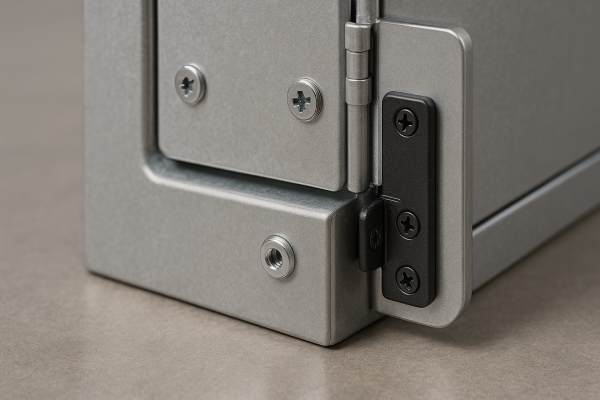
The sheet metal enclosure design itself determines whether manufacturing, assembly, and performance are as expected. Below you can see the main considerations, which apply to most projects.
Bending and Forming
Bend radius directly affects structural strength. A gradual curve distributes stress evenly across the bend, while tight bends and sharp corners can create failure points.
The standard practice for sheet metal enclosure design is having an inside bend radius equal to material thickness. Some materials, like aluminum, allow tighter radii.
Fastening and Assembly
The efficiency of the assembly process depends on the chosen fastening methods.
Whether employing traditional screws, press fit nuts, cage nuts, etc., the goal is to have straightforward assembly (which means enough room and clear access for tools).
Incorporating PEM inserts can further allow improved assembly efficiency and reduce the risk of misalignment.
Hinges and Access Panels
Good sheet metal enclosure design accounts for maintenance from the start. This means well-placed hinges and access panels, so internal components can be easily reached during routine inspections or repairs. Design that access strategy into the geometry early. Retrofitting it later rarely produces a clean result.
Waterproofing and Sealing
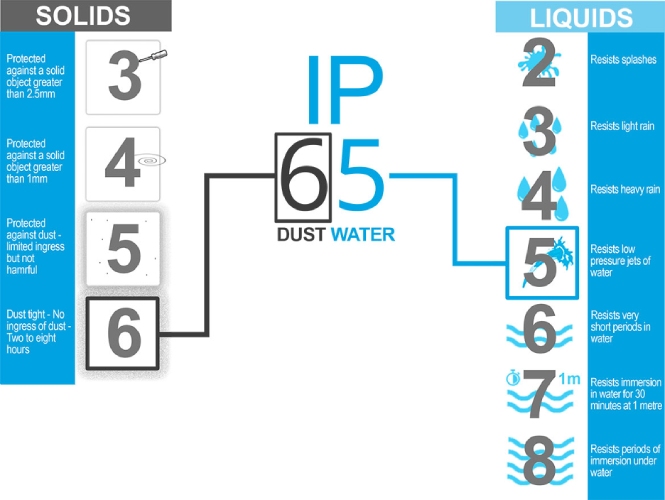
A sheet metal enclosure should be waterproof and correctly sealed to protect internal electric components.
Three rating systems define the benchmarks:
- NEMA classifications evaluate practical performance in industrial and outdoor settings, covering resistance to water, dust, and temporary submersion.
- The IEC IP rating system defines protection levels against solid particles and liquids.
- UL standards add a safety layer, ensuring the enclosure meets both protection and industry safety requirements.
Use the right standard for the target market and application. NEMA for North American industrial environments, IEC IP for international or OEM-specified projects, UL where safety certification is a procurement requirement.
Heat Dissipation and Ventilation Strategies
Heat Dissipation and Ventilation Strategies
Thermal management is a structural consideration. When designing sheet metal enclosures, geometry, material, and internal layout all affect how heat moves, and poor decisions at those show up as component failures in the field.
The Importance of Airflow in Electronic Enclosures
Adequate airflow dissipates the heat that degrades performance over time. Designing for airflow requires knowing where to place vents – but, more than that, how the internal layout affects air movement, so warm air exits and cooler air replaces it.
Passive vs. Active Cooling
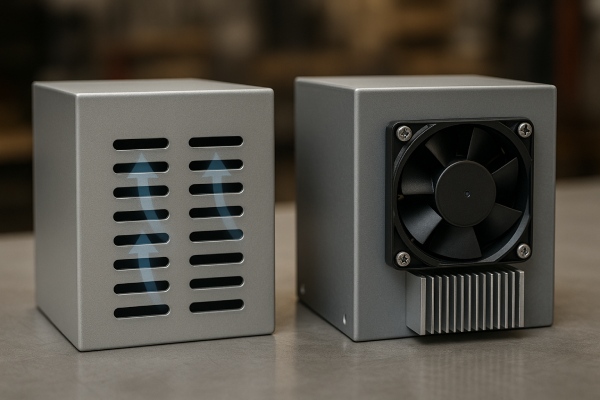
Passive and active cooling are the two main approaches to manage heat inside enclosures. They are both effective but have tradeoffs. The choice is based on the thermal load, the operating environment, and acceptable assembly complexity.
The table below shows the main factors you should account for in sheet metal enclosure design.
| Features | Passive | Active |
|---|---|---|
| Mechanism | Natural convection; aluminum heat dissipation | Fans and heat sinks |
| Weather resistance | Openings require careful design | Lower impact on sealing |
| Complexity | Low | Higher — wiring, moving parts |
| Energy use | None | Increased |
| Best for | Moderate heat loads | High loads, sensitive components |
Passive Cooling
Passive cooling allows warm air to escape without added components.
That's the case for ventilation slots. The tradeoff is exposure — openings increase vulnerability to humidity, so vent location, size, and protective geometry should be carefully planned.
Material choice is also a form of passive thermal management. Aluminum, for instance, dissipates heat significantly faster than steel or plastic.
Active Cooling
Fans and heat sinks force air over critical components, giving more precise control over the thermal environment. This is the right choice for high heat loads or sensitive components where passive convection isn't sufficient.
The tradeoff here is added complexity — more wiring, higher energy consumption, potential fan failure, and noise.
Managing Thermal Expansion in High-Temperature Environments
Materials expand and contract with temperature. In high-heat applications, that movement needs to be designed for. There are several ways to do so:
- Use materials with compatible thermal expansion coefficients
- Incorporate flexible joints where dimensional change is expected
- Set tolerances that accommodate slight shifts
Surface Finishing For Sheet Metal Enclosures
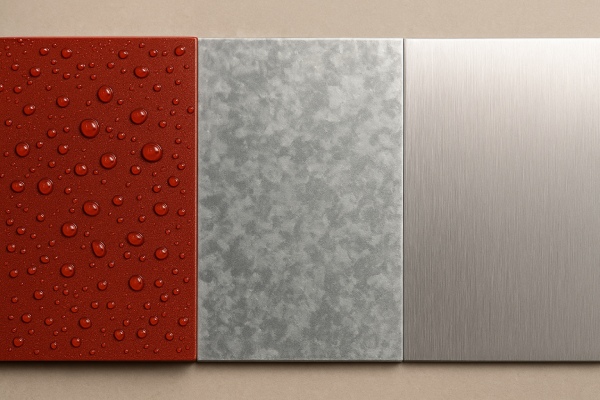
Surface treatments can serve many purposes in sheet metal enclosure design – mostly improving wear, UV, and corrosion protection. Certain finishes can also improve the part's aesthetic appeal.
These are three very common options:
- Powder coating: creates a protective coating over the enclosure, making it more resistant to environmental wear while giving it an attractive finish.
- Anodizing: used in aluminum enclosures to create a hardened oxide layer that enhances corrosion resistance. There are two types of anodizing. Enclosures typically go with Type II, which has the option for decorative colors.
- Galvanization: it has a zinc coating applied to steel for protection against rust. It is a cost-effective solution for outdoor and corrosive environments.
Choosing the Right Finish
Many factors impact the choice. The most important are the chosen material properties and the enclosure application or product requirements.
Here is a quick checklist:
- For outdoor applications: powder coating and hot galvanization. They deliver protection against moisture, UV exposure, and other environmental challenges. Hot galvanization also offers excellent corrosion and wear protection but it can deform thin sheet metal.
- Grounding: powder coating. It doesn't offer full grounding protection, but prevents conductivity, as it is plastic and non-conductive.
- Electrical Conduction: anodized aluminum. It offers good corrosion resistance while maintaining conductivity.
Design for Manufacturability and Cost Optimization
Design for Manufacturability (DFM) is the practice of shaping a design around how it will actually be produced, making it as easy and economical to manufacture to spec as possible.
These are the main approaches for sheet metal enclosure design.
Reducing Part Count for Simplified Assembly
Try to reduce the number of individual parts in your enclosure. This will make every step of manufacturing easier and less expensive. There will be fewer components to source, less room for errors during assembly, and faster quality control.
Standardizing Components to Lower Production Costs
Off the shelf parts are most cost effective, easier to purchase, and available in low to high quantities.
Custom parts should be avoided in most cases if there are good options available – there are generally MOQ, cost, and tooling considerations. That said, Asian supply chains can offer fairly low-cost custom components if the design really calls for it.
Matching Process to Volume
Manufacturing process selection depends heavily on order volume. Use the wrong process for the volume, and cost per unit climbs quickly.
- Laser Cutting & CNC bending: these processes allow for very flexible production. Anywhere from single parts to thousands of enclosures can be made at relatively low costs, and with zero or minimal tooling.
- CNC machining: this is generally a last resort. CNC machining is extremely expensive and time-consuming; some components cannot be made precise enough otherwise, but a general rule is to avoid unless very low volumes are involved.
- Stamping: usually selected only when the order volumes are in the mid-thousands per production. Depending on enclosure size, tooling costs can scale rapidly, so only very high volume projects will generally be stamped.
Testing and Validation of Sheet Metal Enclosures
A sheet metal enclosure design needs to be verified against real-world conditions. Drop, vibration, and environmental stress tests are among the most useful to identify potential failures early.
- Drop tests simulate impacts during handling and deployment to see whether the enclosure's structural integrity holds up.
- Vibration tests replicate conditions experienced during transportation or operation in dynamic environments.
- Environmental tests expose the part to temperature fluctuations, humidity, and corrosive conditions that it will face under operation. The two tests that matter the most for enclosures are:
- Spray testing to evaluate corrosion resistance of base material and finishing.
- IP rating testing to validate waterproofing against a specified protection level.
Prototyping & Design Reviews
Another important aspect of sheet metal enclosure design validation is prototyping. By running very small-volume runs, designers and engineers can evaluate the enclosure under simulated operational conditions. Thus, it is easier to notice issues in material selection, assembly, component fit, thermal management before committing to mass production.
Prototype Production
Generally, the best approach is to use laser cutting, CNC bending, punching and other non-tooled processes to first test and evaluate the assembly and overall design of your enclosure.
Stamping tools are relatively fragile due to the force applied to them, so repeated changes can damage the tool or even destroy it.
Rapid prototyping through laser cutting, 3D printing and other processes not requiring tooling is the way to go.
Prototype Quantity
It's almost always best to produce several units at once, and modify as needed, than to produce single units, purely for batch cost reasons.
If you are doing field testing, multiple units are needed for a more representative performance or analysis. The same is true of certification.
Ensuring Compliance with Industry Standards
Ensuring Compliance with Industry Standards
Certification requirements vary by market and industry. The same sheet metal enclosure design can be used across multiple industries but require different testing standards depending on where it's sold or what it's used for.
There are a lot of potentially applicable standards – the best approach is usually to work with a company that can help you interpret which actually DO apply.
A complicating factor is that many of these organizations or groups can have their own, company-specific certification (UL, CSA, NEMA, etc.), which can sometimes stand in as the national certification standard.
One final aspect is that certification can be aimed at different aspects of the enclosure performance: electrical safety, ingress protection, EMI shielding or EMC compatibility, etc.
We've listed some of the most commonly referred to standards:
UL Standards (Underwriters Laboratories) – US market:
- UL 50 / UL 50E: enclosures for electrical equipment
- UL 508A: industrial control panels and associated enclosures
CSA Standards (Canada)
- CSA C22.2 No. 94.1 / 94.2: this is more or less equivalent to UL 50 standards for enclosures.
Water Resistance
- IEC 60529: standard for ingress protection (IP ratings)
- NEMA IP rating certification
Application-Specific Certifications
- ATEX / IECEx: Required for enclosures used in explosive atmospheres (e.g., oil & gas)
- MIL-STD-461: military EMI enclosure rating
- Automotive: ISO 16750
Sheet Metal Enclosure Fabrication Guide Checklist
Use this sheet metal enclosure design checklist to review key decisions before finalizing geometry.
Environment and Application
- Define operating environment (temperature range, moisture, UV, salt exposure)
- Identify required certifications (IP rating, NEMA classification, UL, CE, ETL, CSA)
- Confirm impact and vibration requirements
Form Factor and Layout
- Minimize enclosure size (plan how components stack without wasting space)
- Leave room for adequate airflow and thermal management
- Space heat-generating components (power boards, power supplies) deliberately
- Set dimensional tolerances that ensure correct fit at assembly
Material Selection
- Select material based on environment and application, not default preference
- Factor in cost, corrosion resistance, thermal properties, and operating environment
Manufacturing
- Set inside bend radius equal to material thickness
- Minimize welding where possible
Assembly and service
- Verify all fasteners are accessible with standard tools from the main opening
- Plan cable routing and component mounting points at the design stage
- Consider PEM inserts to improve assembly efficiency and reduce misalignment risk
- Design hinge and access panel locations for direct access to serviceable components
Grounding
- Include a dedicated grounding point near the power supply entry
- Run grounding lines with lock washers and nuts to all energized surfaces
Waterproofing and sealing
- Specify target IP or NEMA rating early
- Match sealing standard to target market: NEMA for North America, IEC IP for international, UL where safety certification is required
Thermal Management
- Determine thermal load and select passive or active cooling strategy
- Plan vent size and placement with humidity exposure in mind
- Consider aluminum where passive heat dissipation is a priority
- Design joints and tolerances to accommodate thermal expansion in high-heat applications
Surface Finishing
- Select finish based on operating environment, grounding, and electrical conductivity requirements
- Verify material thickness before specifying hot galvanization
Cost and Manufacturability
- Reduce part count whenever possible
- Use off-the-shelf hardware wherever possible
- Avoid custom parts unless necessary
- Match process to volume (laser cutting/CNC bending for most runs, stamping for high volumes, CNC machining as a last resort)
Testing and Validation
- Run drop tests for enclosures subject to handling or deployment impacts
- Run vibration tests for enclosures in transport or dynamic environments
- Conduct salt spray testing to validate corrosion resistance
- Conduct IP rating testing to validate waterproofing claims
- Prototype using non-tooled processes (laser cutting, CNC bending) before committing to mass production
- Confirm which certification standards apply to each target market and industry
- Perform IP rating testing to formally validate waterproofing claims
Conclusion
Sheet metal enclosure design is an act of balance. Function, durability, cost, and manufacturability should all be taken into consideration. The main variables to improve those are material selection, geometry and features, number of parts, surface finishing and testing routines.
FAQ
What are the design considerations for sheet metal enclosures?
The sheet metal enclosure design basics cover operating environment, material selection, thermal management, sealing, structural strength, and manufacturability.
What makes a good sheet metal enclosure?
A good enclosure does its job without overcomplicating production or service. It protects internal components from the specific hazards of its operating environment, assembles without ambiguity, and can be serviced without dismantling.
What are the types of sheet metal enclosures?
There are several enclosure configurations. The most common sheet metal box designs include folded boxes, two-piece clamshells, rack-mounted, and welded.
Are sheet metal boxes, enclosures, and cabinets the same thing?
The three terms are often used interchangeably and there is no strict difference in definition, as they all refer to structures that surround or protect an internal component. However, generally sheet metal boxes are smaller and simpler; enclosures are designed to protect sensitive items, and cabinets are larger and floor-mounted.
Have questions about your enclosure design? Contact us today for personalized guidance from our manufacturing experts.