
Vietnam Contract Manufacturing: Complete Guide for 2026
- Why Choose Vietnam?
- Factors to Consider
- Steps to Take
- Types of CMs in Vietnam
- How to Find a CM in Vietnam
- The CM Hubs in Vietnam
- How to Choose the Right CM in Vietnam
- Final Recommendations
- Komaspec
- FAQs
Vietnam contract manufacturing refers to outsourcing production of goods to Vietnamese factories that build to your design specifications. It's used by global brands seeking lower costs, tariff advantages, and supply chain diversification beyond China.
This guide was last updated in May 2026 and reflects current labor costs, trade agreements, and tariff conditions.
Vietnam has rapidly recently emerged as a contract manufacturing powerhouse, especially for companies seeking supply chain diversification beyond China.
With rising costs and geopolitical uncertainties in traditional manufacturing hubs, Vietnam has managed to stand out as a strategic, cost-effective alternative. In 2026, it offers competitive labor costs, modern infrastructure, and trade accessibility for global OEMs and brands.
This is a guide with everything you need to know about contract manufacturing in Vietnam.
Key Takeaways
- Vietnam's labor costs are lower than China's, but the gap is narrowing as wages rise.
- Trade agreements like EVFTA and CPTPP give Vietnamese-made goods tariff advantages in Europe and other major markets.
- The supply chain is still maturing. Specialty components and high-spec inputs usually come from China.
- North, Central, and South Vietnam serve different production profiles, so factory location affects more than just proximity.
- Vietnam works best for assembly-heavy, mid-volume programs.
Table of Contents
- Why Choose Vietnam for Contract Manufacturing?
- Factors to Consider Before Outsourcing to Vietnam
- Steps to Take Before Reaching Out to Manufacturers
- Types of Contract Manufacturers in Vietnam
- How duly to Find a Contract Manufacturer in Vietnam
- The Contract Manufacturing Hubs in Vietnam
- How to Choose the Right Contract Manufacturer in Vietnam
- Final Recommendations for Vietnam Contract Manufacturing
- Get the Most Out of Contract Manufacturing with Komaspec
- FAQs
Why Choose Vietnam for Contract Manufacturing?
Vietnam is chosen for contract manufacturing primarily because of its low labor costs, an extensive network of free trade agreements, a young and growing workforce, and its strategic role as a China + 1 diversification base for global supply chains.
In recent years, Vietnam has firmly established itself as a competitive and reliable destination for contract manufacturing, particularly for companies seeking to diversify away from China.
While it's not a one-size-fits-all solution, contract manufacturing in Vietnam offers several compelling advantages that make it a prime choice for global supply chains in 2026.
The major reasons why so many companies are choosing Vietnam are:
- Overall cost competitiveness
- Tariff relief and trade agreements
- A young workforce
- A stable political environment
- Diversification for global supply chains
Learn more about them below.
Cost Competitive (But the Gap with China Is Narrowing)
Labor costs in Vietnam are lower than in China. The average monthly wage for manufacturing workers in Vietnam is about $261, while in China it is around $689.
For assembly-intensive products, this is a very significant advantage.
But it is not absolute—and there are two main reasons for this:
The first is that costs, including wages, are rising as Vietnam's economy develops.
The second is that there are other factors that make up the cost of a product (component sourcing, logistics, lead times, etc.)
Even considering all this, Vietnam overall offers a satisfactory cost-benefit ratio.
Tariff Relief and Trade Agreements
Vietnam is one of the most open economies in Asia. Companies manufacturing in the country benefit from a number of free trade agreements (FTAs) that reduce tariffs and duties.
The major agreements are:
- EU-Vietnam Free Trade Agreement (EVFTA): eliminates 99% of tariffs between Vietnam and the EU.
- CPTPP: covers Japan, Canada, Australia, and other major economies.
- ASEAN Free Trade Area (AFTA): reduces friction with neighboring Southeast Asian markets.
US tariffs currently sit at 25%, among the lowest in Southeast Asia.
Young Labor Force and a Stable Political Environment
Vietnam's workforce is young — over 70% of workers are under 40 — and the government has built the infrastructure to convert that demographic into manufacturing capacity. Vocational and STEM programs feed workers directly into the industrial base. Pro-business policy, industrial zone incentives, and active pursuit of foreign capital do the rest.
This, coupled with political stability in recent decades, provides predictability in the country, making it attractive for companies embarking on long-term investments.
Diversification Benefits for Global Supply Chains
Contract manufacturing in Vietnam is frequently an alternative choice to China. Geographic characteristics, political stability over the past two decades, and steady manufacturing growth are the main reasons.
The benefits of moving production to the country include:
- Proximity to China by truck or short sea shipment
- Shared time zones with key East Asian sourcing hubs
- Port infrastructure capable of handling serious export volume
So, moving capacity to Vietnam doesn't mean rebuilding logistics from scratch.
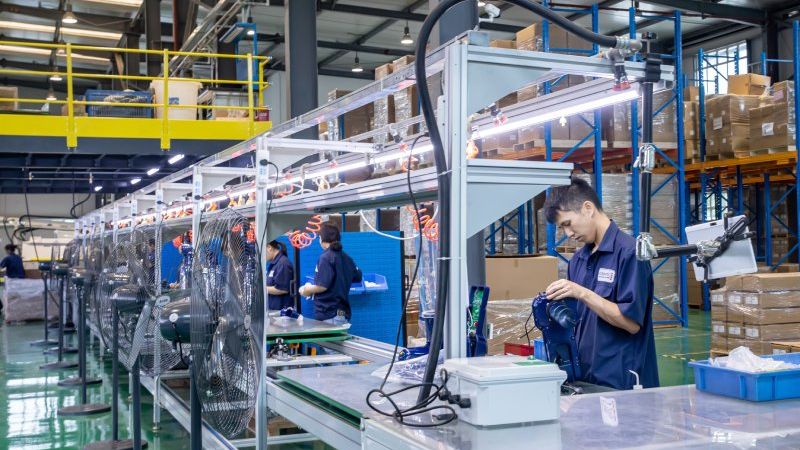
Samsung, Intel, and Foxconn have invested heavily in Vietnamese operations, and that concentration has pulled supplier development and workforce capability up with it. The country isn't just cheap labor anymore. It's a real node in global electronics and manufacturing supply chains.
Vietnam as a China + 1 Manufacturing Base
China + 1 means keeping production in China while adding capacity in a second country to cut concentration risk.
Vietnam is a default answer for companies taking that approach, though the country's manufacturing capacity goes well beyond absorbing production moved for geopolitical reasons.
In Vietnam, you get the tariff benefits on finished goods without rebuilding your entire supply chain, thanks to geographic proximity with China. Moving production from China to Vietnam can cut effective duty rates into Europe to near zero.
The limitation is the domestic supply chain in Vietnam, which still is maturing. If your BOM relies on local specialty materials or high-spec sub-assemblies then the options are limited.
Factors to Consider Before Outsourcing to Vietnam
Before outsourcing to Vietnam, assess whether your product type, supply chain needs, logistics requirements, and communication expectations are a genuine fit for what Vietnamese manufacturers do best.
Vietnam's advantages are real but not consistent across all products or business models. Working with an experienced partner like Komaspec with own facilities in Hai Phong, can make the difference between a smooth transition and a costly learning curve.
These are the factors that decide whether the move actually makes sense for your needs:
- Technical expertise
- Production type
- Logistics
- Communication and cultural differences
- IP protection
Learn about them below.
Labor Cost vs. Technical Capability
Vietnam offers substantial labor savings for assembly-heavy and labor-intensive products. Average monthly wage ~$300 lower than China.
Manual assembly, sheet metal fabrication, and plastic injection molding are Vietnam's strongest ground. Factories in Hai Phong and Binh Duong have real depth in these processes. CNC machining is available and increasingly capable across materials.
Supply Chain Depth and Component Availability
Vietnam's supply chain is strong for assembly, plastics, sheet metal, and textiles, but still relies heavily on imports for specialty components, electronics inputs, and advanced materials - most of which come from China.
Vietnam's supply chains are growing but are not yet as mature as China's, which is challenging because:
- Some raw materials are hard to find, like aluminum billets, and specialty resins
- There is heavy dependence on imports for key inputs, like textiles and electronics components (e.g., 80–90% of cotton comes from other countries)
- Only a small number of suppliers can make high-spec parts
What Type of Production Works Well in Vietnam
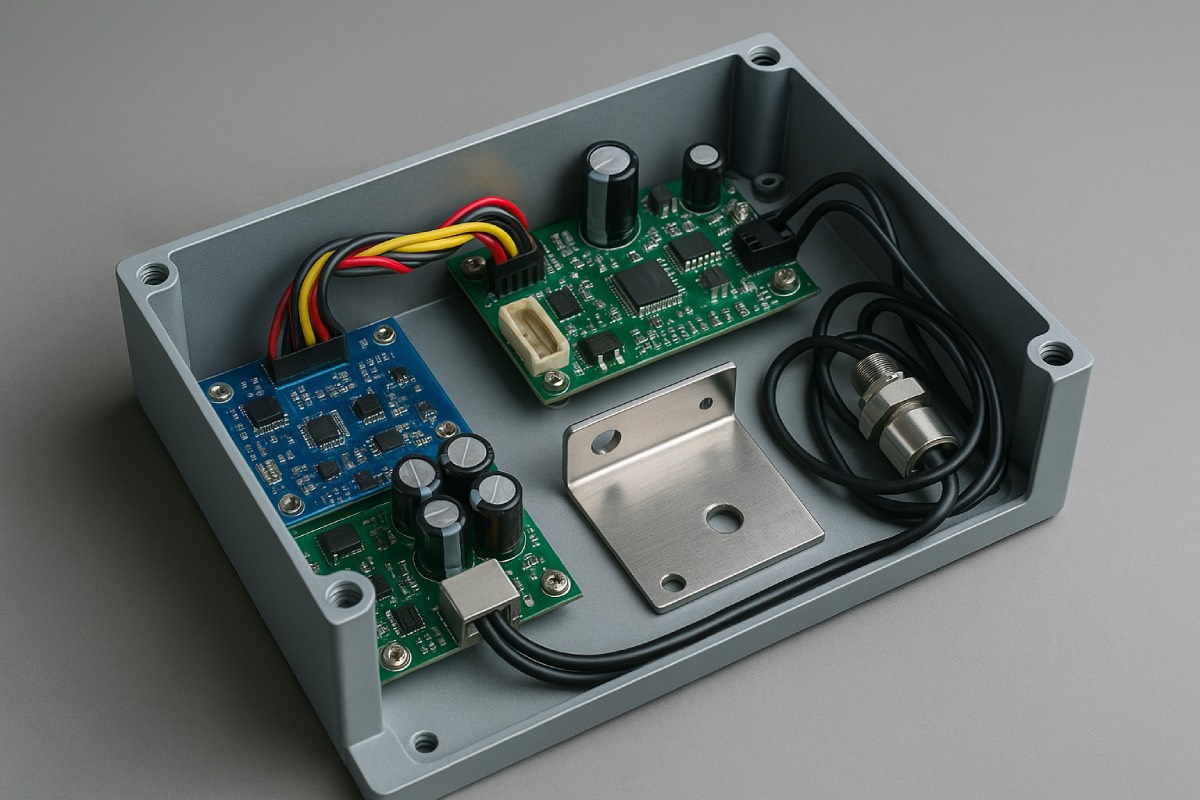
Vietnam's manufacturing strengths sit in sheet metal fabrication, plastic injection molding, pipe and tube processing, consumer goods assembly. Simple to mid-level electronics assembly is increasingly viable, particularly in the north around Hai Phong and Bac Ninh.
Products requiring multi-layer PCB design, tight machining tolerances, or complex system integration will typically need components from China or Taiwan.
Logistics: Port Access, Inland Transport, and Costs
Vietnam has a good network of deep water ports including:
- Hai Phong (North)
- Da Nang (Central)
- Cat Lai, Cai Mep-Thi Vai (South)
But its inland infrastructure is far less reliable, particularly in rural provinces—only 20% of the roads are paved. Port congestion is an issue during peak trade seasons. Before you sign up for contract manufacturing in Vietnam, ensure that your partner has good logistics at its disposal.
Communication and Cultural Differences
You'll probably need to speak Vietnamese to deal with the factories. English levels are rising on average but not yet at the level to be the only language.
Tolerance misunderstandings are common when specs aren't documented precisely. What feels obvious on a drawing can get interpreted differently across a language gap.
Also note that time zone differences (and differences in workweeks) can slow response times.
Intellectual Property Protection
Protection against IP infringement has been stepped up, but there is no technical way to look into each case. Don't discuss technical details before signing NDAs, and before specifying who owns the tooling and design-related intellectual property.
Steps to Take Before Reaching Out to Manufacturers
Factories quote and respond to what you give them. The quality of your first engagement depends entirely on how prepared you are going in.
The main tips are:
- Clearly explain what you need
- Understand testing and compliance requirements
- Define production volume
- Choose the right kind of contract
Learn below how to do it all.
Solidify Product Specifications, BOM, and Drawings
Lack of clarity leads to back-and-forths, delays, low-quality samples, unexpected costs and rework.
Before approaching a contract manufacturer, get the following ready:
- Detailed engineering drawings (2D + 3D CAD)
- Complete bill of materials with reference part numbers
- Material and surface finish requirements
- Assembly instructions and quality standards
Understand Testing and Compliance Requirements
Vietnamese contract manufacturers build to what you specify. Compliance requirements are your responsibility to define.
So, explain clearly:
- Required certifications (like CE, FCC, RoHS or industry-specific equivalents)
- Relevant test protocols (like drop tests or IP ratings)
- Documentation needed for exports to your desired countries.
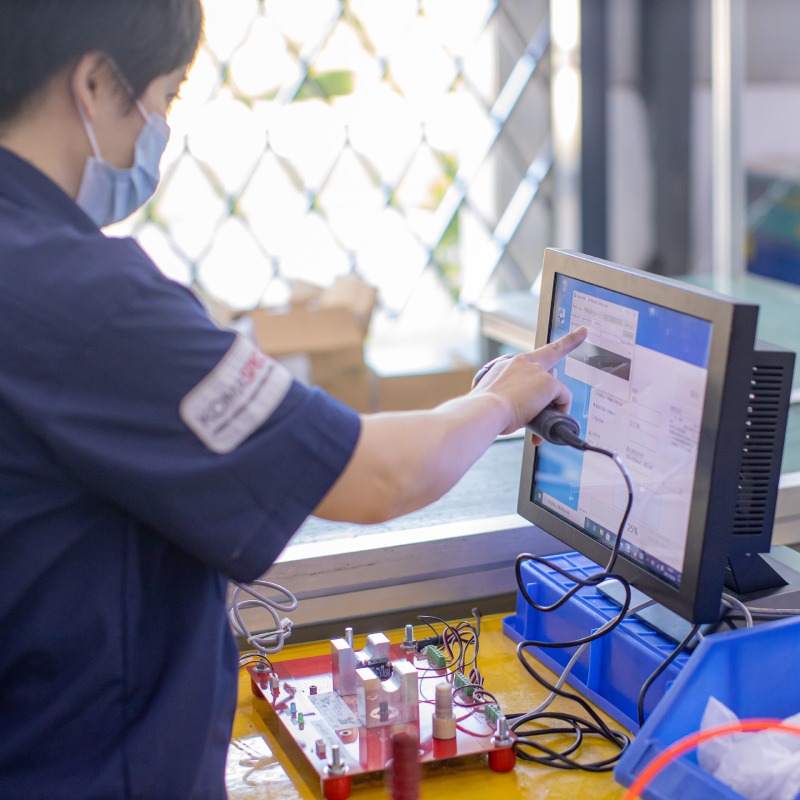
Doing so before sampling will save you time and money.
Define Target Cost, MOQ, and Production Scale
Product quantity needs to be planned up front, as factories can offer more accurate pricing based on an understanding of where the project is headed, not just its starting point.
Target cost per unit, expected MOQ, and if there are future plans to increase production need to be discussed with your manufacturing partner.
Many Vietnamese manufacturing plants are content with low-to-mid MOQs that range from 250 to 500 for first orders, which is significantly less than the usual MOQ of 1,000 and above which applies in China.
Get Clear on Contract Manufacturing vs. OEM/ODM
Define your sourcing model before conversations start.
The top contract manufacturers in Vietnam work with different formats:
- Contract manufacturing (CM): you provide the design, the factory builds it
- Original Equipment Manufacture (OEM): the factory provides partially developed designs, and you customize them
- Original Design Manufacturer (ODM): the factory owns the product and the IP entirely.
Be clear about the type of partnership you want to build, as this determines which type of factory is even worth talking to.
If you'd rather skip the search entirely, Komaspec operates its own vertically integrated facility in Hai Phong. With Western account management, it's a ready-made starting point for companies looking to manufacture in Vietnam without the headaches.
Types of Contract Manufacturers in Vietnam
Vietnam's contract manufacturers fall into three main categories: locally-owned SMEs best for simple labor-intensive work, Asian-owned EMS factories with proven technical depth, and Western-managed facilities that combine cost competitiveness with international project management standards.
Vietnam's contract manufacturing industry ranges from small family workshops to large Western-managed facilities with global client lists. The right type depends on your product, your volume, and how much management overhead you want.
Vietnamese-Owned SMEs
Vietnamese small and medium-sized enterprises dominate the local manufacturing base.
The main draws are:
- Lower costs
- Flexible MOQs for simpler products
- Real skill at manual processes like welding, sewing and basic assembly
Challenges include:
- Limited English language skills
- Degrees of formalization of documentation and processes varies greatly
- Quality control can be inconsistent without external auditing
Choose Vietnamese SMEs for low complexity & labour intensive products such as textiles, home products and simple hand assembly where cost advantage outweighs the management overhead.
Asian EMS & CM Factories
Established Chinese, Taiwanese, South Korean, and Japanese manufacturers have operations in Vietnam.
Their main advantages are:
- Proven processes
- Established tooling systems
- Technical skillset to handle electronics, automotive parts, and metalwork
Challenges include:
- Access barrier if you don't speak the local language or don't have a sourcing agent
- Being a smaller buyer or one that requires flexibility
These factories typically operate on OEM/ODM contracts for higher-tier clients.
Western-Managed Contract Manufacturers
Western-managed CMs bring Vietnam's cost and location advantages together with the project management, engineering support, and communication standards that Western buyers expect.
They offer:
- End-to-end capability from DFM through production and logistics
- Dedicated account management
- Experience with the compliance and documentation requirements of EU and US markets.
How to Find a Contract Manufacturer in Vietnam
Sourcing Vietnam contract manufacturers can be hard. Many good Vietnam contract manufacturers do not put any effort into building up their online profiles, so they have to be found through "old-fashioned" techniques such as personal introductions and face-to-face visits.
Online Directories and Sourcing Platforms
Alibaba, Global Sources and Vietnam Manufacturers Directory are good for preliminary research and benchmark quotes. Build a list using these and cross-check suppliers you meet through other avenues.
Most profiles are self reported and not audited, so consider them only a starting point. On large platforms, it is common that trading companies pretend to be direct manufacturers. Be careful.
Trade Shows and Industrial Networks
Trade shows allow you to see sample quality, production setup and how a factory's team actually communicates, none of which you can do through a sourcing platform. Some of the relevant events are:
- Vietnam Manufacturing Expo (Hanoi)
- Global Sourcing Fair Vietnam (Ho Chi Minh City)
- Vietnam Industrial and Manufacturing Fair (VIMF)
For any program where the cost of getting the partner wrong is high, the time investment is worth it.
Sourcing Agents or Third-Party Consultants
A good sourcing agent pre-vets factories, organises site visits, and audits and manages logistics and compliance for you. When you don't have the language coverage or local presence to check out factories yourself, use one.
Agent quality is all over the place—before you get involved, check references, understand the fee structure and clarify if they are independent or if they have ties to specific factories that could sway their suggestions.
Due Diligence and Common Red Flags
Before you commit, check for:
- Recent customer references in your product category
- Current factory certifications (ISO 9001, CE, RoHS as applicable)
- Documented QC procedures and traceability systems
- Willingness to allow factory visits or video walk-throughs.
Avoid factories that:
- Overpromise on timing and quality
- Won't share ownership or export license details
- Don't have a physical address you can verify
- Want a deposit before you've had any technical discussions.
The Contract Manufacturing Hubs in Vietnam
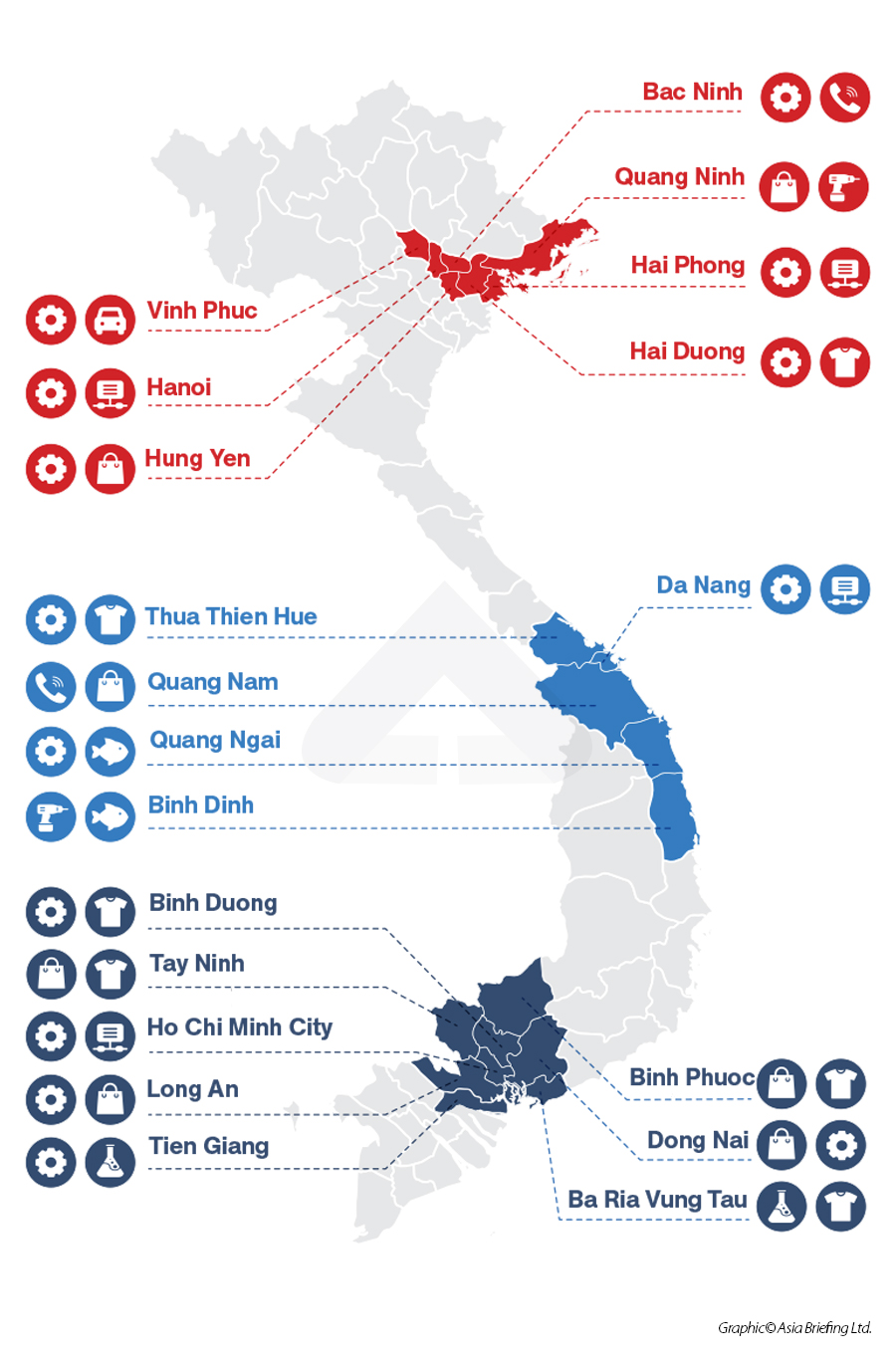
Each region in Vietnam has a different profile for contract manufacturing. Where your factory sits affects component access, labor costs, port proximity, and lead times. It's not a detail to figure out after you've picked a supplier.
North Vietnam (Hanoi, Bac Ninh, Hai Phong)
The north is Vietnam's electronics and electromechanical assembly hub. Bac Ninh, Bac Giang, and Thai Nguyen have become major bases for electronics and heavy industry, driven by their proximity to China and the component supply chains that come with it.
Benefits of the region include:
- Proximity to China for easy access to imported materials and components
- Strong presence of foreign investment—Samsung has invested over $23.2 billion in its Vietnamese operations here. Foxconn and LG are present as well.
- Access to the Hai Phong port, which handled over 190 million metric tons of cargo in 2024.
Choose North Vietnam contract manufacturers for assembly-heavy products, electronics builds, and multi-component programs that depend on steady access to Chinese inputs.
Central Vietnam (Da Nang, Quang Nam, Hue)
Central Vietnam's manufacturing base is still forming, with new industrial parks and government incentives.
Benefits of the area include:
- Lower labor costs than north or south (10%-15% lower)
- Government incentives (for example, tax breaks, land lease concessions and simplified licensing)
- Foreign and domestic investment in industrial parks such as Da Nang Hi-Tech Park and Chu Lai Open Economic Zone
Central Vietnam is the right choice for simpler assemblies where cost efficiency is the priority, or for programs that want to avoid the congestion and overhead of the established industrial zones.
South Vietnam (Ho Chi Minh City, Binh Duong, Dong Nai)
The south is the most developed and diverse industrial section of Vietnam.
Benefits of the region include:
- Access to logistics infrastructure, like the Cat Lai port, which handles more than 5 million TEUs per year, and Ho Chi Minh City's Tan Son Nhat International Airport
- Mature industrial zones —VSIP, Amata, Long Duc— with fast access to tooling and third party services
- High density and diversity of supply chains, including textiles, garments, plastics, footwear and packaging
There are clear drawbacks as well: factory workers in Ho Chi Minh City earn upwards of $350 a month, with congestion and overhead costs among the highest in Vietnam.
Select South Vietnam for volume-driven production when supply chain density and logistics reliability trump unit labor cost.
| Region | Specialties | Infrastructure Notes |
|---|---|---|
| North | Electronics, Complex assemblies | Ports, highways, direct access to China |
| Central | Cost-effective labor, Simpler manufacturing | Still developing, fewer suppliers |
| South | Textiles, Plastics, Packaging | Mature ecosystem, strong logistics, higher costs |
How to Choose the Right Contract Manufacturer in Vietnam
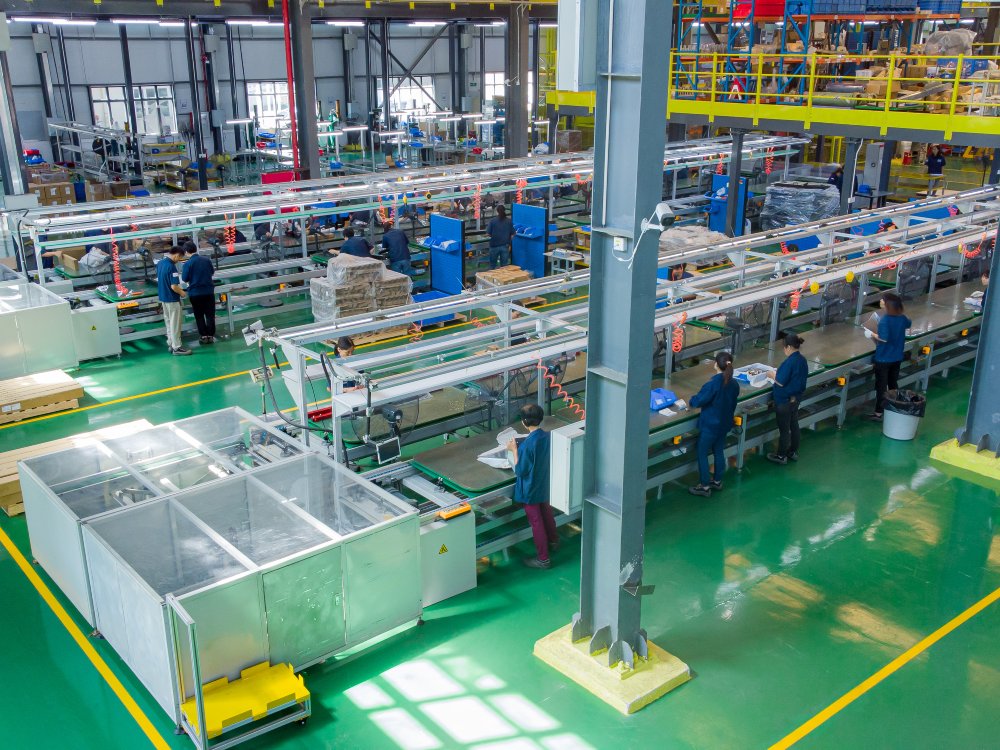
After finding potential partners, you will have to select which one meets all the necessary criteria for your next project. Of course, there is no "right" answer since Vietnam contract manufacturing is so broad.
Below you will find some factors that you should consider to make this decision.
Evaluate Capabilities and Specialization
Match your product requirements to what the factory actually does well, not what their sales deck says they can do.
Align:
- Whether they handle complex assemblies or multi-material components
- What capacity looks like against your lead times
- If they have expertise in the manufacturing processes you need
- Volumes they are able to produce efficiently
Check Quality Control Processes and Certifications
Certifications matter, but they don't tell you how quality is managed day to day.
Ask for:
- Documented QC procedures and inspection checkpoints
- Whether they use digital systems for real-time quality visibility
- Verification that certifications match your compliance requirements
As production scales, quality systems need to hold. Check whether their processes are built for that or whether quality is being managed manually at low volumes, which breaks down quickly as you ramp.
Assess Communication and Culture
Communication failures can cause as many production problems as technical ones.
Evaluate:
- English fluency across the team you will actually work with, starting with the project manager you will speak to daily
- Project management structure and escalation paths when something goes wrong
- How they have handled production issues with other clients
The Western communication practices such as giving updates, timeliness, and responsibility are not shared by all suppliers. This says more than any capabilities statement.
Ethical Standards and ESG Concerns
Sourcing from Vietnam doesn't exempt a brand from ESG scrutiny.
Check:
- Labor standards documentation
- Environmental practices and waste management
- ISO 14001 compliance if it's relevant to your market
Vietnam's ESG standards are still developing, but manufacturers targeting international OEM clients have generally moved faster than the broader market.
Scaling Capacity and Flexibility
Your first order is a proof of concept. What matters is whether the factory can move from pilot lots to full production without disrupting delivery or quality.
Ask:
- How they handle volume ramps
- How they manage multi-SKU programs
- What workforce capacity looks like as production grows
Final Recommendations for Vietnam Contract Manufacturing
Vietnam is a strong fit for medium-volume, assembly-intensive programs targeting EU or UK markets, or companies building a China + 1 supply chain - but less suited to products requiring hyper-specialised local supply chains.
Vietnam is a strong contract manufacturing option for the right product and the right company.
Cost-effective labor rates, a good trade agreements network, and growing industrial landscape make Vietnam a viable location for especially medium-volume and assembly-intensive manufacturing.
Checklist For Contract Manufacturing in Vietnam
To start working with a manufacturer, you should first make sure that you and your partner agree on:
- Specifications of your products and BOM, target cost, and other compliance requirements
- Type of manufacturing cooperation: CM, OEM, or ODM
- Quality standards and inspection procedures
- Certifications and sustainable manufacturing
- Method and tools of communication
- Pilot batch parameters and scale-up plan
When Vietnam Is the Right Fit (And When It Might Not Be)
Vietnam is a strong option for certain program profiles, and a poor fit for others. The difference usually comes down to volume, product complexity, and supply chain strategy.
Vietnam is the right fit when:
- You need medium-volume, high-mix production with cost discipline
- You're building out a China + 1 supply chain
- Your product is assembly-heavy or electromechanical
- EU and UK market access with tariff advantages matters to your margin
Vietnam might not be the best fit when:
- You need hyper-specialized local supply chains for high-volume runs
- Your product requires proprietary materials that aren't available locally
- Your MOQs are too low for most factories
Get the Most Out of Contract Manufacturing with Komaspec
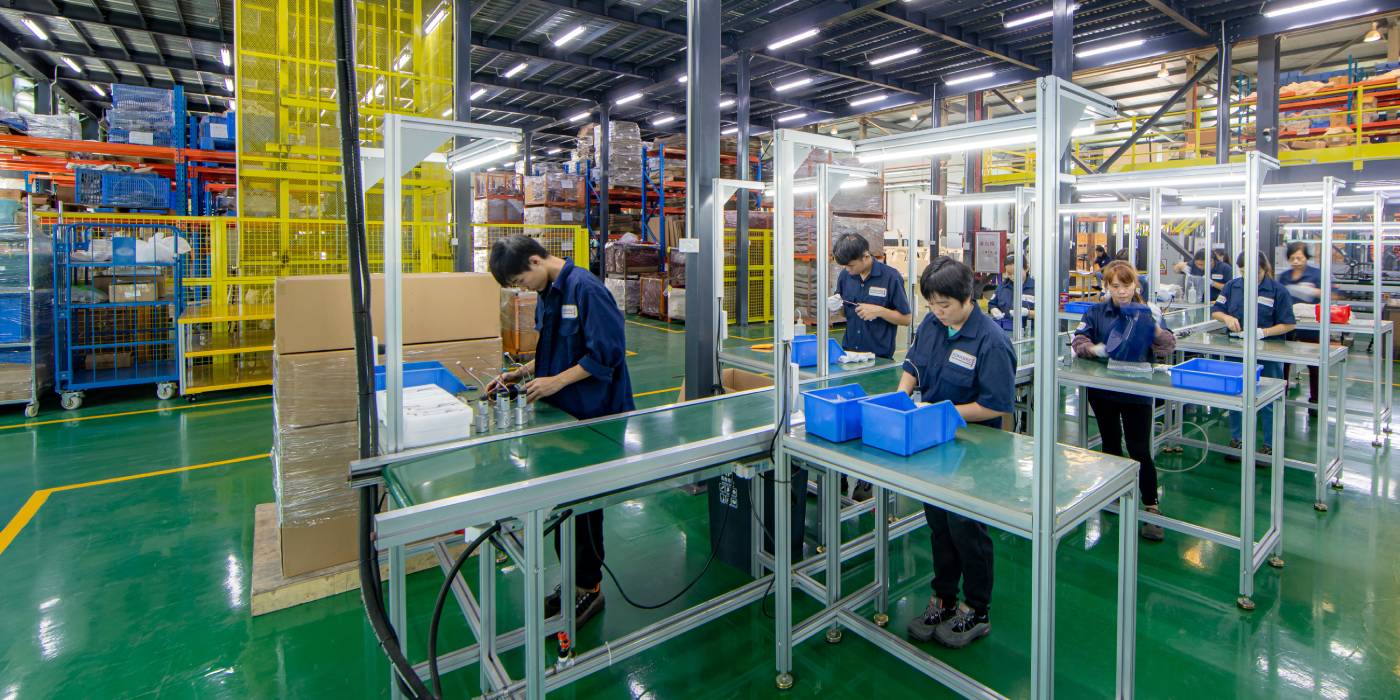
Komaspec's Hai Phong factory is a vertically integrated smart factory located in one of Vietnam's strongest manufacturing and logistics corridors. The facility is home to more than 100 brands in a variety of industries and provides DFM, prototyping, NPI and full-scale production all in one location.
Schedule a call or get a quote today to start manufacturing in Vietnam with Komaspec.
FAQs
Can I fully shift production from China to Vietnam?
Yes, that is true for certain products.
Consider a full shift if your products use readily available or imported raw materials, or are relatively simple to produce. For example, textiles, shoes, consumer goods, and basic manufactured parts.
However, for products that are relatively complex and require special components or raw materials, then you should choose both countries simultaneously. Many businesses manufacture their products in China but assemble and export from Vietnam.
How does the "China + 1" strategy relate to Vietnam?
China Plus One is a strategy to keep part of manufacturing in China, and part in another country to mitigate production risks.
Most companies that adopt this strategy select Vietnam as the second destination, as the country offers proximity to China, low-cost labor, favorable free trade agreements with both the EU and the UK, and increasing technological expertise.
What are some tips for successful manufacturing in Vietnam?
- Define project specifications before contacting suppliers
- Visit the factory in person or work with a western-managed firm to bridge cultural differences
- Include IP protection terms in your contract
- Independently verify factory conditions
- Run a trial batch first
What are typical MOQs and lead times in Vietnam?
Vietnam's manufacturing boom has pushed prices and MOQs up. MOQs in the low to mid-thousands are standard for most product categories, but there are factories willing to do less. Lead times typically run one to two weeks longer than comparable programs in China.
Is the Vietnam manufacturing ecosystem mature enough for complex products?
Definitely yes, especially those that are electromechanical assemblies, metal works, and plastics.
But maybe there might not be enough capability in the country in producing complicated components such as semiconductor products and aerospace-grade alloys. It is for this reason why being in close proximity to China is a good thing for Vietnam's manufacturing competitiveness.
What are the biggest manufacturing companies in Vietnam?
Samsung, Foxconn, LG, and Intel are the biggest names. Beyond them, the market includes a large base of regional SMEs and foreign-owned companies.
How does Komaspec support clients in Vietnam?
Komaspec's Hai Phong facility covers DFM, prototyping, and pilot production, in-house plastic injection, sheet metal fabrication, laser cutting, and assembly, real-time quality control via Pivot88 and MES, and end-to-end turnkey manufacturing for complex builds. Engineering and account management are handled by a Western-trained team with experience across 100+ international programs.