
Manufacturing in China vs. Vietnam: Which Is Superior?
- Introduction
- Key Takeaways
- Why Compare?
- China and Vietnam Options
- Manufacturing in China
- Manufacturing in Vietnam
- Key Factors
- Dual Sourcing
- China vs Vietnam Manufacturing
- FAQ
Manufacturing in China vs Vietnam used to be a simple cost-based decision. But now, it's a strategic decision, with a number of critical factors involved, like changing trade dynamics, increased supply chain complexity, risk of IP infringement, trade agreements, and government support.
Historically, China has been the leader in high tech, large scale production with engineering services. But in recent years, Vietnam has emerged as a powerful hub for contract manufacturing with its own compelling advantages.
In this article we are going to look at the pros and cons of China vs Vietnam manufacturing so you can choose the best option for your next project.
Key Takeaways
- China still remains the global leader in high-tech, large volume manufacturing.
- Vietnam offers better labor costs and has growing industrial capabilities.
- For many companies, dual sourcing is the best option. Common approach is to manufacture parts in China and assemble them in Vietnam in order to mitigate manufacturing risks, minimize tariffs, and reduce overall costs.
Table of Contents
- Introduction
- Key Takeaways
- Why It Can Be Critical For You To Compare China and Vietnam for Manufacturing?
- China And Vietnam As The Top Two Options for Overseas Manufacturing
- Manufacturing in China
- Manufacturing in Vietnam
- Key Factors When Choosing Between China vs Vietnam Manufacturing
- Do You Have to Choose Just One? The Case for Dual Sourcing
- Deciding Between China vs Vietnam Manufacturing
- FAQ
Why It Can Be Critical For You To Compare China and Vietnam for Manufacturing?
China was the default for contract manufacturing for a long time. Vietnam has changed that. Its growth in textiles, footwear, and other product verticals has made it a genuine alternative for many companies.
Both countries have real strengths, but also pose challenges that will affect your production if you don't account for them upfront.
| Factor | China | Vietnam |
|---|---|---|
| Labor Cost | Higher, rising steadily | 40–60% below China (in 2023) |
| Tariff Exposure | High, especially for US-bound goods | Lower, more stable |
| Supply Chain Depth | Deep, covers nearly every category | Shallower, relies on imported components |
| Engineering Support | Mature, widely available | Limited outside major foreign manufacturers |
| Volume Capacity | High-volume, large orders | Small to medium batches, lower MOQs |
| Geopolitical Risk | Higher — US-China tensions, Russia alignment, Taiwan | Lower for Western-market exporters |
| Infrastructure | World-class | Improving, have some regional gaps |
| Best For | Complex, high-volume, precision manufacturing | Labor-intensive, export-oriented, cost-sensitive production |
Global Trends Affecting Manufacturing In China and Vietnam
China built its manufacturing dominance over decades. The infrastructure, the equipment, the concentration of suppliers, the workforce — none of that happened quickly, and none of it has disappeared. What has changed is the cost of relying on it exclusively.
Rising wages have eroded some of China's labor cost advantage. Tariffs, particularly from the United States, have added real cost to Chinese-made goods heading into Western markets. And the geopolitical environment has made some companies nervous about exposure to a country with complicated relationships with both the US and Russia.
The result is that "China only" sourcing strategies have come under pressure, and Vietnam has been one of the main places companies have looked when they started diversifying.
Labor, Tariffs, and Supply Chain Disruption
Vietnam has a very desirable set of characteristics that are hard to find elsewhere: cost-competitive labor, lower tariffs, a privileged location next to China, and access to international trade networks.
Based on multiple reports, labor costs in Vietnam are around 40% to 60% lower than labor costs in China. Some reports are claiming even 73% difference in the labor costs expenses. FDI-friendly policies have attracted foreign capital to Vietnam's manufacturing sector, resulting in the creation of industrial hubs that are more capable than they were five years ago. Another factor is improved trade network access, which includes eliminating tariffs on 99% of goods and gaining duty-free access to Canada, Mexico, and Japan.
China And Vietnam As The Top Two Options for Overseas Manufacturing
China and Vietnam manufacturing are backed by robust infrastructure and governments that actively support production. But they are not the same.
China is the best place for high-volume, high-complexity manufacturing. No other country can match its supplier ecosystem or the sheer variety of what it produces.
Vietnam, on the other hand, offers low labor costs, trade deal access, and lower political exposure for companies exporting to the West. Its capacity is still more limited than China's, but the gap is narrowing.
But the gap is narrowing. Together, China and Vietnam cover most of what companies need from a contract manufacturing strategy in Asia.
Manufacturing in China
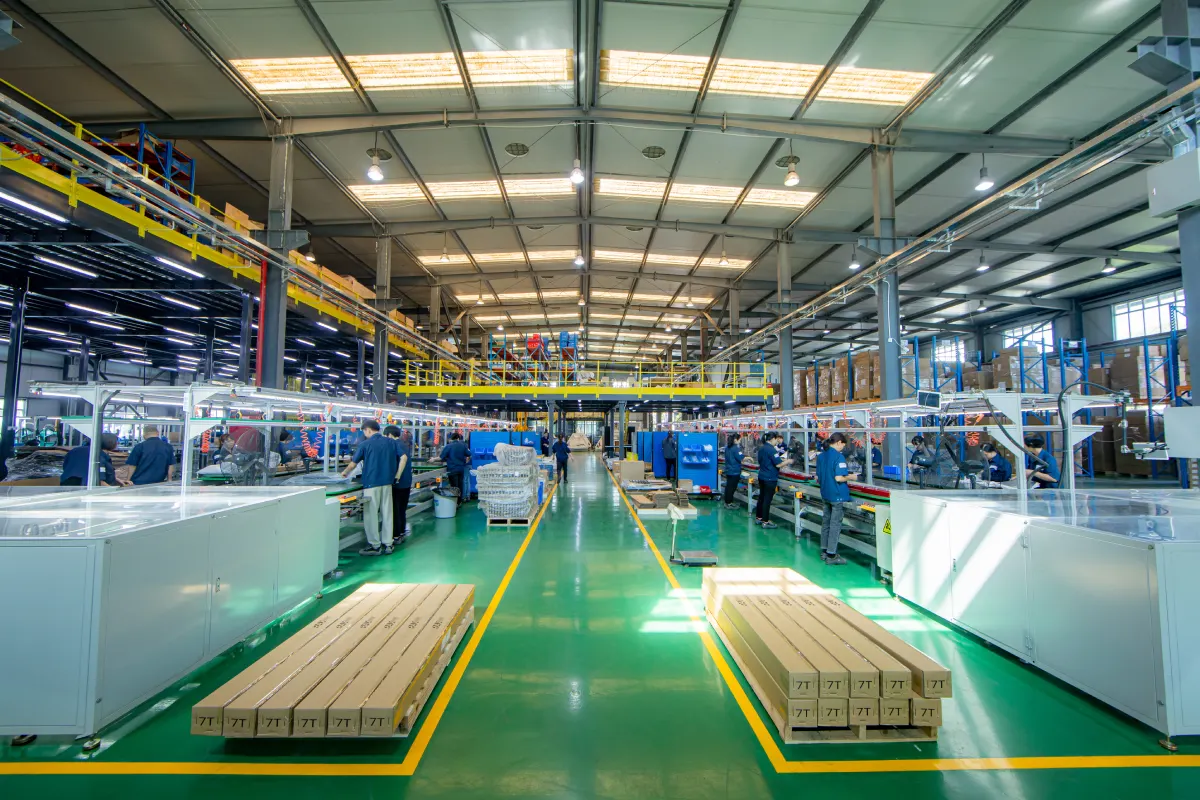
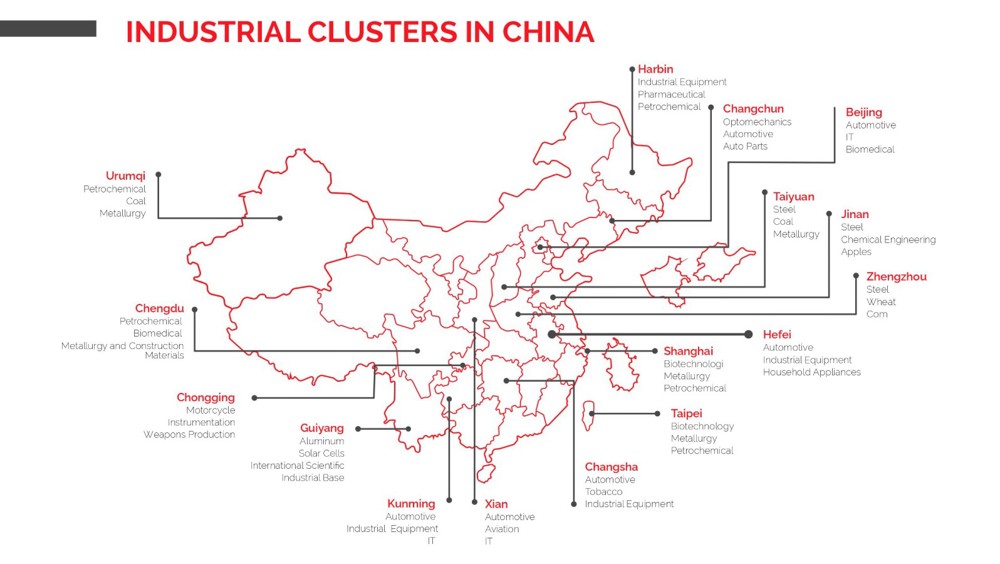
China remains the largest manufacturing hub in the world. In "the world's factory" you can find reliable, scalable, affordable, vertically-integrated, export-ready production.
The country is ahead in electronics, automotive, machinery, medical, and other demanding industries, thanks to technical depth, high-level of engineering support, automation, and evolving quality systems.
It is genuinely difficult to find these capabilities elsewhere at the same level.
Advantages of Manufacturing in China
- Supplier depth across nearly every product category, making component sourcing and scaling much easier.
- Support for engineering and product development – enabling fast prototyping, iterative design and access to local research and development, which can be valuable if you are still developing your product.
- High level of automation and vertical integration for smooth production. Quality control systems with decades of refinement, capable to consistently meet demanding international standards.
Disadvantages of Manufacturing in China
The tariff situation is the most significant downside. The US-China trade war has produced tariffs as high as 50% on many Chinese goods, with rates subject to sudden changes that make long-term cost planning difficult. That alone has been enough to push some companies toward Vietnam regardless of other factors.
Beyond tariffs, China's alignment with Russia and the ongoing tension around Taiwan have introduced reputational and operational risk that companies with Western customers increasingly have to account for.
Perceived IP risk is another real concern. Weak enforcement, counterfeit exposure, and limited legal recourse (particularly for smaller companies) have made some manufacturers cautious about running sensitive production through Chinese facilities.
An aging population also adds a longer-term labor question that hasn't resolved itself.
Manufacturing in Vietnam
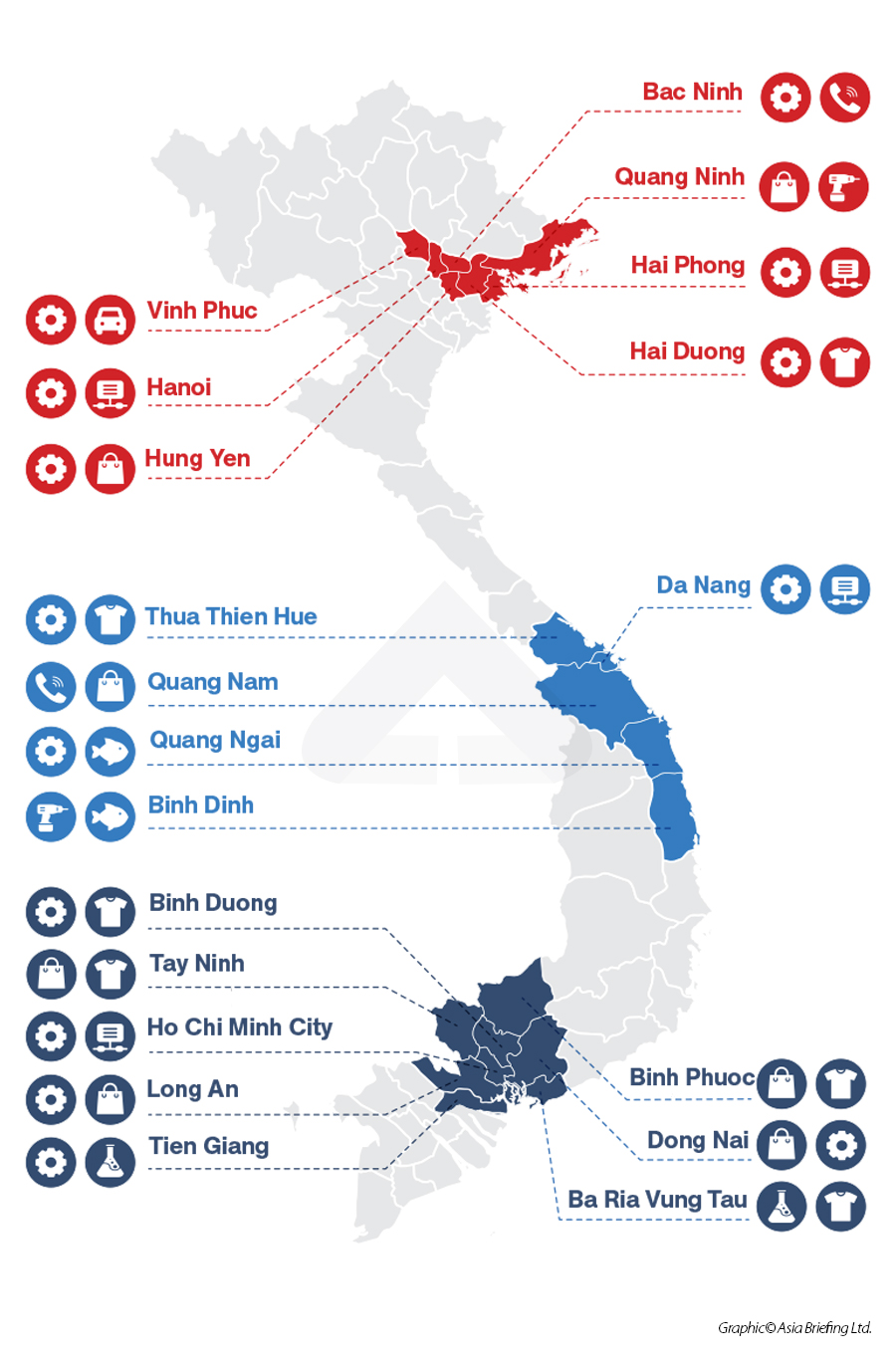
Vietnam's manufacturing has moved well beyond being a low-cost appendage to China. Foreign investment has brought real infrastructure development, and trade agreement networks made the country rise as a viable alternative.
Advantages of Manufacturing in Vietnam
- Labor costs that remain 50 to 70% below China's, even after recent wage growth.
- US tariffs on Vietnamese goods have been less volatile and far lower than on Chinese goods.
- One of the most comprehensive FTA networks in Asia, including EVFTA (99% of EU tariffs by 2027), CPTPP (for duty-free access to Japan, Canada and Mexico), and RCEP (the world's largest Asia-Pacific trade agreement).
- A government that has actively courted foreign manufacturers with tax incentives, subsidies, and industrial zone development.
- Rapid expansion in electronics component production and integration into global supply chains, with high-tech exports growing faster than those in traditional categories.
Disadvantages of Manufacturing in Vietnam
Contract manufacturing in Vietnam faces a shallower supply chain. Some regions have lower local supply and are thus more reliant on imported components, many of which are supplied by China. This increases lead times and costs and means that disruptions in China can also impact output in Vietnam. Capacity for complex builds is also limited. Precision manufacturing faces equipment, scalability, and skilled workforce constraints.
Key Factors When Choosing Between China vs Vietnam Manufacturing
There's no universal answer here. The right call depends on what you're making, where it's going, how much you're making, and what risks you can actually manage.
Here are the factors that matter most.
Product Complexity And Component Availability
Choose China for high-complexity or high-precision projects. There, you will find advanced machinery, suppliers, and engineering support directly from the factory floor. For demanding industries such as medical and electronics, this is a must.
Vietnam is well suited for labor-intensive, lower-tech production. Furniture, basic electronics, and footwear are examples of products widely manufactured there.
Production for demanding industries such as automotive and electronics is improving (thanks to companies like Samsung, Intel, and VinFast) but still relies heavily on sourcing components. If you are making complex products in Vietnam, this dependency should be factored into your lead time and cost expectations.
Volume and Lead Time Expectations
China handles high-volume production reliably. The scale, automation, and supplier proximity let factories absorb large orders quickly without sacrificing quality.
Vietnam is better for small to medium batches with lower MOQs, which is why it tends to suit startups and SMEs well. Lead times generally run longer because of import dependence and lower automation levels, though for some product categories the labor cost savings make that tradeoff worthwhile.
Tariff Exposure and End-Market Location
If your end market is the US and your product is made in China, current tariff rates need to be built into every cost model. Rates have shifted abruptly before and could again.
Vietnam has come through the tariff environment in much better shape, and its FTA coverage gives exporters a structural cost advantage for European and Asia-Pacific markets that China simply can't match right now.
Engineering Support and Customization
China's engineering depth — tooling, mold design, rapid prototyping, iterative product development — is a practical advantage that shows up most clearly when a product is still being refined or when production requires tight feedback between design and manufacturing. That infrastructure is mature and widely available.
Vietnam is catching up, particularly in facilities attached to major foreign manufacturers, like Samsung or Intel. Most domestic manufacturers still offer limited engineering support and are building out quality processes incrementally.
Product Quality And Cost
Vietnam manufacturing is generally more cost-effective, especially for labor-intensive products, as China's wages have been going up and Vietnam has not kept pace. However, heavy reliance on imported components can erode those savings, depending on what is being produced.
About quality, China tends to be more consistent for complex components because of their decades of industrial maturity. Vietnam is more competitive in the areas where it has developed real depth, such as footwear, garments and furniture, as it is still developing QC systems.
Do You Have to Choose Just One? The Case for Dual Sourcing

Most manufacturers don't have to pick China vs Vietnam manufacturing. A dual-sourcing model that uses factories in both countries lets you capture their strengths without being fully exposed to their risks.
Benefits of a Dual China and Vietnam Strategy
The main benefit is resilience. When trade policy shifts, when a factory goes offline, when shipping rates spike on one route, companies with production split across two countries have more options than those concentrated in one.
Dual sourcing also enables cost optimization that's harder to achieve from a single location. For example, high-tech component manufacturing in China, and final assembly or labor intensive stages in Vietnam can produce better unit economics than either country alone.
Diversification as a Competitive Advantage
Diversifying production between manufacturers in Vietnam and China enables your company to adapt more quickly to new markets, scale more efficiently, negotiate better prices and react more effectively to geopolitical changes.
This not only helps reduce risk, but also puts you ahead of competitors tied into single-location supply chains.
Vietnam is a good prospect for diversification, with trade networks offering quick access to markets in Europe and North America. It is no coincidence that it has become one of the leading targets for "China Plus One" strategies that avoid sole dependence on Chinese manufacturers.
When Dual Sourcing Works Best
It works best when a product can be developed in China and assembled in Vietnam at lower MOQ. Growth-stage companies benefit from this structure regularly.
High-volume, low-margin products also make good candidates: labor-intensive stages go to Vietnam, China's automation handles component manufacturing, and the total cost lands lower than either country alone.
This strategy is also great for products sold in large quantities with thin profit margins. The parts that need a lot of manual work can go to Vietnam, while the components are made at China's automated factories. By combining these, the total costs are often lower.
Deciding Between China vs Vietnam Manufacturing
Deciding Between China vs Vietnam Manufacturing
"China or Vietnam?" is not a yes or no question. It depends on what you are producing, your market, expected volume, risk tolerance, and diversification strategy.
China has the production depth and robust supply chain for complex projects. Vietnam has the labor cost advantage, better tariff position, and extensive trade networks. Both can deliver quality products at competitive prices. And in many cases, you don't have to choose one or another.
Komaspec operates factories in both China and Vietnam and can help you find the right setup for your next project. Both facilities handle the entire production process (sourcing, manufacturing, assembly, quality control, and delivery) under a single point of contact.
FAQ
Q: Is Vietnam cheaper than China for manufacturing?
On labor, yes. Vietnam runs roughly 30–60% cheaper. But the total landed cost is more complicated. Logistics, component sourcing, and longer lead times can close that gap, and in some cases tip it back toward China.
Q: Which location is better for high-volume production?
China. The scale, automation, and infrastructure aren't matched elsewhere yet. Vietnam is a better fit for lower-volume, labor-intensive runs.
Q: Can I source from both countries simultaneously?
Yes, and it's often the smarter move. Most dual-sourcing setups involve Chinese component manufacturing with Vietnamese assembly, but the specifics depend on your product and supply chain.
Q: What are the major risks to consider for each?
China: tariff exposure (especially for US-bound goods), geopolitical risk tied to Russia and Taiwan, IP protection gaps.
Vietnam: shallower supply chain, infrastructure limitations in some regions, limited skilled labor for advanced or high-precision manufacturing.