
How to Find a Contract Manufacturer in Vietnam
- Key Takeaways
- Why Choose Vietnam?
- Steps to Find a Contract Manufacturer in Vietnam
- Vietnam-Specific Supply Chain and Manufacturing Challenges
- Legal and Compliance Implications
- The Costs of Contract Manufacturing in Vietnam
- Work With a CM That Knows Vietnam
- FAQs
To find a contract manufacturer in Vietnam, you need to define your product specifications, research suppliers through B2B platforms and trade shows, vet candidates through factory audits and reference checks, and negotiate a contract that protects your IP and sets clear quality standards. It sounds straightforward — but Vietnam's manufacturing base is fragmented, and the verification process takes more groundwork than the country's reputation suggests. This guide walks through each step in detail.
Labor costs run about 50% lower than China's, and its free trade agreement network gives it real tariff advantages across key export markets. For buyers already diversifying out of China, it's a serious option that requires more groundwork than the country's reputation suggests.
Finding the right contract manufacturer in Vietnam is harder than it looks.
The core challenge is verification. Vietnam's manufacturing base is fragmented - a mix of large export-oriented factories, mid-size subcontractors, and small workshops that often present themselves identically online.
Directories and trade platforms give you names, not capability assessments. A factory may hold the right certifications and still lack the process controls to hit your quality specifications at volume. Some subcontract work without disclosure.
In this article, you will learn how to find good contract manufacturing suppliers, and how to choose the most suited to your business.
Key Takeaways
Contract manufacturing is a business model in which a company outsources the production of its products — or components — to a third-party factory. The buyer retains ownership of the design, brand, and intellectual property; the manufacturer provides the production capability, equipment, and labor. In Vietnam, this model is widely used across electronics, furniture, footwear, automotive components, and metal fabrication — making it one of the most active contract manufacturing destinations in Southeast Asia.
- Vietnam offers significant cost advantages as a manufacturing hub, including labor costs lower around 50% than China ($2.99/hour vs $6.50/hour in China), modern infrastructure, and access to 15+ free trade agreements.
- Multiple manufacturing models (OEM, ODM, and CM) offer different levels of customization, IP flexibility and speed to market.
- Finding the right contract manufacturer in Vietnam involves clear product definition, supplier research, thorough vetting (including audits), and well-structured contracts.
- Vietnam faces infrastructure gaps, labor shortages, and regulatory complexity. Because of this, many suppliers still rely on Chinese imports.
Table of Contents
- Why Choose Vietnam for Contract Manufacturing?
- Understanding Vietnam's Manufacturing Landscape
- Steps to Find a Contract Manufacturer in Vietnam
- Vietnam-Specific Supply Chain and Manufacturing Challenges (And How to Mitigate Them)
- Legal and Compliance Implications of Contract Manufacturing in Vietnam
- The Costs of Contract Manufacturing in Vietnam
- Work With a Contract Manufacturer That Knows Vietnam
- FAQs
Why Choose Vietnam for Contract Manufacturing?
While China is traditionally seen as the go-to-source for overseas contract manufacturing, more companies are looking to Vietnam as an appealing alternative. Low labor costs, improving infrastructure, and a strong FTA network make Vietnam a credible choice.
Key Advantages of Vietnam Contract Manufacturing
Vietnam's manufacturing sector offers several structural advantages that hold up beyond the headline numbers:
- Labor costs: Vietnam's labor rates average around $2.99/hour, approximately 50% lower than China's $6.50/hour — a significant advantage for labor-intensive production.
- Free trade network: Free trade network: Vietnam has signed more than 15 FTAs, including the CPTPP, EVFTA, and RCEP — reducing tariffs and customs friction for buyers in North America, Europe, and Asia.
- Strategic Geographic Location: Vietnam offers easy access to ASEAN markets and some of the world's busiest shipping lanes.
- Pro-business policies: the government actively invests in manufacturing by training the labor force, developing modern infrastructure, and welcoming foreign investments. At the same time, local government promotes foreign investment with tax incentives, streamlined regulations, and a growing network of industrial zones equipped with modern infrastructure.
Which Industries Are Best for Contract Manufacturing in Vietnam?
Vietnam's depth varies by sector. Some industries have developed genuine expertise in technical capability and established supply chains, well beyond basic cost advantages.
The major contract manufacturing sectors are:
- Automotive components with foreign OEMs like Denso, Hyundai, and Bosch contracting local production of parts and assemblies.
- Metal fabrication and precision components: with strong capacity in CNC machining, stamping, and sheet metal across northern industrial zones.
- Plastic injection molding: supplying consumer goods, industrial components, and packaging for both local and global buyers.
- Electronics, with presence of giants like Samsung, Foxconn, and Intel.
- Furniture (specially wooden and outdoor) supplying large retailers in the U.S. and Europe
- Footwear and leather goods, with established supply chains and presence of exporters like Nike, Puma, and Vans
Understanding Vietnam’s Manufacturing Landscape
Vietnam's manufacturing base is more varied than it appears. Regional specializations, different supplier models, and distinct production cultures mean that where you source and what kind of manufacturer you work with have a direct impact on cost, quality, and speed.
Major Regional Manufacturing Hubs in Vietnam
Vietnam's industrial capacity is distributed across three main regions, each with its own strengths.
| Region | Major Cities | Key Industries | Logistics & Trade | Labor Market | Infrastructure |
|---|---|---|---|---|---|
| North Vietnam |
|
|
|
|
|
| South Vietnam |
|
|
|
|
|
| Central Vietnam |
|
|
|
|
|
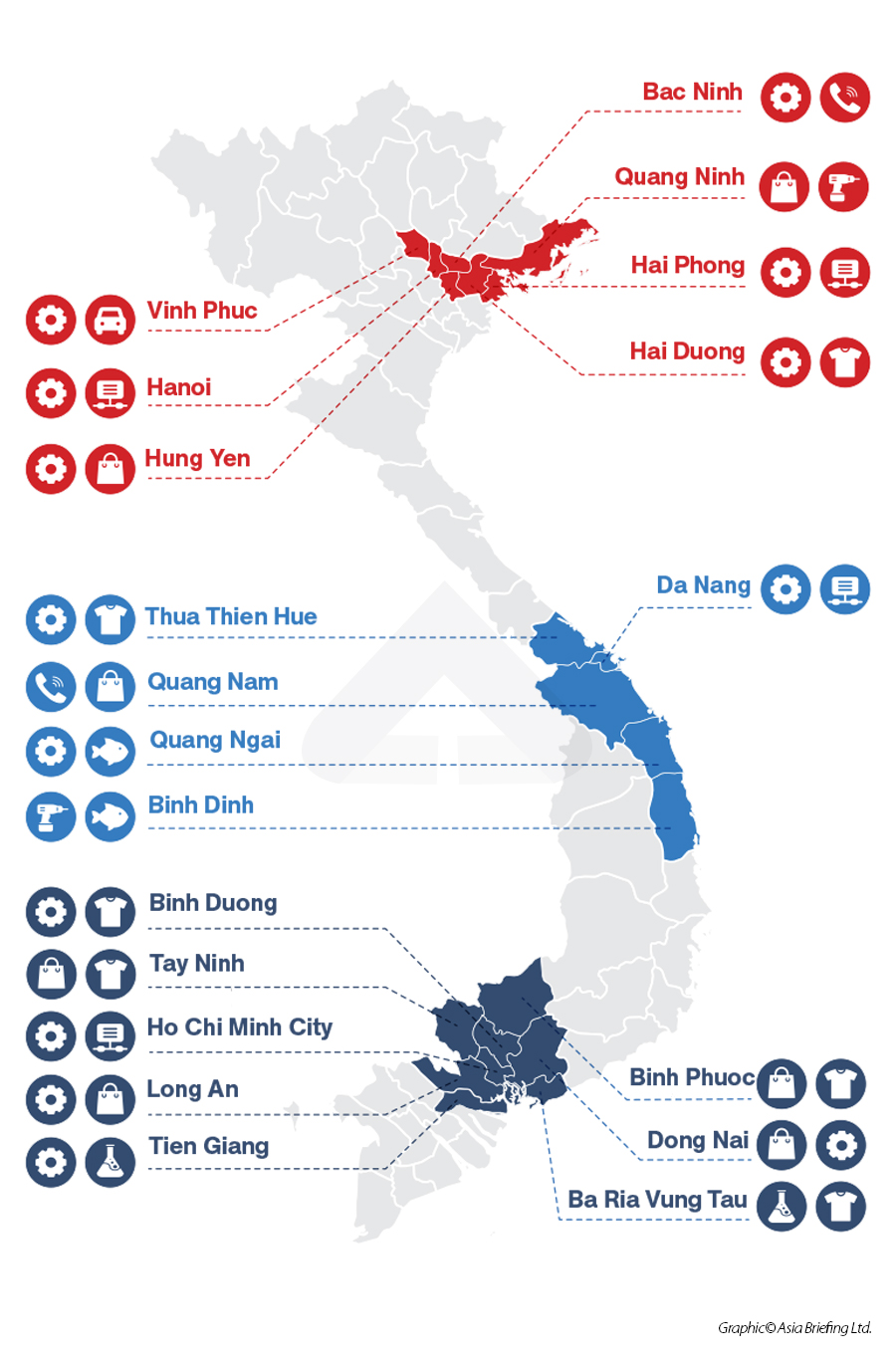
Here are some highlights regarding the manufacturing geography of Vietnam:
- North – Hanoi, Bac Ninh: High tech and electronics manufacturing is located in these places due to closeness to China, skilled labor force, and efficient infrastructure. Samsung, Intel, Canon and Foxconn are located here.
- Southern Vietnam – Ho Chi Minh City, Binh Duong, Dong Nai: One of the first industrialized places in the country. It moved from only domestic industry to cover many sectors.
- Central Vietnam – Da Nang and nearby places: This part of Vietnam is still developing. It offers cheaper labor and land cost, and has growing industrial parks.
Types of Manufacturers in Vietnam
Vietnam has several distinct manufacturer types. The right one depends on how much of the product development you own and how much control you need over production. If you're looking for a contract manufacturing model with full IP protection and end-to-end support, Komaspec Vietnam facility specializes in exactly that.
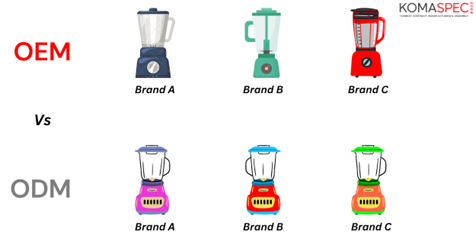
- OEM (Original Equipment Manufacturer). OEMs produce to your design, using their existing supply chain and technology. Foreign investment in Vietnam's OEM industry has reached nearly $26 billion. The model works well when you have your own R&D and branding but need reliable, scalable production. There is room for customization, though IP ownership can be mixed and tooling costs are often significant.
- ODM (Original Design Manufacturer): ODMs develop the products under their own IP and you brand and sell them as yours. Consumer electronics is a major ODM strength in Vietnam. The development time is shorter and the upfront costs are lower but the IP protection is limited and the products are generally less differentiated.
- CM (Contract Manufacturer): Contract manufacturers build to your specs and do not offer a design or a brand. This model provides the highest degree of customization, product control and IP protection. Development is slower and may cost more.
| Category | OEM | ODM | CM |
|---|---|---|---|
| Design Responsibility | Buyer provides design and specs | Manufacturer owns the design | Buyer provides full design and production instructions |
| IP Owner | Buyer | Manufacturer | Buyer |
| Customization Level | High | Medium | High |
| Speed to Market | Slow/Medium | Fast | Medium |
| Cost | Medium/High | Low | Varies |
| Use Cases | Tech, Automotive, Electronics | Electronics, Fashion | Pharmaceuticals, Food, Industrial |
Steps to Find a Contract Manufacturer in Vietnam
Finding a contract manufacturer in Vietnam rewards preparation. You have to take some steps to correctly specify your production needs, identify red flags early, request samples, and negotiate contracts that protect your interests.
See below the 8 main steps you should take to find a contract manufacturer in Vietnam, from the moment you are finishing your technical drawings, to the daily contact with the factory.
Step 1: Define Your Requirements
Before reaching out to any manufacturer, clearly define your product and production needs. Include detailed specs (materials, dimensions, tolerances), target volumes, quality and compliance standards. Included Vietnam-specific challenges such as raw material sourcing and logistics constraints. Cover at minimum:
- Detailed specifications (materials, dimensions, tolerances, surface finishes)
- Target volumes
- Possibility of scaling
- Quality and compliance standards (ISO, CE, UL, or whatever applies to your product)
- Packaging and labeling requirements
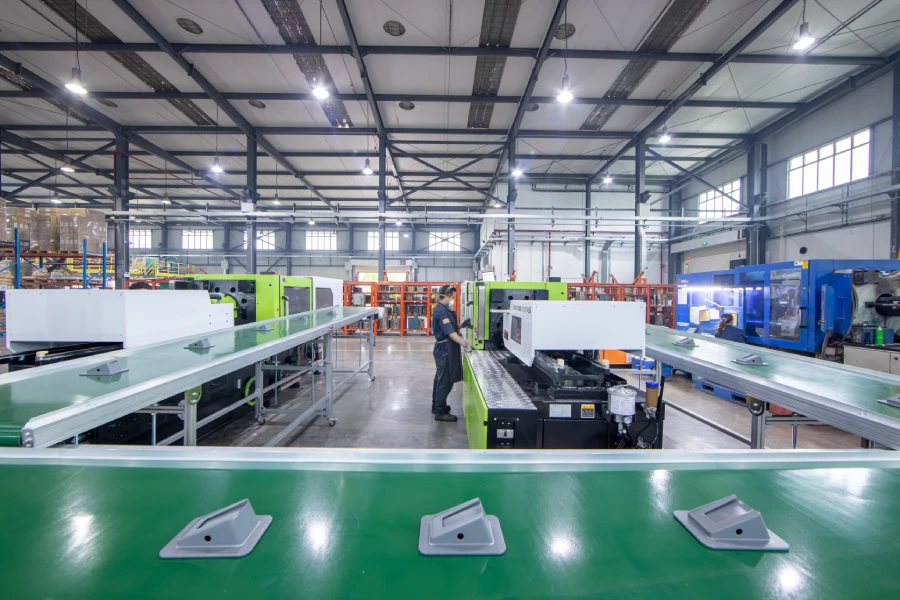
Step 2: Research and Identify Potential Suppliers
Many contract manufacturers in Vietnam won't have a strong digital presence. So, you have to use alternative ways to build your supplier list. Options such as online platforms, trade shows, and local support shall remain on your list.
If you'd rather start with a proven partner, Komaspec's Vietnam facility is available for a free consultation.
Online platforms
- Alibaba is widely used but requires careful vetting
- VietnamExport.gov.vn is an official export directory from VIETRADE, useful for finding registered factories
- VietFactory and VietnameseMade.com are B2B sourcing sites focused on Vietnam-based manufacturers
- Vietnam Credit provides supplier registration and creditworthiness data
Use each platform as a searchable database to narrow the field before reaching out. Pre-vetted recommendations don't exist here.
Trade shows
- Vietnam Expo (Vietnam International Trade Fair) — annual event for international trade and business matchmaking
- Metalex Vietnam — annual event focused on machinery and industrial goods
Local sourcing support
- VIETRADE and Vietnam's trade associations (there are nearly 100 of them, organized by industry) can connect you directly with suppliers
- Bilingual sourcing agents or Western-managed sourcing firms are worth the cost if you don't have on-the-ground presence
Step 3: Initial Screening
Verify licenses and certifications. Check social and labor compliance. Evaluate communication skills and English proficiency. Confirm factory capabilities (product category specialization, production volume).
Check:
- Business licenses and relevant certifications
- Social and labor compliance records
- English proficiency and responsiveness — poor communication at the inquiry stage signals how the relationship will run
- Whether they specialize in your product category and can meet your volume requirements
- References from buyers with comparable product types and order sizes
Step 4: Send RFQs
Provide clear documentation: specs, tolerances, materials, packaging, and target price ranges. Address Vietnam-specific issues (shipping lead times, tariffs, raw material sourcing). Request samples or process validation.
A vague RFQ gets a vague quote, so your request for quotation should include:
- Full specs (tolerances, materials, packaging requirements, and target price range)
- Vietnam-specific variables (shipping lead times, tariff considerations, raw material sourcing)
- Requested delivery schedule and minimum order quantities
- A request for samples or process validation before you move forward
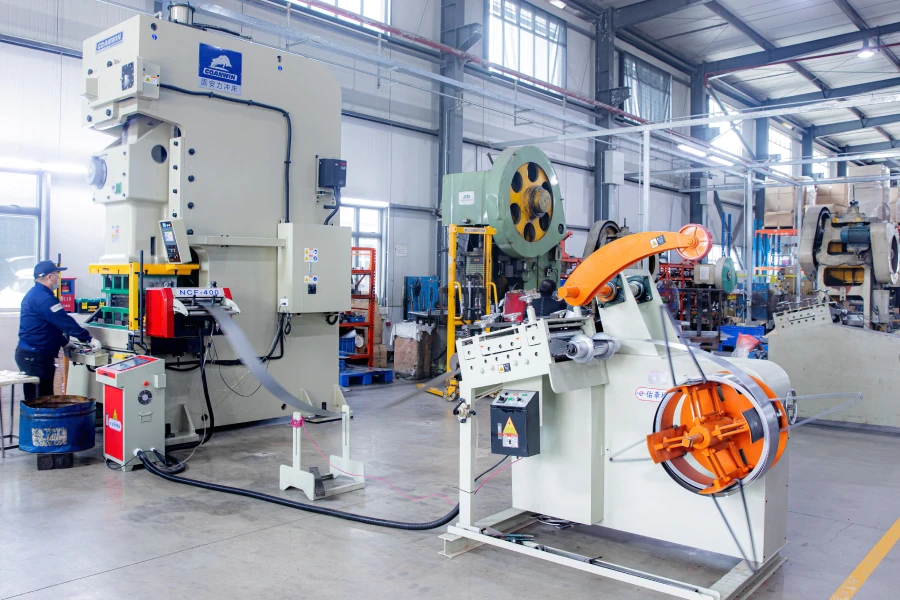
Step 5: Assess and Audit
Visit the factory or hire a third-party auditor. Review quality systems (ISO 9001, in-house inspections). Investigate raw material sourcing (dependence on Chinese imports, supply chain diversification).
The main ways to do this are:
- Visiting the facilities (in-person or through a third-party auditor)
- Reviewing quality systems, like in-house inspections and ISO standards
- Investigating raw material sourcing
- Checking production capacity against your volume projections
Step 6: Negotiate and Contract
Establish payment terms (avoid large upfront deposits). Include quality control and rework clauses. Establish IP protection via NDAs. Include force majeure clauses. Confirm infrastructure reliability (backup power, port proximity).
- Set payment terms that avoid large upfront deposits without safeguards
- Include quality control and rework clauses
- Protect your IP with NDAs
- Add force majeure clauses for unforeseen disruptions
- Confirm infrastructure reliability (backup power, proximity to ports, logistics capacity, etc.)
Step 7: Pilot Production
Run a pilot batch to test production processes, quality control, and logistics. Establish communication protocols, iron out misunderstandings, and validate timelines. Only scale up once initial runs prove successful.
Step 8: Relationship Management
Consider the contract as the starting point and constantly reevaluate the partnership.
- Define clear KPIs and expectations from the start
- Conduct periodic factory audits
- Keep direct contact with your suppliers rather than routing everything through intermediaries
Handle issues collaboratively — it builds the kind of alignment that holds when production gets complicated.
Vietnam-Specific Supply Chain and Manufacturing Challenges (And How to Mitigate Them)
Vietnam's advantages for contract manufacturing are real, and so are the operational constraints that come with the territory.
The main ones to plan for:
- Infrastructure deficiencies: power outages, port congestion, and road network gaps regularly affect lead times, particularly in industrial zones outside major cities.
- Skilled labor shortages: demand for precision manufacturing workers — CNC machining, electronics assembly, robotics — outpaces supply, and the gap is widening as Vietnam's industrial base expands.
- Regulatory complexity: customs procedures, tax treatment, and import/export rules vary by province and can change with short implementation windows, catching foreign buyers off guard.
- Inconsistent quality: Vietnam has world-class factories and small workshops with weak quality controls — and the difference isn't always visible until production starts (review quality management at Komaspec).
- Import dependence on China: a large share of Vietnamese factories source key inputs from China, meaning cross-border disruptions or tariff changes can halt your production at short notice.
Here's a closer look and how to mitigate each challenge.
Infrastructure Gaps
The infrastructure in Vietnam has improved a lot in the last decade, but the gaps still pose operational problems. In industrial zones outside the major cities, power is not reliable and some factories have backup generators as a matter of course.
Congestion is also a real concern in certain regions, especially during peak seasons. As such, it can be problematic getting goods from an inland factory to a coastal port on a tight schedule.
How to mitigate: build buffer time into project timelines. Treat delays in infrastructure and logistics as expected.
Skilled Labor Shortages
Vietnam's labor force is large and growing, but skilled manufacturing labor — e.g. precision CNC machining, robot-assisted assembly, semiconductor fabrication — is in short supply relative to demand.
As the country's industrial expansion accelerates, workers are finding jobs in manufacturing faster than training programs are producing qualified technicians, although there is government investment in this regard.
How to mitigate: Invest in supplier development where the relationship merits it. Training and process support can increase baseline capability over time.
Regulatory Complexity
Vietnam's regulatory environment is decentralized. Provincial authorities are responsible for customs procedures, tax treatment and import/export regulations and there can be significant differences between regions.
Rules change too, sometimes with short implementation windows. Foreign buyers who rely on their manufacturer to handle compliance without independent oversight regularly get caught off guard.
How to mitigate: Use bilingual sourcing agents or sourcing firms owned by Westerners. They reduce communication failures, and keep you abreast of local regulatory changes.
Inconsistent Quality Across Suppliers
Vietnam has world-class factories that manufacture products for major global brands, as well as small workshops with weak quality control processes. As a result, you will encounter varying quality offered by each supplier—and, sometimes, from one batch to the next.
How to mitigate: Perform third party quality inspections and set stringent tolerances and acceptance criteria before production.
Import Dependence on China
A large share of Vietnamese factories source specialized raw materials and components — steel, electronic components, specialty plastics, tooling, etc. — from China.
A Vietnamese factory can be halted quickly by disruptions across borders or tariff changes, and may not be able to find an alternative supplier at short notice.
How to mitigate: If possible, diversify your supply chain so that you're not dependent on just one supplier or region.
Legal and Compliance Implications of Contract Manufacturing in Vietnam
Most of the focus goes to production costs. But there are real operational weights in legal and compliance requirements.
Legal and Compliance Requirements
Ensure your supplier holds valid business licenses and maintains a clean labor compliance record. Vietnam's labor laws set conditions on work hours and remuneration — and compliance can vary by province, which makes independent verification important. Also confirm up-to-date Environmental Health & Safety (EHS) certifications; a supplier out of compliance can become a liability if it faces legal scrutiny.
International Compliance Standards
Depending on your target market, your products may need to comply with CE, RoHS, ISO 9001/14001. Factor into cost and timeline. IP (patents, trademarks, designs) should be registered through National Office of Intellectual Property (NOIP), especially with ODMs.
What to Include in Your Contracts
A good contract manufacturing contract should contain:
- Subcontracting restrictions and worker protections
- IP protection clauses
- Certificates of Origin, Customs Declarations, and Product Testing Reports
- Dispute resolution terms
The Costs of Contract Manufacturing in Vietnam
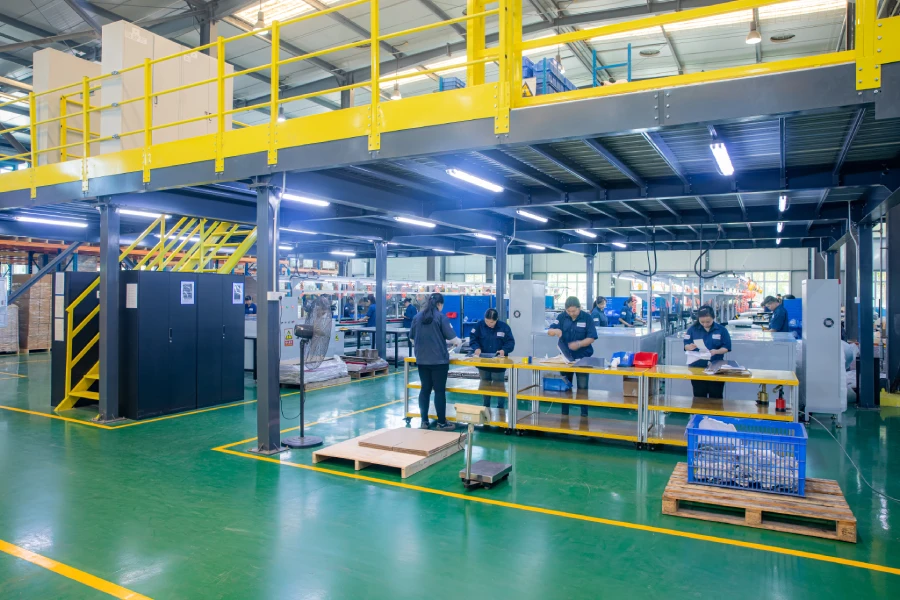
Vietnam offers some of the lowest production costs in Asia, with low labor costs compared to other nations. Good budgeting, however, requires consideration of all aspects, both direct and indirect.
The following represents a summary of the primary cost factors, including those that surprise most companies.
Cost Breakdown
All Vietnam manufacturing budgets have the same basic line items, but the difference between a good estimate and a bad one is usually underestimating the indirect ones.
- Labor costs in Vietnam are one of the lowest in the region and far lower than China, averaging about $2.99/hour. This is the most cited benefit, and it is true.
- Materials are still imported in large quantities, often from China. Consider the unit price, but also the foreign exchange rates and customs duties on those inputs.
- Shipping and logistics in Vietnam involves freight forwarding, inland transport and port handling. Costs depend on the factory's proximity to export ports.
- Inspection and compliance are a must and will increase your per-unit cost. Meeting international standards like CE, RoHS, and ISO may also require other certifications or documentation, each with its own fee structure.
- Customs, VAT, and tariffs are applied on many types of goods. Most products are subject to a 10% VAT, which may be refundable on export. Add tariff classification, customs clearance fee and any import duties for the materials sourced outside Vietnam.
- Infrastructure buffers are often needed because of power cuts, port congestion and road delays. Budget for added warehousing, generator use or alternative transport for contingency.
Hidden Costs
Even the best laid budgets are disrupted by costs that never made the line item list.
- Poor communication. There are often misunderstandings between buyers and the Vietnamese manufacturers, especially with spec interpretation and change requests. A misread tolerance or undeclared material substitution can mean a complete production has to be reworked or rejected.
- Rework due to quality control failures. Defective products and inconsistent batches occur especially with suppliers who don't have a robust in-process inspection. The rework costs time and money, and compresses your schedule.
- Fragmented logistics management. If your raw materials, factory and export port are in different regions in Vietnam, you will deal with multiple handoffs. Each one is a delay point, a risk of damage or an added cost that wasn't in the original freight quote.
Work With a Contract Manufacturer That Knows Vietnam
Vietnam has established itself as a serious alternative to China for contract manufacturing — not just an emerging option, but a proven destination for electronics, textiles, furniture, footwear, and industrial components. Companies that succeed here invest in understanding the local environment, building genuine supplier relationships, and treating quality control as a system rather than a series of individual tests.
Komaspec operates a 60,000 square feet facility in Vietnam (Hai Phong), offering turnkey manufacturing services from sourcing and production to quality control and logistics.
FAQs
Why is Vietnam a good choice for contract manufacturing?
Vietnam combines low labor costs (averaging ~$2.99/hour), a growing skilled workforce, improving infrastructure, strategic access to ASEAN markets and global shipping lanes, and 15+ free trade agreements that reduce tariffs across key export markets.
What industries are most common for contract manufacturing in Vietnam?
Automotive components, metal fabrication and precision components, plastic injection molding, electronics, furniture, footwear and leather goods.
What are the best ways to find reputable contract manufacturers in Vietnam?
The three main approaches are:
- Using B2B platforms to do an initial exploration of your options. Alibaba, VietnamExport.gov.vn, and Vietnam Credit are common choices
- Hiring a sourcing agent with presence in Vietnam to narrow the field and help you avoid red flags
- Visiting trade shows like Vietnam Expo and Metalex Vietnam to talk with suppliers in-person
What should I look for when evaluating a potential contract manufacturer in Vietnam?
There are many variables you might consider. The most important are:
- Production capabilities that match your requirements (equipment, capacity, lead times)
- Valid business licenses and up-to-date certifications (ISO, BSCI, CE where applicable)
- Clean social and labor compliance records
- Robust quality control systems and in-process inspection processes
- Raw material sourcing practices and supply chain exposure
- English proficiency and responsiveness
- References from other buyers with comparable order sizes
- Demonstrated ability to maintain capacity at your projected volumes, including at peak periods
Can I visit the factory before signing a deal?
Yes, and this is highly recommended to verify production capability, to build rapport with your manufacturer and to identify potential risks early. If an in-person visit isn't possible, hiring a reputable third-party auditor is a solid alternative.
If you're considering Komaspec, you're welcome to visit our Vietnam facility — or any of our facilities in China and Mexico. Reach out to arrange a visit or consultation.