
The 14 Most Common Mistakes When Manufacturing in China
- Key Takeaways
- The biggest challenges of manufacturing in China
- The Most Common China Manufacturing Mistakes
- Best Practices to Avoid Common China Manufacturing Pitfalls
- Turnkey Manufacturing Built on Accountability
- FAQs
The mistakes when manufacturing in China start in the buyer's office rather than on the factory floor. Poorly written specifications, empty contracts, miscommunication and not knowing how to manage quality control are among the biggest.
China offers incredible benefits—unmatched industrial scale, capacity in many manufacturing methods, specialized suppliers, expert toolmakers, deep supply chains, among other advantages. But these quickly evaporate when the buyer has no process for managing the relationship.
This article details the main mistakes companies make when they decide to manufacture overseas. Startups, scaling brands, mid-size manufacturers, private label sellers, established OEMs, and product designers launching their own lines must recognize these dangers and prepare accordingly to avoid burning cash on avoidable fixes.
If you want to avoid these problems altogether, at Komaspec we are ready to provide you with a complete turnkey contract manufacturing service, including assembly. Reach us any time to discuss your project.
Key Takeaways
- Active management is a must: manufacturing a product in China is not a passive process. It is crucial that you oversee manufacturing, conduct factory audits, and speak to the engineers or technical account managers, and not simply send your specifications and wait for delivery.
- Ambiguity is expensive: always specify exactly what you need, in terms of design, materials, processes, tolerances, measurement, etc. If you assume the factory will fill in the blanks, you risk receiving a very different product than you were imagining.
- Don't make quality and financial assumptions: unspoken standards and assumed best practices hold zero weight on the factory floor. You must enforce quality with proper supplier vetting and rigid acceptance criteria, and build your budget around the true landed cost (including tariffs, logistics, and hidden MOQs) rather than just the factory's quoted unit price.
- Culture and geopolitics dictate your schedule: you cannot copy-paste a Western production schedule overseas. Instead, you must actively manage cultural differences, build weeks-long buffers for massive holiday shutdowns, and in many cases establish a "China Plus One" contingency plan to protect your business from sudden tariff hikes.
Table of Contents
The Biggest Challenges of Manufacturing in China
Manufacturing success in China depends on how you manage the gap between your design files and the factory floor. This disconnect usually falls into four categories of operational failure.
First is the selection gap, where choosing the wrong partner leaves you with a factory incapable of meeting your technical or volume requirements.
Second is the information gap, where ambiguous specifications or language barriers allow factories to misunderstand your requests, or interpret requirements in ways that favor their own margins.
Third, you face a systemic gap, caused by fragmented supply chains or the lack of formal, local oversight during the production process. The result is a series of problems that compound across multiple layers and surface in the finished product.
Finally, there is the legal and cultural gap, where buyers rely on unenforceable contracts or ignore the realities of Chinese business practices to their own detriment.
These situations happen whenever you treat remote production as a passive, hands-off transaction, instead of a managed process that requires clear processes and direct inputs. Many of the most expensive mistakes when manufacturing in China originate from this assumption, leading to challenges such as:
- Factory quality varies enormously across China, and from another continent it might be hard to tell who is reliable and who is not.
- Production capacity also varies widely between suppliers, and the most well-known online directories rarely make those differences clear.
- IP protection is a well-known problem in China, which calls for extra care with contracts and legal questions before production starts.
- The language and cultural barriers are significant, and weigh more heavily on buyers that are just starting out, or that are dealing with factories that have no international teams or management experienced in working with Western clients
- Quality control, compliance, and production consistency are also recurring challenges, and the problem usually gets worse when specifications are vague or the supplier was chosen without much screening.
- Labor costs in China have been rising, cutting into the price advantage that used to draw foreign companies there.
- Concentrating production in China leaves the supply chain exposed to local disruption, whether geopolitical, logistical, regulatory, or otherwise.
- Shifts in tariffs and trade policy can hit a supply chain at any moment, regardless of how the manufacturing itself is going.
The Most Common China Manufacturing Mistakes
Chinese manufacturing does offer many benefits—but only if you know how to navigate the challenges that go along with it. Otherwise, errors will begin to accumulate throughout production.
Each lost hour devoted to solving a preventable problem, pursuing a delayed order, resolving a legal issue, or handling an unexpected miscommunication reduces your margins.
These are the 14 most common mistakes when manufacturing in China:
| Problem | Description | How to avoid |
|---|---|---|
| Not Vetting Manufacturers Well Enough | Relying solely on online directories or cheap prices without verifying actual technical capability or production volume fit. | Check their online presence, test them with technical questions, verify references independently, and attend trade fairs. |
| Not Doing Your Due Diligence | Focusing only on unit price while ignoring regulatory standards (FDA, CE), hidden costs (packaging, tooling), and component minimums. | Confirm certifications upfront, collect multiple quotes, and audit the entire Bill of Materials (BOM) for hidden costs and minimums. |
| Miscommunication with the Factory | Relying on generic emails and sales reps rather than directly communicating with engineers, causing technical nuances to get lost. | Ensure account managers have engineering backgrounds, verify English proficiency, use video calls, and document everything. |
| Failing to Coordinate Production Across Multiple Suppliers | Splitting component sourcing without active project management, leading to mismatched schedules and out-of-tolerance final assemblies. | Use a single lead coordinator, physically verify progress, or use a turnkey manufacturer to consolidate the process. |
| Approaching Factories Without Clear Specifications | Requesting quotes with partial specs and making mid-production changes, leading to expensive revisions and strained relationships. | Finalize all technical details before quoting, treat specs as rigid baselines, and embrace Design for Manufacturing (DFM) early. |
| Not Being Specific Enough with the Project | Leaving requirements open to interpretation, allowing the factory to substitute materials or apply subjective quality standards. | Use approved physical prototypes, specify raw materials and vendors, and define objective visual and technical thresholds. |
| Not Ordering Product Samples | Scaling up production based on drawings or a single "golden sample" without testing the factory's volume capability. | Request production-run samples, use pilot runs to validate the process, and keep marked copies of the final approved sample. |
| Lack of Audits | Skipping regular inspections and relying on the factory's subjective reporting, allowing minor deviations to slip through. | Implement standardized step-by-step inspection protocols and hire qualified independent inspectors to verify progress. |
| Poor Quality Control | Failing to align quality expectations or ignoring internal QA processes, leading to ambiguous defect thresholds and late-stage conflicts. | Formalize written acceptance criteria, perform in-process inspections at 80%, and condition final payment on passing criteria. |
| Weak IP Protection | Using standard domestic NDAs that hold no legal weight in China, leaving proprietary designs exposed to competitors. | Use a China-specific NNN (Non-Disclosure, Non-Use, Non-Circumvention) agreement and run background checks on the factory. |
| Using Generic Contracts | Relying on foreign legal templates or verbal promises that are unenforceable in the local Chinese court system. | State proper dispute resolution locations (like CIETAC), use the exact company name, and require the physical company seal. |
| Incorrect Pricing | Budgeting only for pure manufacturing unit costs while ignoring hidden fees like logistics, customs, and component MOQs. | Calculate total landed cost, ask for component-level breakdowns, and check MOQs on all custom components. |
| Not Accounting for Cultural Differences | Ignoring the concept of "face" (hiding mistakes) and failing to plan around massive, weeks-long Chinese holiday shutdowns. | Foster a collaborative relationship for honest reporting, build holiday buffers into your schedule, and enforce penalty clauses for delays. |
| Not Accounting for Geopolitical and Tariff Risk | Relying exclusively on China without a contingency plan for sudden tariff hikes or geopolitical disruptions. | Model the financial impact of tariffs and actively qualify secondary suppliers in alternative hubs like Vietnam ("China Plus One"). |
Now we will take a closer look into each of them.
1. Not Vetting Manufacturers Well Enough
Sourcing is not simply about looking for the best deal on cost alone. If you do not adequately review the factory, you are taking a risk on its capability to meet your demands from a technical standpoint.
This type of problem occurs due to many buyers' preference for convenience, using factors such as ratings on big platforms, or checking just the production cost of a part, without considering the total landed cost.
The effect is immense, since poor vendor verification will ultimately lead to manufacturing problems and other mistakes when manufacturing in China further down the road.
The main mistakes are:
- Sourcing exclusively from online directories like Alibaba, where suppliers compete on visibility rather than on genuine production capability.
- Choosing factories that say "yes" to every request. They often gloss over technical aspects and accept every request regardless of whether they can fulfill it or not, just to close the deal.
- Accepting the manufacturer's references without independently verifying them.
If you want to avoid the time and risk of vetting factories on your own, at Komaspec we are ready to provide you with a complete turnkey contract manufacturing, service, including assembly, under one accountable roof. Reach us any time to discuss your project.
- Selecting a manufacturer whose production model doesn't match your expected volume. For example, approaching a turnkey manufacturer to make standalone parts, or a high-mix, low-volume manufacturer for mass production.
- Seeking only the cheapest price. When an offer appears almost unbelievable, the factory will probably try to save money during production and inspection.
How to avoid these mistakes:
- Check the manufacturer's online presence. Verify their website and look for guided factory tours, corporate history, case studies, and explanations of internal processes.
- Visit trade fairs to talk personally with representatives of Chinese manufacturers.
- Put the factory to the test during the quoting process. Ask detailed technical questions and see how the workers handle pushback.
- Verify references by independently contacting past clients through professional networks.
- Align your order volume with the factory's core business so that your project remains a priority and is executed with maximum efficiency.
2. Not Doing Your Due Diligence
Skipping due diligence is one of the costliest mistakes when manufacturing in China, because it usually means focusing on unit price while ignoring the regulatory and structural realities of your destination market.
Products get seized at customs, or you discover too late that hidden component minimums make your real cost-per-unit unsustainable.
Success depends on knowing upfront what a factory can actually produce and what legal hurdles your product has to clear before it reaches the end user.
The main mistakes are:
- Failing to comply with standards like FDA, CE or RoHS, depending on your market destination.
- Pushing for prices below realistic production costs.
- Looking only at the product MOQ while ignoring other factors, like packaging.
How to avoid these mistakes:
- Confirm all required certifications before production starts.
- Collect quotes from multiple vetted suppliers to better understand your cost structure.
- Pay attention to hidden costs as well, such as tooling fees, custom packaging minimums, sample charges, and inland freight to the port, that are not always clear from the start.
- Audit the entire Bill of Materials (BOM), stating minimums for every component, including packaging and labels.

3. Miscommunication with the Factory
Dependence on generic emails makes you out of touch with engineers and manufacturers who actually do the work, and that's because buyers tend to consider the salesperson to be a specialist in the field. However, their task is to close deals, not oversee tolerances.
If you fail to identify the right people responsible for each stage of production, the output will look nothing like your original intent.
The main communication mistakes companies make when manufacturing in China are:
- Asking technical questions to account managers without engineering backgrounds.
- Working with suppliers with limited fluency in English.
- Communicating solely through email, which can hide nuances in communication that only appear during live interaction.
- Starting a project without identifying clear points of contact for billing, shipping, and production.
- Treating the manufacturer as a self-correcting entity, which lets it fill the communication vacuum with their own operational priorities.
Ways to prevent these mistakes:
- Select a vendor whose account managers know how production really operates.
- Assess your supplier's writing, oral, and listening proficiency in English.
- Select vendors that offer you live information when required.
- Never assume your manufacturer understands your requirements. Ask for confirmation.
- Document everything to create a paper trail in case of future disputes.
4. Failing to Coordinate Production Across Multiple Factories and Suppliers
The moment you split your component sourcing across multiple vendors, you instantly inherit the job of project manager—and ignoring that reality guarantees trouble. Many buyers mistakenly assume that independent workshops will organically synchronize their production schedules and quality standards on their own.
In reality, without someone actively coordinating the workflow, your components will show up weeks apart or completely out of tolerance simply because no one verified the incoming parts before final assembly, creating some of the most costly mistakes when manufacturing in China.
The turnkey manufacturing model eliminates this exact chaos by consolidating the entire process under a single point of contact. With one partner taking full responsibility for every stage of production, you avoid the logistical nightmare of herding disconnected suppliers.
The main mistakes are:
- Managing several factories as isolated entities, which prevents you from catching delays or quality deviations until it's too late to fix them.
- Letting production spread across various workshops without any physical or digital tracking presence, which compounds errors in parts handling.
- Expecting to coordinate complex, multi-site production from afar without on-site support, leaving you blind to daily operational changes.
How to avoid these mistakes:
- Implement a consistent method (either through your own system or by appointing a local agent) to ensure that all samples are tracked.
- Have all subcontractors report to one lead coordinator responsible for assembling the components.
- Physically visit sites to verify the project is following the schedule, instead of relying solely on reported information.
- Consider business models such as product contract manufacturing or turnkey manufacturing.
5. Approaching Factories Without Clear Specifications
Requesting quotes from partial specs ensures that you face an extremely expensive uphill struggle.
Many times, buyers assume that since the design stage allows for some flexibility, they can modify technicalities or aesthetics without necessarily altering the initial cost baseline. But each and every change made while you are in the middle of the manufacturing process costs you valuable time and money.
Do not confuse "poor specification planning" with Design for Manufacturing (DFM), though. DFM is a deliberate, collaborative effort between your team and the manufacturer's to make production more efficient by optimizing elements like design features and material choices.
The main mistakes are:
- Requesting quotes without firm specifications, which forces factories to estimate based on guesswork and leads to cost increases later that are hard to manage.
- Continuously tweaking features after production starts, which strains the relationship and causes the factory to deprioritize your order in favor of more stable clients.
How to avoid these mistakes:
- Finalize every technical detail, drawing, and material choice before asking a single factory for a price.
- Treat your initial specification as a rigid baseline to keep costs predictable and maintain the factory's full engagement.
- Inquire about DFM practices and be open to your manufacturer's suggestions.
- Negotiate pricing based on realistic production milestones.
- Build scheduled forecast reviews into your contract so the factory can adjust accordingly.
6. Not Being Specific Enough with the Project
Allowing requirements to be interpreted gives way to subjective considerations. And subjectivity creates unpredictability. Your "standard" and the manufacturer's "standard" will never be the same, and the difference will likely result in poor quality and rework later on.
If details aren't clearly documented, you have no grounds to push back when a shipment arrives looking, feeling, or functioning incorrectly.
The main mistakes are:
- Failing to clearly specify exact weights, thicknesses, or material types, which gives the factory permission to use lower-cost alternatives.
- Not naming approved raw material vendors in your contract, or not requesting material identification, which allows the factory to switch to cheaper, unknown alternatives without your knowledge.
- Not outlining acceptable quality limits, or defect thresholds.
- Not discussing expectations for inspections before the product leaves the factory.
How to avoid these mistakes:
- Use an approved physical prototype as the absolute reference point for all production runs to eliminate subjective interpretations.
- Require reports for every batch to ensure raw materials meet your exact chemical and physical specifications.
- Specify the worst-case acceptable versions of aesthetic features to provide an objective visual threshold for rejection.
- Define every detail and specify each objectively — from colors to material specifications and design features.
7. Not Ordering Product Samples
Samples are the only way to prove a factory's capability versus its marketing claim, which is why skipping them remains one of the most expensive mistakes when manufacturing in China.
This mistake happens when buyers rely on drawings and promises, skipping the validation that reveals whether a factory can actually execute the design at scale.
Relying on theory over physical proof is how you end up with a high-volume order of defective goods.
The main mistakes are:
- Placing an order based on specs alone, which leaves you completely exposed if the factory can't technically manufacture what's on the page.
- Mistaking a perfectly crafted "golden sample" for the actual production reality, which leads to quality discrepancies.
- Assuming a working prototype translates automatically to consistent volume production without testing the stability of the manufacturing process.
- Failing to check whether your production process can hold up under volume, which leads to high defect rates once the line runs at full capacity.
How to avoid these mistakes:
- Ask for a production-run sample before signing any contracts to ensure the factory's capacity.
- Use a pilot production to validate your design before full-scale production.
- Develop a well-thought-out transition from prototype to production where materials, machinery, and assembly can be tested for reproducibility.
- Keep marked copies of the final, approved sample for you, for the manufacturer, and for the QC inspector, to act as the physical source of truth for the entire production run.
8. Lack of Audits
Skipping regular audits creates a significant blind spot in your supply chain. When factories lack rigorous in-house quality engineering, production decisions are often made informally, relying on assumptions rather than measurement and documentation.
This means that minor deviations can silently slip through, and that you might have difficulty holding your Chinese manufacturer accountable if quality drops.
The main mistakes are:
- Lack of archive documentation for product IDs, deviation logs, and other relevant information.
- Corrections done without doing proper root-cause analysis just to deliver on time, which leads to ignoring the source of the problem.
- Relying on subjective confirmation from project managers rather than doing objective inspections backed by data.
How to avoid these mistakes:
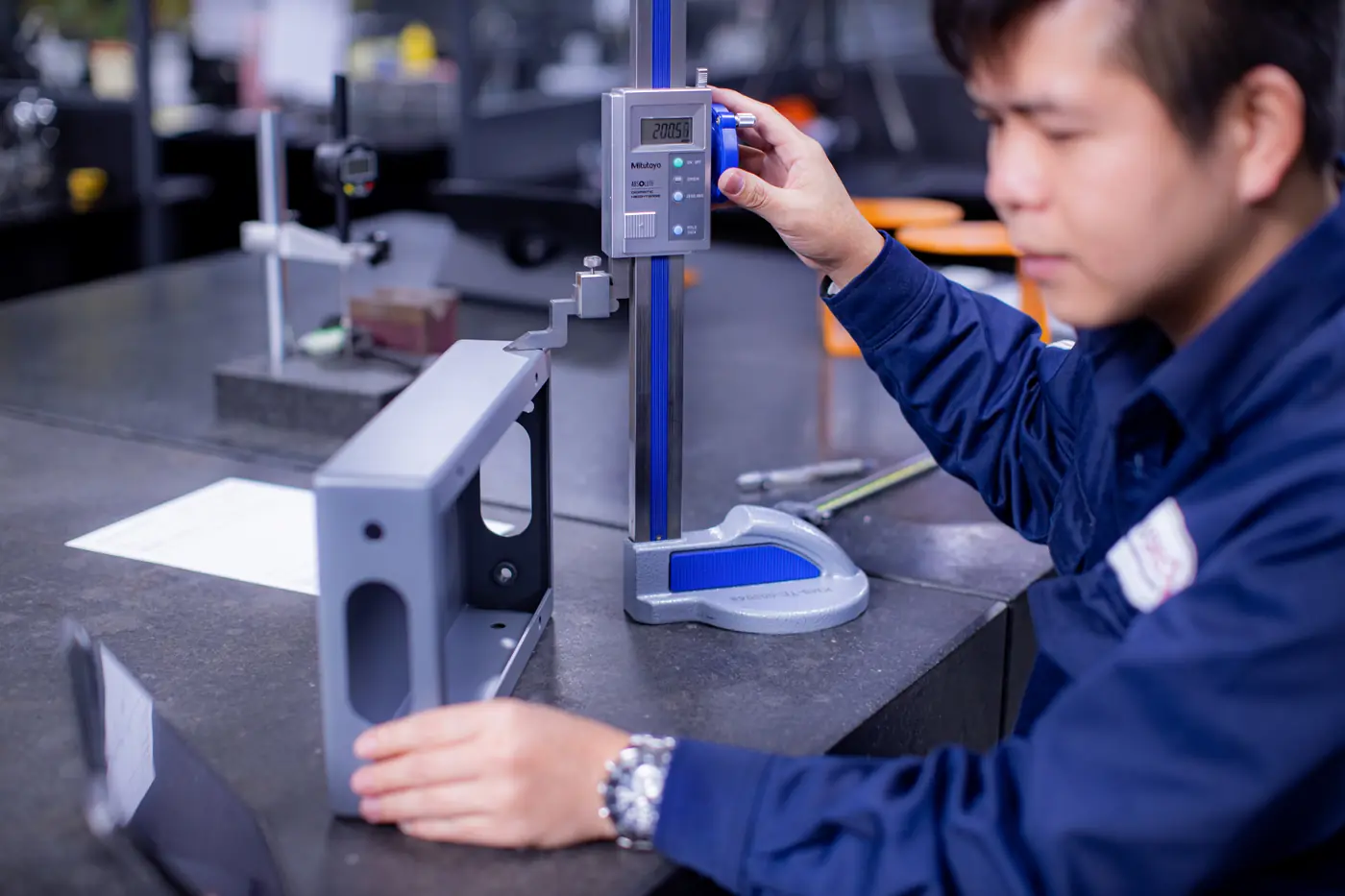
- Apply standardized approaches to inspection.
- Develop step-by-step inspection protocols at different production stages.
- If you hire an independent inspector, choose based on technical skills, language proficiency and experience.
- Clarify if the factory can subcontract production and under what circumstances.
9. Poor Quality Control
Quality control is the barrier between your design and a defective shipment, making weak inspection processes one of the most expensive mistakes when manufacturing in China. Many buyers also fail to align expectations with the factory beforehand, which leads to conflicts when a shipment, for instance, gets blocked over minor cosmetic issues.
The main mistakes are:
- Failing to verify the factory's internal quality assurance processes.
- Providing vague product specifications, creating a level of subjectivity that makes any quality control effort inherently ambiguous and ineffective.
- Assuming that later production batches will equal the quality seen in the first one.
- Calling for "zero defects" but not specifying exact criteria to achieve, leaving it up to the factory to determine what is acceptable.
- Expecting the factory to solve your design problems—that's not their responsibility.
How to avoid these mistakes:
- Audit the factory in person or via a reputable external specialist.
- Record everything related in writing, to make sure the specifications for your product are clear beyond doubt.
- Validate the supplier's DFM capabilities, confirming before signing a contract that they perform structured reviews and assessing the quality of their feedback.
- Structure a transparent quality plan, ensuring every stage—from sub-component assembly to final packaging—is governed by clear, coordinated compliance guidelines.
- Formalize acceptance criteria in writing, establishing an objective standard that serves as the final reference point for both your internal team and the factory inspectors.
- Perform in-process inspections, verifying the production run when it is roughly 80% complete and conditioning final payment on the goods meeting your established criteria.
10. Weak IP Protection
Your intellectual property is the most valuable asset you bring to a factory. It's also the most vulnerable.
This mistake happens when buyers assume standard domestic NDAs offer protection in a cross-border environment where they're largely unenforceable. Factories may work with your competitors, and without proper legal safeguards, your key features can show up in another company's product at the next industry trade show.
The main mistakes are:
- Failing to secure your design files, which allows factories to share or use your intellectual property for their own projects or your competitors'.
- Using a standard NDA instead of a specific NNN agreement (Non-Disclosure, Non-Use, and Non-Circumvention).
How to avoid these mistakes:
- Use a China-specific NNN contract that explicitly forbids the manufacturer from using your product or selling it to your target market.
- Run a background check on the factory's other clients to make sure they don't already build products for your direct competitors.
11. Using Generic Contracts
A contract is only as strong as its enforceability in the local court system. Buyers often rely on domestic legal templates or verbal promises, both of which give almost no leverage. If you end up in a dispute, a contract that doesn't account for local business realities, or that names a foreign court as the resolution venue, leaves you without legal options.
The main mistakes are:
- Failure to identify the correct dispute resolution location or verify the company seal used in China.
- Treating the delivery deadlines as flexible goals rather than a commitment.
How to avoid these pitfalls:
- Ensure that you have a legally binding agreement within Chinese law by stating the correct dispute resolution location.
- Use the exact name of the company, and ensure that each document bears its physical company seal.
12. Incorrect Pricing
The unit cost on a factory quote is only a fraction of the total price. A common mistake is building your budget around that pure manufacturing number while overlooking the true landed cost. If you don't actively factor in the realities of international trade—like logistics fees, customs, and currency fluctuations—those hidden costs will quietly eat away at your margins by the time the product finally reaches your warehouse.
The main mistakes are:
- Budgeting exclusively for the unit cost of a component while failing to amortize the expensive, upfront "hard costs" of injection molds, stamping dies, or custom tooling required to initiate contract production.
- Ignoring third-party inspection and pre-shipment testing costs in the unit price.
- Failing to consider additional costs, like high-quality packaging and moisture protection for overseas transportation.
- If you are making low-volume runs, ignoring the MOQ for individual components, which drives prices up.
How to avoid these mistakes:
- Ask for a component-level breakdown during quoting. Don't accept one blended unit price.
- Check the MOQ on every custom component (color, connector, branding, packaging insert). Don't assume the finished-product MOQ covers them.
- Calculate total landed cost at your actual volume before comparing suppliers. Don't compare quotes on unit price alone.
13. Not Accounting for Cultural Differences
When manufacturing in China, you have to take care of the supply chain and culture at once. The latter will catch most companies unaware.
One of the biggest barriers you will face in China will be the issue of "face." A factory manager who is behind schedule or has made an error rarely says so directly. Instead you get "no problem," "almost done," or "yes, yes" while the actual fix happens quietly behind the scenes.
Chinese New Year slows down the entire manufacturing sector as workers enjoy the festivities or travel to other provinces. Golden Week does something similar on a smaller scale.
If you don't plan for these situations, you will probably find yourself with damaged inventory, delayed production, and many of the avoidable mistakes when manufacturing in China that derail overseas projects.
The main mistakes are:
- Escalating issues with aggressive emails and finger-pointing, which weakens the relationship with your manufacturer.
- Assuming workers will proactively flag defects on the line and not having processes in place to check what is truly happening in the factory.
- Planning a project too close to the major holiday season, resulting in a backlog that might interfere with your lead time.
- Not incorporating Chinese holidays, especially the New Year that span over several weeks, in your manufacturing schedule.
- Signing contracts with no penalty clause for late deliveries.
How to avoid these mistakes:
- Build a relationship where partners can report problems honestly without losing "face," so issues get flagged early.
- Build all major Chinese public holidays into your long-term production and inventory strategy from day one.
- Verify the factory's actual capacity before ordering, to ensure it can meet your deadline.
- Include clear penalty clauses for late delivery in your contract, so the factory has a direct incentive to keep your order on schedule.
14. Not Accounting for Geopolitical and Tariff Risk
It is easy to be captivated by the sheer scale and efficiency of manufacturing in China, but relying exclusively on it means ignoring the reality of today's tense geopolitical climate.
The trade landscape is highly volatile. Sudden policy shifts—like sweeping, unpredictable tariff hikes—can instantly turn a profitable supply chain into a massive loss. If you build your entire business model around a single, vulnerable region without a contingency plan, you are one trade dispute away from losing your margins.
Surviving this instability requires active preparation, which increasingly means adopting a "China Plus One" strategy to establish alternative manufacturing hubs in other countries.
The main mistakes are:
- Being blinded by China's manufacturing scale, causing you to overlook the severe geopolitical tensions that make relying on a single country incredibly risky.
- Failing to model the financial impact of sudden tariffs, leaving your margins completely exposed to unpredictable trade barriers and new import taxes.
- Operating without a "China Plus One" contingency plan, meaning you have no alternative suppliers in other countries ready to step in when geopolitical shocks disrupt your primary production.
How to avoid these mistakes:
- Run predictive scenario planning, actively modeling the financial impact of 25% or 50% tariff hikes on your unit cost so you know exactly where your financial breaking point is.
- Test the alternative hubs with trial orders first, placing small, active production runs in countries like Vietnam.
- Avoid a rushed, total exit from China, so you can leverage the country's many benefits while scaling up a secondary regional hub.
Best Practices to Avoid Common China Manufacturing Pitfalls
Manufacturing in China doesn't run on autopilot. Cross that much distance and cultural difference, and anything you don't spell out gets misread. The buyers who do well aren't hunting for a perfect factory. They're building processes that hold up when things go wrong: clear documentation of what they expect, financial safeguards that actually protect them, and incentives that put the factory on their side.
Here is a quick checklist, summarizing the good practices to successfully avoid the most common mistakes when manufacturing in China:
- Go to trade shows to spot real engineering and production capability in person.
- Nail down every technical detail before asking for quotes.
- Visit the factory or hire an independent agent to do so, with the goal of verifying equipment, capacity and quality control systems.
- Map your points of contact early, such as sales contact, account manager, and project manager.
- Connect with technical teams via video calls rather than relying solely on sales representatives for engineering data.
- Execute NNN agreements to legally protect your proprietary designs, firmware, and core intellectual property.
- Validate production samples from an actual run to confirm the factory can execute your requirements at scale.
- Audit the entire BOM for component and packaging minimums to prevent inventory imbalances and cash flow problems.
- Use independent inspectors to check goods at key milestones, and never release final payment until the inventory meets your written standards.
- Tie your money to performance by using milestone payments or letters of credit instead of full upfront wire transfers.
- Plan early for the main Chinese holidays.
- Lock delivery dates and penalty clauses into the contract.
- Keep golden samples, deviation reports, and photo logs on file in case a dispute comes up.
- Pay attention to the "hidden costs" of manufacturing in China, such as shipping, tariffs, tooling, customs, packaging, and insurance.
- Qualify a backup supplier in another country, such as Vietnam or Mexico. Tariffs and politics in China can be hard to navigate.
- Build relationships where factory staff can flag problems early without losing face.
Turnkey Manufacturing Built on Accountability
You can navigate these risks alone, but the cost of a single misstep often exceeds the margin on your first production run. Avoiding the mistakes when manufacturing in China requires constant presence, local legal expertise, and deep technical oversight.
Most companies lack the local infrastructure to enforce these standards, and need a partner who treats your specifications as absolute requirements. Komaspec operates on these exact principles.
Under our turnkey, vertically integrated manufacturing approach, we can make your product from end-to-end, with every major process happening under a single contract. This setup eliminates the risky vendor handoffs during production, which keeps the process tight and significantly accelerates your lead times.
Komaspec is a Western-managed firm where every account manager has an engineering background, your technical questions receive actual answers, preventing the miscommunications that typically derail overseas projects.
The result is a streamlined operation that ensures your products are built strictly to spec, priced competitively, and delivered on schedule. Contact Komaspec today to discuss your project and ensure your next build stays on schedule and within tolerance.
FAQs
How to find a reliable Chinese manufacturer?
Don't just look for the cheapest prices or check online directories. Check out their website for guided factory tours, corporate history, and case studies to verify their capabilities. You should also test them on technical questions in the quoting process and speak directly with their engineering teams, by video calls, to make sure they can actually do the work for your project.
How detailed do my product details need to be?
You have to decide all technical details, drawing and material choice before asking for a quotation. Treat your specs as a hard baseline and the approved physical prototype as the absolute reference point. This prevents the factory from interpreting your quality standards subjectively or substituting cheaper raw materials behind your back.
How to protect my intellectual property (IP)?
Standard domestic NDAs are legally meaningless in China and leave your proprietary designs vulnerable. The most common way to legally protect your key intellectual property, designs and firmware is to sign a NNN (Non-Disclosure, Non-Use, Non-Circumvention) agreement specific to China. This contract specifically prohibits the manufacturer from using your product or selling it to your target market.
How much does offshore manufacturing really cost?
Don't set your budget solely on the unit price quoted by the factory. You need to calculate the total landed cost to safeguard your margins. This complete budget should also cover hidden costs like logistics, customs, tariffs, component MOQs (Minimum Order Quantities), and the upfront "hard costs" of injection molds or custom tooling.
How do I manage quality at a distance?
Unwritten standards and subjective reporting are not acceptable on the factory floor. You need to formalize written acceptance criteria and enforce step-by-step inspection protocols to drive quality. Moreover, you should employ independent qualified inspectors to verify progress and make your final payment conditional on the goods meeting your specified criteria.