
How to Find an Electronics Contract Manufacturer
- Introduction
- Key Takeaways
- Define Your Needs
- 5 Evaluation Criteria
- Step-by-Step Selection
- 6 Mistakes to Avoid
- Conclusion
Introduction
Finding the right electronics contract manufacturer is one of the most critical decisions a company can make when bringing their product to market. Whether you’re developing a consumer device, an industrial controller, or a connected IoT system, the quality of your manufacturing partner determines cost, yield, and compliance. And most importantly, customer satisfaction.
This guide explains how to evaluate potential partners, which criteria matter most, and provides steps to reducing risk before signing a contract. It’s written for engineers, product designers, and business leaders who need clarity on how to choose the right partner for reliable production.
Key Takeaways
- An electronics contract manufacturer should deliver more than labor. The strongest partners also offer engineering input, DFM/DFT analysis, supply chain stability, and testing infrastructure that raise first-pass yields above 97–99%.
- Certifications are often necessary, but not sufficient. IATF 16949 and ISO 13485 demonstrate competence in regulated industries, but certification does not equal quality. On-site audits, sampling, and ongoing quality assurance are still needed.
- Geography dictates cost and resilience. China still accounts for more than 40% of global electronics exports, offering unmatched cluster density and speed. Vietnam delivers tariff advantages and competitive labor, but with thinner ecosystems. Local manufacturing can help with oversight but can carry much higher per-unit costs.
- The real test is alignment, not promises. Match your product’s complexity, compliance scope, and volume to a partner’s verified track record. Avoid being swayed by marketing claims and focus on audited capacity, equipment capability (e.g., 01005 SMT placement), and customer references.
- Cost should be viewed as total value. Cheaper quotes can lead to 20–30% higher lifetime costs due to rework, shipping inefficiencies, or quality issues. A transparent electronics manufacturing company reduces hidden costs and strengthens long-term scalability.
Table of Contents
Understanding Your Manufacturing Needs
Before approaching any electronics manufacturing company, you need a precise picture of what you want to build. This sets the foundation for a productive partnership.
Product Complexity
- Start by evaluating how complex your product is:
- Simple PCBAs (printed circuit board assemblies): May only require SMT (surface mount technology) assembly and functional testing.
- Box builds or integrated systems: Often include mechanical housings, cabling, plastic parts, and final system assembly.
- Multi-process / material products: Complex designs may involve integrating components made by a wide range of processes and materials (e.g. sheet metal, CNC machining, plastic injection molding, electromechanical components, cable harnessing).
The more processes are involved, the more valuable it is to work with a vertically integrated contract manufacturer. They can handle multiple processes under one roof, resulting in greater efficiency.
Production Volume
Manufacturers usually specialize in certain production scales. Choosing a partner with experience at your intended scale reduces cost overruns and ensures they have the right equipment, staffing, and supply chain depth to meet your needs.

Prototyping and NPI (new product introduction): Small batches of 10–100 units.
- Services like PCBWay and JLC PCB are used for their online component libraries and fast turnaround.
- Smaller on-shore EMS (electronic manufacturing services) companies may offer low-volume builds for specialized industries or prototyping prior to larger scale off-shore production.
Low-to-mid volume: Runs of 500–10,000 units (common for industrial or medical devices).
- There is a wide range of tier 4 to tier 1 EMS companies capable of handling these build volumes.
- Both on- and off-shore options are available, depending on your industry, requirements, and cost sensitivity.
High volume: 100,000+ units (typical of consumer electronics).
- Usually done by large-scale EMS providers.
- Cost, automated quality, and inventory control are key concerns at this scale.
- Production of this size is typically done in Asia as this is where final product build and integration will occur.
Technical Requirements
Document every technical requirement before reaching out to manufacturers. Include:
- Specific components, approved vendor lists (AVLs), and material restrictions.
- Compliance with standards such as CE, FCC, UL, or RoHS.
- Required testing methods, whether automated optical inspection (AOI), in-circuit testing (ICT), or functional test fixtures.
Budget and Timeline
Be realistic about both.
Timeline
A typical PCB assembly cycle runs 4–8 weeks.
- This timeline can be shortened by buying components on the spot market (Digikey, Arrow, etc.), but this will increase cost significantly.
- Stocking long lead time components can condense lead time, but it comes with inventory risk and carrying costs.
Custom tooling for housings can add 6–10 weeks, depending on the complexity. Injection molding first piece samples generally require 45 days, and there will be adjustment and assembly tests.
Budget
Budget should account not only for unit cost but also NRE (non-recurring engineering), tooling, and certification testing.
There will be setup costs for prototyping and smaller builds. These are usually amortized over per-piece price, which is why small volumes tend to be much more expensive.
Most complex PCBAs will require a testing jig to ensure quality and aid in flashing firmware. This needs to be both designed and built.
- Depending on the functionality needed, this can be anything from a simple bed of nails tester (costing a few hundred dollars) to a full-spectrum functional tester (with development costs for hardware and firmware running thousands or more).
Certification can be quite expensive, particularly for WiFi- or Bluetooth-enabled boards, which require more complex EMC-compliance. If custom boards are needed, this is a key cost for selling into major markets.
5 Major Criteria for Evaluating Electronics Manufacturers
Choosing the right electronics contract manufacturer involves more than looking at price quotes. A capable partner will help you reduce defects, shorten lead times, and protect your brand’s reputation. Here are the factors that matter most.
Quality and Certifications
A solid quality management system is the backbone of consistent output. Certifications, like ISO 9001 for general quality systems, IATF 16949 for automotive, and ISO 13485 for medical devices, are typical qualifications, but implementation can be uneven depending on the facility.
On the technical side, inspection tools like AOI (automated optical inspection), ICT (in-circuit testing), and X-ray analysis are standard in mature factories. If possible, work with a factory that uses a layered approach to quality:
- Incoming quality checks on the component and board level, including part identification and RoHS compliance.
- Process control checks such as solder AOI inspection, machine vision for component placement, and X-ray analysis.
- Finished goods inspection via flying probe, bed of nails, or functional testers.
Without these types of systems in place, expect defect rates well above industry benchmarks. Typical first-pass yields for good EMS providers exceed 98–99% (though this depends on whether the board is fully SMT or includes a high portion of through-hole componentry).
Experience and Expertise
Domain experience can be a deciding factor. A manufacturer that has shipped products into regulated markets already knows how to avoid compliance pitfalls.
- For consumer electronics, look for evidence of high-volume runs (100,000+ units per year). This shows they can handle scale without compromising timelines.
- For regulated industries (like aeronautics, aerospace, automotive, and military), proof of experience complying with standards and testing requirements is essential.
- For more complex board types (like rigi-flex or high layer boards), make sure they have produced these at volume and for a given time.
Ask for case studies, customer references, or sample reports. Seasoned partners will have these on hand.
Technical Capabilities
The manufacturer’s capabilities should align with your bill of materials.
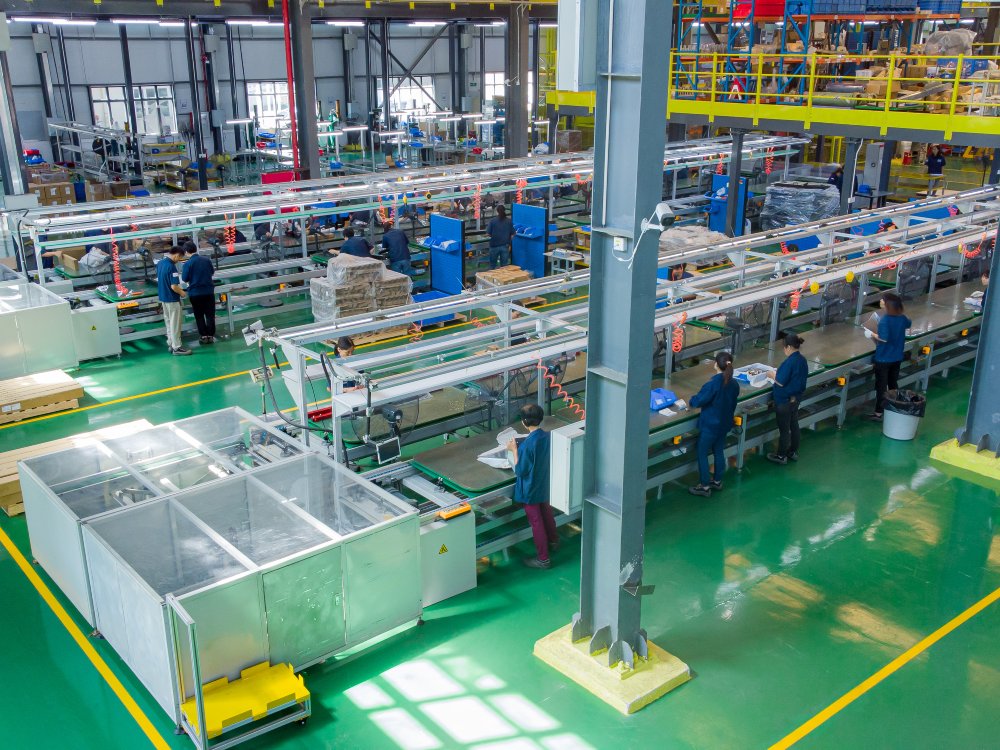
Some companies only assemble PCBs, while others offer full box-build assembly, including plastics, sheet metal, and cable integration.
For PCB manufacturing, what types can they handle? Are they able to make flexible PCBs? What is the maximum number of layers they can produce? Can they manufacture HDI PCBs?
Many EMS plants will have simple assembly capabilities in-house, with most other capabilities outsourced.
- If your product is mechanically simple, these suppliers can offer excellent value for cost.
- If your product is mechanically or electromechanically complex (multiple process and material types, mix of custom and standard parts), you may need a partner with more general contract manufacturing capabilities.
How old is the equipment used by the manufacturer? SMT lines capable of 01005 component placement (0.4 mm x 0.2 mm) are essential for modern IoT and wearables.
Does the manufacturer have automated systems in place? Are processes like SMT and inspection done manually, or do they use automation to ensure uniformity and quality?

Location and Supply Chain Reach
The choice of location comes down to balancing cost, control, and logistics complexity.
China
China still accounts for more than 40% of global electronics exports, with Shenzhen and Suzhou serving as mature clusters.
A massive percentage of the passive and low-cost active components (at board and component levels) are manufactured in China, meaning shorter lead times, better availability, and significant cost advantages.
Vietnam
Vietnam doubled its electronics exports in the past decade, attracting Samsung, Apple suppliers, and dozens of EMS firms.
The overall ecosystem (boards, stencils, capital equipment, passives, distributors, and so on) isn’t as robust as China’s, but there are good capabilities and easy access to the Chinese supply chain.
Taiwan, the Philippines, and Malysia
These countries have significant EMS capabilities, though typically smaller in scale (thousands of employees rather than tens of thousands). However, there are some very large firms located in these countries.
North America and Europe
North America and Europe offer shorter lead times, with a high percentage of market share and capabilities concentrated in regulated industries (including automotive, transport, aerospace, and medical).
Usually, this comes with higher unit costs (though Mexico and Eastern Europe are relatively competitive) due to higher labor and input costs, and weaker ecosystem support.
Communication and Project Management
Even with strong technical capabilities, poor communication can derail projects.
The best electronics manufacturing companies assign a dedicated project manager, provide structured updates, and use tools like ERP-linked dashboards for transparency.
Responsiveness matters as well. In surveys of global OEMs, delays in communication accounted for up to 20% of project overruns.
Evaluating and Selecting an Electronics Contract Manufacturer: A Step-by-Step Guide
Finding a reliable electronics contract manufacturer is rarely about luck. It’s a structured process where each stage helps you filter out risks before committing significant money and time. Here’s how experienced OEMs and product companies approach it.

Step 1: Initial Research and Longlisting
Start by casting a wide net. Use online directories (like IPC’s Global EMS Directory), trade shows (such as Electronica in Munich or Canton Fair in Guangzhou), and referrals from industry associations to find manufacturers. Most buyers create a longlist of 10–15 candidates, knowing that at least half won’t pass early screening.
Collect basic data on each candidate, including the size of the company, services offered, certifications, and their annual revenue. Global EMS reached over $600 billion USD in 2024, but a large share is concentrated among top-tier firms, so it pays to identify whether a factory is suited for startups, mid-size companies, or Fortune 500 volume.
Step 2: RFQ and Shortlisting
Prepare a structured RFQ package, including BOM details, volume forecasts, compliance requirements, and testing needs. Send it out to your longlisted candidates and evaluate responses – not just on price, but also completeness and clarity.
Expect about 60 to 70% to reply within one week. But only about a third will provide fully detailed quotes. Use the responses to narrow your list down to 3 to 5 manufacturers who show genuine engagement and relevant technical depth.
Step 3: Deep Dive and Due Diligence
Interview the candidates on your shortlist. Look for red flags like a reluctance to share customer references (credible manufacturers will provide at least two). Speaking with those clients often reveals whether schedules, quality, and service match what’s promised. According to a PwC analysis, a single 12-month delay can cost an OEM up to $200 million and cost a supplier $15 million.
Step 4: On-Site Audits and Final Selection
Before signing contracts, an audit is crucial. If you can’t visit the facility in person, use a third-party inspection service (typically $300–$500 per day in Asia).
Check for organization on the factory floor, functioning quality-control checkpoints, and worker morale, as this often correlates with process discipline.
Document your findings and compare them against your criteria: quality, scale, communication, and financial stability. Then make your final selection and move to negotiation.
6 Common Mistakes to Avoid When Choosing an Electronics Manufacturer
Even with a structured evaluation process, companies often fall into predictable traps when selecting an electronics contract manufacturer. Avoiding these mistakes can save months of delays and thousands in unplanned costs.
1. Focusing on the Lowest Price
A factory quoting 10–15% below the competition may look like a bargain, but this often comes with hidden costs.
Always assess total cost of production, not just unit price.
2. Poor Due Diligence
Skipping proper audits or customer reference checks is a big mistake.
On-site or third-party audits provide visibility into a factory’s true capabilities and process discipline.
3. Poor Communication Channels
A survey of engineering leads at OEMs found that 31% of them experienced product development delays due to supplier miscommunication.
Projects relying only on email often suffer from communication issues. Structured tools, weekly WeChat check-ins, shared dashboards, or ERP-linked updates can reduce misunderstandings.
4. Ignoring Cultural and Geographic Nuances
Time zones, holidays, and cultural norms matter. For example, Chinese New Year shuts down most factories for 2 to 4 weeks, while Vietnam observes Tet around the same period. Failing to account for this can set your project back months.
Understanding how “face” and decision hierarchies work in Asian contexts can also help avoid stalled negotiations.
5. Weak IP Protection
Failing to sign enforceable NNN agreements (non-disclosure, non-use, non-circumvention) in the supplier’s local language leaves designs vulnerable to IP leaks. Filing trademarks and patents locally before disclosure gives you an extra layer of defense.
6. Choosing Location Based on Labor Cost Alone
Shifting production to the lowest-cost country without considering its infrastructure and supply chain depth will often backfire.
For example, moving production to Vietnam may save on labor costs, but means dealing with a supplier ecosystem that is less dense than China’s. This could stretch lead times for multi-process products.
Conclusion
Choosing the right electronics contract manufacturer is not a one-off sourcing task, it’s a strategic decision that directly impacts cost, quality, and long-term scalability. The right partner should align with your product complexity, production volume, and compliance needs, while providing clear communication and resilient supply chain management.
Global electronics manufacturing is expected to exceed $1.2 trillion by 2030, and competition is fierce. Companies that secure strong partnerships now will be better positioned to scale new products and protect their IP in an evolving trade environment.
At Komaspec, we specialize in bridging these gaps with end-to-end support: from design-for-manufacturing reviews and prototyping to box-build assembly and global logistics. If you’re planning your next electronics program, we encourage you to contact our team for a consultation.
FAQs
Q1: What is the difference between an OEM, an EMS provider, and a contract manufacturer?
- OEM (Original Equipment Manufacturer): Designs and sells products under its own brand but typically outsources production.
- EMS (Electronics Manufacturing Services): Specializes in PCB assembly, testing, and electronic integration.
- Contract Manufacturer (CM): Offers broader capabilities, often combining electronics with mechanical parts (plastics, sheet metal, cable harnesses). A CM like Komaspec can manage the full supply chain, from prototyping to final assembly and shipping.
Q2: How can I protect my intellectual property when working with an electronics manufacturer?
Start by filing trademarks and patents in the production country (China or Vietnam) before disclosure. Use legally enforceable NNN agreements (non-disclosure, non-use, non-circumvention) written in the local language, not just NDAs.
Contracts should also state tooling ownership, with serial numbers and storage requirements to avoid unauthorized use. Many companies also record their IP with China Customs, enabling seizure of counterfeits at export.
Q3: What are the most important quality certifications to look for?
- ISO 9001: General quality management across industries.
- ISO 13485: Medical devices, with traceability and risk management.
- IATF 16949: Automotive, focused on defect prevention and continuous improvement.
- IPC-A-610: Global standard for PCB assembly workmanship.
- ISO 14001/45001: Environmental and occupational safety standards (valuable for ESG-focused buyers).
Q4: Should I choose a domestic or an overseas manufacturer?
Domestic manufacturers may simplify communication, logistics, and compliance, but costs are typically higher. Overseas hubs like China (30% of global manufacturing output) and Vietnam (electronics exports valued at $177B in 2024) offer cost savings and supply chain depth. The trade-off is longer lead times, navigating cultural differences, and the need for closer oversight.
Q5: What are the advantages of manufacturing in China vs. Vietnam?
- China: Dense supplier clusters, rapid prototyping, and unmatched scale. PCB prototypes can ship in 24–72 hours, and lithium battery production accounts for ~75% of global output.
- Vietnam: Lower labor costs, strong government incentives, and tariff advantages under trade agreements like CPTPP and EVFTA. However, the ecosystem is less mature, so multi-process products may require longer sourcing cycles.
Q6: What are typical lead times when working with Asian manufacturers?
- PCB prototypes: 2–5 days
- Injection molds: 4–8 weeks
- Metal stamping dies: 3–6 weeks
- Box builds / complex assemblies: 12–24 weeks, depending on certifications (e.g., FCC, CE) and component lead times.
Q7: How much does it cost to manufacture an electronic product?
Costs vary widely based on complexity. In Asia, PCB assembly often runs $0.05–0.10 per placement, while an integrated electromechanical box build can range from $50 to $500+ per unit depending on materials, testing depth, and volume.
Always consider total cost of ownership (TCO), including rework, logistics, tariffs, and warranty exposure, not just the per-unit price.
Q8: What should I consider when visiting a manufacturing facility overseas?
Look beyond the machinery. Assess factory cleanliness, process flow, and operator training programs. Check for in-house test equipment such as AOI (automated optical inspection), ICT (in-circuit testing), or X-ray for BGAs.
Ask about employee turnover. A high rate often signals poor management and unstable quality.
Request access to production, warehouse, and quality control areas, not just the showroom floor.